
Leveraging AI Systems Architecture for Scaling SaaS Business...
Leveraging AI Systems Architecture for Scaling SaaS Business...
Leveraging AI Systems Architecture for Scaling SaaS Businesses
SaaS businesses are like teenagers—full of potential but constantly needing more resources, attention, and let’s face it, room to grow. Enter AI systems architecture, the growth hormone for your business that doesn't require late-night pizza binges or teenage angst.
Understanding AI Systems Architecture in SaaS
A long time ago in a galaxy not so far away, SaaS businesses simply wanted to provide software via the cloud. But now, the demand for scalability, efficiency, and personalization has pushed AI to the forefront. So what exactly is AI systems architecture, and why should you care?
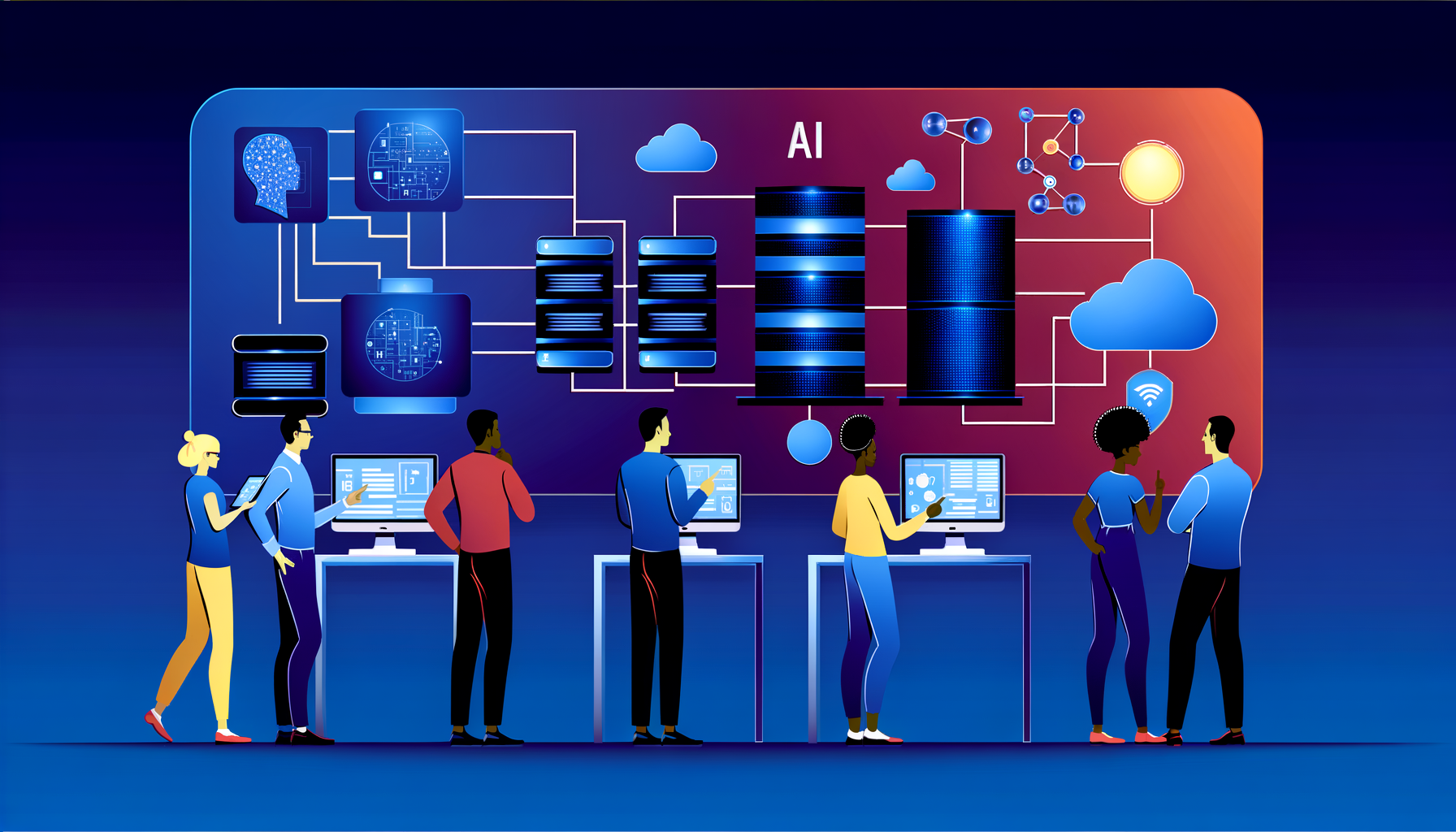
In essence, AI systems architecture is your SaaS business's strategic blueprint, combining AI technologies to automate complex tasks, drive efficiency, and improve customer experiences. Think of it as hiring a network of digital Swiss Army knives. Here's how these cutting-edge systems become game-changers:
- Scalability: AI can swiftly manage increased demand without a hitch, akin to your friend who suddenly finds friends at the bar closing time—it just knows how to handle it.
- Cost Efficiency: Save on costs by reducing manual work, allocating resources smartly, and quite crucially, stopping Joe from ordering extra plants for the office. We don't need another ficus.
- Personalized Experiences: Offer your customers hyper-personalized journeys thanks to real-time data analysis. Imagine knowing your customer's needs better than they know their Netflix password—it's that intuitive.

Core Components of Effective AI Systems Architecture
Imagine AI systems architecture as a fancy lasagna: it's all in the layers. Here's what makes this metaphorical pasta dish so delectable for SaaS scaling:
1. Multi-Agent Orchestration Architecture
This isn’t a high-brow concept for organizing teenagers at a birthday bash. Multi-agent orchestration seamlessly manages and coordinates multiple AI agents, ensuring smooth functionality across the board. It's like having an invisible, ultra-efficient handling team that’s always on-call.
2. Real Intelligence (RI) Framework
Unlike your last-minute idea to abseil the Christmas tree, the RI framework offers a more thoughtful approach to AI, ensuring efficient human-AI collaborations. This framework understands emotional contexts, learns, adapts, and performs like that incredibly smart kid back in school who never really tried but somehow aced every class.
3. Memory-Driven Agent Systems
Memory-driven agents use past interactions to improve decision-making—a true memory powerhouse. Imagine if you could remember everyone's coffee order in the office. Well, you can't, but your AI system can.
Practical Steps to Implement AI Systems Architecture
Step 1: Define the Business Outcome
Your teen probably wants to be a rock star, but what's your SaaS business aiming for? Clearly define your business objectives and let these goals guide the architecture setup.
Step 2: Choose the Right Tools and Technologies
Opt for solutions that cater directly to your needs. ArcanoLabs offers a plethora of tools, from blog management to social media scheduling, integrating seamlessly into your existing systems. It’s the tool suite that makes even tool-averse programmers nod in approval.
Step 3: Implement a Scalable and Flexible Design
Ensure the architecture supports both scalability—like a family pizza night—and flexibility, allowing new tools and technologies to integrate as needed. A system as adaptive as your wardrobe choices on laundry day.
Step 4: Monitor and Adapt Continuously
If parents can track their teenagers' every move, you can certainly keep tabs on your architecture’s performance. Utilize AI-driven analytics to adapt and refine strategies effectively.
Success Stories: AI Systems in Action
Turning theory into practice requires concrete examples. Here’s how others have paved the way successfully:
ArcanoLabs enabled a tech startup to enhance customer engagement, utilizing AI-driven content generation and personalized experiences that tickled the fancies of even their pickiest clients. They increased content output by 200% without upping their caffeine intake—remarkable!
Your Turn: Elevate Your SaaS Business with AI
If you’re ready to leverage AI like never before, get started with ArcanoLabs. It’s more than just a service; it’s your guide through the kaleidoscope of AI systems architecture, making the complex intuitive and elegant.
Feel free to reach out for a chat or a digital high-five. Visit ArcanoLabs Contact and join the league of empowered entrepreneurs using technology not just for competitive edge but for innovation and revolution.
The Whys and Hows of Implementing AI in SaaS: A Deep Dive
Implementing AI systems architecture in your SaaS business isn't unlike adopting a new pet. It's exciting, exhausting, and potentially life-changing—but you cannot skip the behind-the-scenes work. Here's a humorous yet pragmatic guide to making AI your trusty sidekick without chewing your proverbial shoes.
Why AI? The Call Beyond Just Scaling
AI isn't just the hipster trend your SaaS business needs to follow. It's your closest ally in achieving more personalized customer service, lightning-speed operations, and Sherlock Holmes-level anomaly detection. Here’s why AI has moved from being a fancy gadget to an essential household item:
- Hyper-Personalization: Just like every coffee shop offers oat milk now, AI lets you tailor customer interactions to an individual level. No one likes being sold pet food when they're allergic to fur, right?
- Efficiency Beyond Imagination: Think of AI as a magical entity that never takes coffee breaks (unless you program it to), handling menial and complex tasks effortlessly and, dare we say, elegantly.
- Predictive Analysis: With AI, your business can predict trends the way some people always know when they'll encounter traffic. Move over, crystal balls; data-driven forecasts are in town.
How to Get Started: Your AI Adoption Checklist
If your head is spinning faster than a teenager on roller skates, don’t worry. Set those nerves aside, grab your to-do list, and let's dive into AI adoption:
- Assess Your Readiness: Consider whether your current IT infrastructure can support AI capabilities. If your systems crash more often than you refresh Instagram, it’s time for an upgrade.
- Budgeting for Brains: AI's not free, folks. Come up with a budget and allocate resources wisely. Hey, it’s not like you’re buying another ficus, right?
- Training and Development: Ensure your team gets the necessary training to work with AI tools. You wouldn’t hand a toddler a smartphone without some guidance, would you?
- Implement Incrementally: Don’t just dive in cannonball-style; ease into AI integration for smoother transitions and fewer ripples in your operations.
FAQs: Satisfying Your AI Curiosities
Inquiring minds want to know, and we’ve got answers. Here are some popular questions that shed light on the mysteries of AI:
- Can AI completely replace human jobs? Nope, even AI couldn’t pull off your coworker’s penchant for office small talk.
- How secure is AI? When implemented smartly, AI offers robust security enhancements. But just like your grandma’s secret spaghetti recipe, you’ll need to keep it well-guarded.
- Does AI make mistakes? Occasionally! But just as you wouldn’t fire your best employee for showing up in mismatched socks, you won’t ditch AI for minor slip-ups.
Key Performance Indicators: Measuring Your AI Success
Understanding AI success involves more than checking whether the office ficus is still alive. Measure the ROI of AI implementation with these KPIs:
- Customer Satisfaction Scores: Has AI improved the customer journey? If customers say "yes," you’re on the right track.
- Operational Efficiency Ratio: Determine how AI has reduced time and costs compared to previous methods. Did you save money or simply buy another coffee machine?
- Conversion Rates: If your conversion rates are climbing higher than a mountain goat, AI might just be your new best friend.
Case Study: The AI Adventure of SmartCloud Startup
Meet SmartCloud, a jaunty startup that decided to integrate AI with the ambition of conquering the world—or at least their corner of the market. Facing challenges like manual data logging and repetitive customer complaints, AI was their valiant solution.
After adopting a multi-layered AI systems architecture, SmartCloud automated data entry processes, reducing human errors by 80%. Additionally, AI-led chatbots impressed even the most grumpy customers, lifting the net promoter score by 15% in six months—proving humor really is the best medicine... or maybe it's just a very well-trained bot.
The AI Tipping Point: Are You Ready?
At the end of this dizzying AI rollercoaster, the big question remains: are you ready to make the leap? AI offers your SaaS business scalable opportunities and the potential for market growth as swift as a caffeinated squirrel.
If you think it's your time to shine, consult the AI wizards at ArcanoLabs for guidance tailored specifically to your needs. Why not transform your SaaS business into an AI-fueled superstar?
The future is AI—don’t just watch it happen; be the architect of it. Ready? Set? Go, go, go!
Advanced Strategies: Embracing AI with a Human Touch
In the quest for scaling your SaaS business, blending AI's might with that irreplaceable human touch could be your secret sauce. Here's how to achieve this golden equilibrium:
- Human-AI Synergy: Equip your team to work harmoniously with AI. Encourage brainstorming sessions where creativity meets computational power—like a jam session with robots.
- Feedback Loops: Use AI tools not just to analyze customer feedback but to generate insights that are 'human-readable'. No one loves deciphering binary data over their morning espresso.
- Empathy in AI Design: Implement AI that understands not just data, but sentiment. Your users will appreciate software that feels more empathetic than the average automated phone system.
Follow Author
Get notified when new posts are published