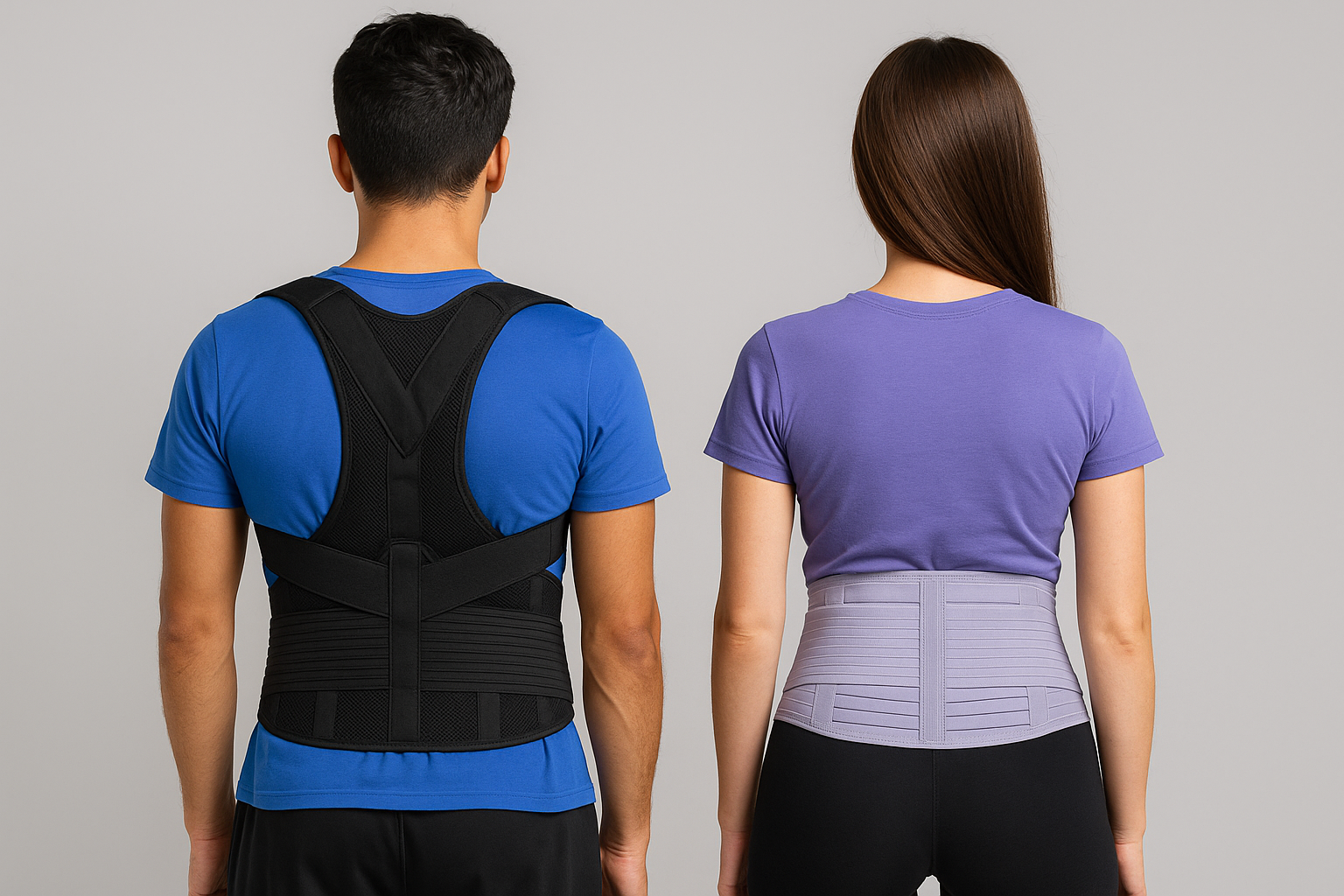
Braces vs. Support Belts: Which Back Support Gear Actually Works
Braces vs. Support Belts: Which Back Support Gear Actually Works
Comparing Back Support Gear: Braces vs. Support Belts
A back brace and a support belt look nearly identical. Most people use the terms interchangeably. That is a mistake—and picking the wrong one means you are wearing gear that does not match your problem.
How Braces and Belts Differ Structurally
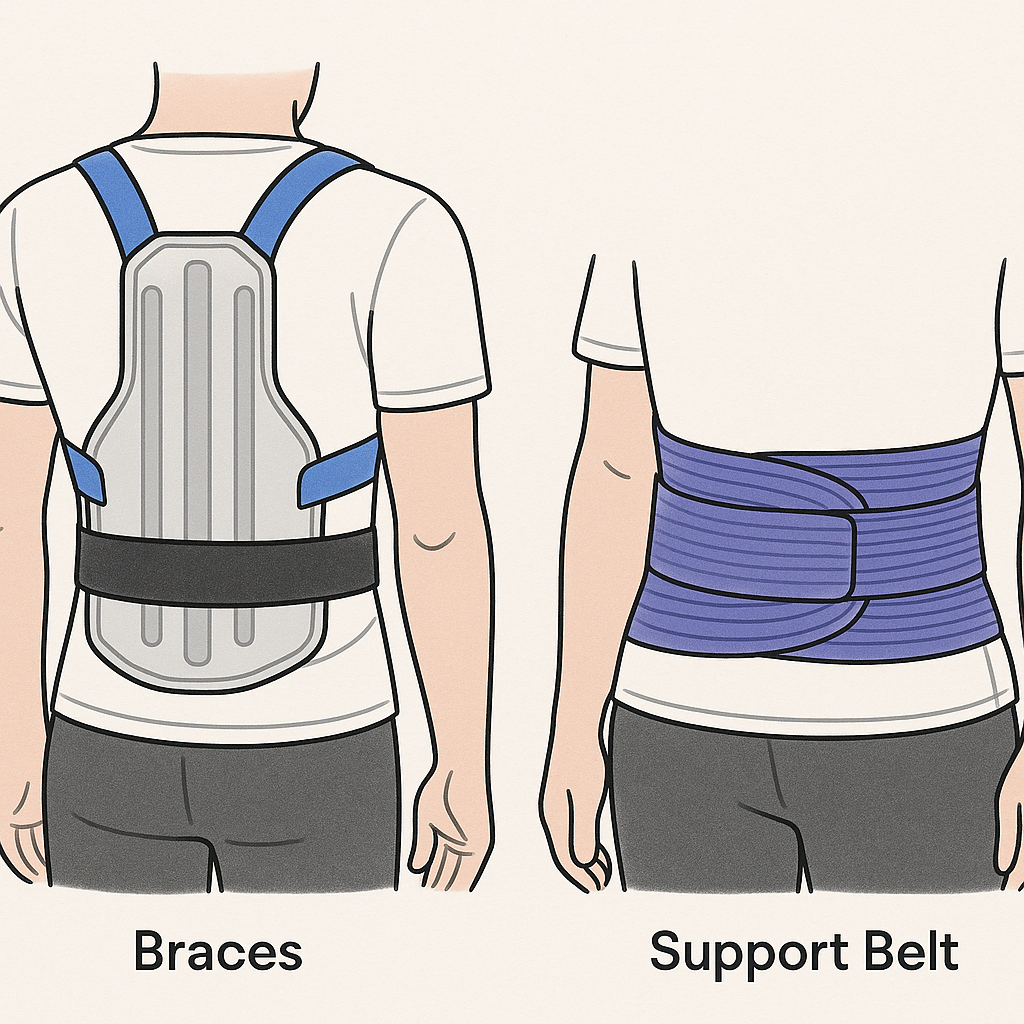
Start with the hardware. Braces are built with rigid stays or panels. That structure limits movement by design. If your spine needs to be held in place after an injury or surgery, that rigidity is exactly the point.
Support belts work differently. They are made from elastic materials that compress without restricting. They wrap the lower back and abdomen, adapt to your body, and move with you. That flexibility makes them the right tool for physical tasks like heavy lifting—not for immobilizing a damaged spine.
Coverage is another real distinction. Braces extend from the lower back up to the mid or upper back, distributing pressure across a wider surface. Support belts stay focused on the lower back. Narrower coverage, narrower purpose. Know which one matches your situation before you buy.
What Each Type Is Actually Designed For
Braces are clinical tools. They are prescribed post-injury or post-surgery to stabilize the spine and prevent further damage. Herniated discs, chronic back pain requiring restricted movement—these are brace territory. The goal is immobilization, not comfort during a shift.
Support belts are occupational tools. Warehouses, delivery routes, construction sites—anywhere workers face repeated lower back strain from lifting or prolonged standing. The compression maintains posture and reduces injury risk during physical work. They are not a substitute for medical treatment. They are a preventive layer for people who are on their feet and moving weight all day.
How Braces Provide Stability vs. How Belts Provide Compression
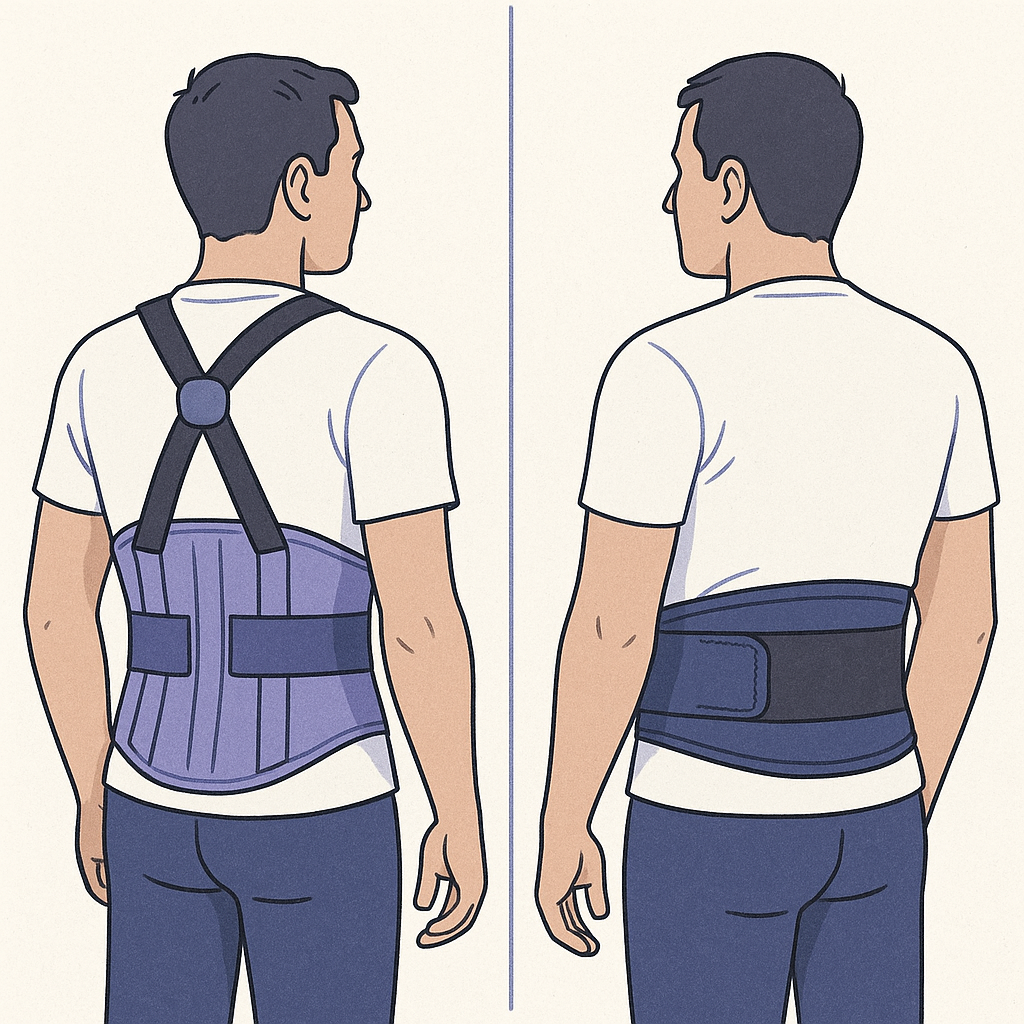
The mechanism matters. Braces limit motion. That is their entire value proposition. When unwanted movement could set back a recovery, a brace stops it. Simple, structural, non-negotiable for the right conditions.
Support belts increase intra-abdominal pressure. That pressure transfers load away from the lower back muscles and onto the abdominal wall, reducing strain during lifting or extended standing. The spine gets indirect support. The muscles get a break. You keep moving.
The decision is straightforward once you know your priority. Stability first? Use a brace. Muscle support with full range of motion? A support belt is your answer.
Fit, Comfort, and Wearability Over Time
Braces are bulkier. Their rigid structure makes them uncomfortable for all-day wear and difficult to conceal under clothing. That is a trade-off you accept when the medical need is real.
Support belts are thinner, more elastic, and far easier to wear under work clothes for an extended shift. They are built for daily use during specific activities. That said, neither type should be worn continuously without a plan. Braces require medical supervision for extended use. Belts should be worn during high-risk tasks, not as a permanent substitute for building core strength.
Cost and Durability Differences
Braces cost more. The rigid components, the materials, the engineering—it adds up. They are built to last, but lifespan depends on how often you use them and how well you maintain them.
Support belts are more affordable and widely available across a broad price range. The trade-off is longevity. Elastic degrades. Belts wear out faster and need replacing more often. On the insurance side, braces are more likely to be covered when a healthcare provider prescribes them. Support belts typically come out of pocket. Verify your coverage before you assume anything.
When to See a Doctor Before Choosing Either
Some symptoms are not a gear problem. Severe pain, leg numbness, or weakness in the lower extremities are red flags that point to something a belt or brace cannot fix on its own. See a doctor first.
Herniated discs, spinal fractures, and chronic back pain require a full treatment plan. Support gear may be part of that plan—but it is not the whole answer. A proper diagnosis tells you which tool belongs in your recovery, and at what stage.
The bottom line: your choice between a brace and a support belt should be driven by your specific condition, not by what looks right on a shelf. For workers in physically demanding roles—like last-mile delivery drivers—where back support is a daily operational need, BackGuard Relief builds solutions matched to that reality.
For more on occupational safety and back health, visit BackGuard Relief.
Customization and Adjustability Features
Adjustability is not a bonus feature. It is a functional requirement. Braces with adjustable straps and panels let you dial in support exactly where you need it—critical when symptoms shift throughout the day or when recovery demands varying levels of restriction.
Support belts offer their own version of adjustability through Velcro closures and similar mechanisms. You can tighten or loosen compression between tasks without removing the belt entirely. Some advanced models now include built-in sensors that monitor posture and exertion in real time. That kind of feedback turns a passive support tool into an active one—useful for workers who need accountability, not just compression.
Environmental and Workplace Considerations
Your environment shapes your gear decision as much as your diagnosis does. In hot, humid conditions, breathability becomes a hard requirement. Support belts, typically made with ventilated fabrics, hold a clear advantage over the denser, less breathable structure of most braces.
Cold environments flip that equation. A brace can provide added insulation alongside stability. Beyond temperature, think about the actual work. Repetitive lifting calls for the compression of a belt. Post-surgical recovery at a desk calls for the stability of a brace. Match the tool to the task and the environment, not just the injury.
Maintenance and Care Tips
Gear that is not maintained stops working. For braces, inspect the rigid components regularly. Warped or cracked stays compromise stability and give you a false sense of support. Follow the manufacturer's cleaning instructions—usually spot cleaning or hand washing to protect the materials.
Support belts are lower maintenance but not zero maintenance. Sweat and bacteria build up fast in elastic fabric. Most belts are machine washable—secure the Velcro before every wash to prevent snags. Check the elastic and edges regularly. Fraying or worn-out stretch means the belt is no longer doing its job. Replace it before the problem shows up in your back.
FAQs About Back Support Gear
- Can back support gear be worn during exercise? Yes, but match the gear to the activity. Support belts work well for exercises involving heavy lifting. Some braces are appropriate for low-impact movement, but only with a healthcare provider's approval.
- How long should back support gear be worn each day? It depends on the gear and your condition. Wear braces only as directed by a medical professional. Use belts during high-risk tasks, but do not let them replace the core-strengthening work that builds lasting resilience.
- Are there any side effects of wearing back support gear? Yes. Prolonged use without medical guidance can cause muscle dependence or atrophy. Support gear is a tool, not a long-term solution. Pair it with exercises that actively strengthen your back and core.
Factor in adjustability, environment, and maintenance alongside the clinical basics. That complete picture is what separates a smart gear decision from an expensive guess.