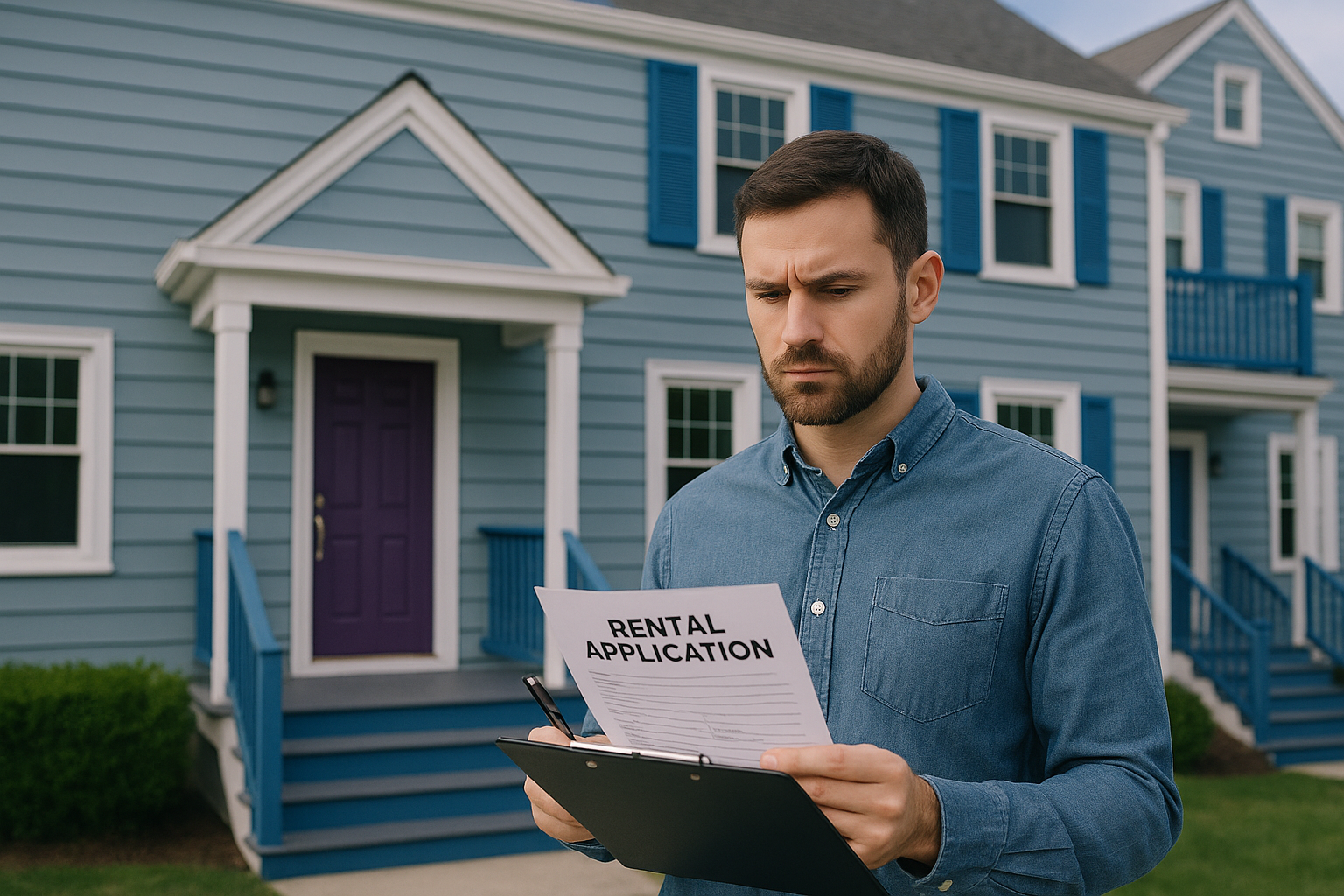
How to Screen Tenants for a 2-Family Home Without a Property Manager
How to Screen Tenants for a 2-Family Home Without a Property Manager
Screen tenants yourself and you control whether someone pays on time or leaves you chasing payments through the courts. That decision — yours alone — determines your occupancy rate, your cash flow, and how much of your investment survives contact with the real world. This is a systematic process that lets you screen as effectively as any professional property manager. No middleman required.
Why Tenant Screening Matters for Small Landlords
One bad tenant in a 2-family home does not stay contained. It bleeds into your finances, your time, and your peace of mind. Eviction alone can take months and cost thousands in legal fees — and while that clock runs, your occupancy drops and your income stalls. Add repair costs from a negligent occupant and the damage compounds fast. The operators who build quietly and earn in peace treat upfront screening as the cheapest insurance they will ever buy. Spend the time now. The alternative is far more expensive.
Set Clear Screening Criteria Before You Advertise
Before you write a single word of your listing, define your standards. Concrete criteria keep emotion out of the decision when applications start arriving and desperation starts whispering.
- Minimum Credit Score: Set a benchmark that reflects your actual tolerance for financial risk.
- Income-to-Rent Ratio: Require applicants to earn at least three times the monthly rent. No exceptions.
- Criminal History Policy: Decide in advance which offenses are disqualifying. Write it down.
- Rental History Requirements: Look for a consistent, clean record — no evictions, no pattern of late payments.
Written criteria applied uniformly protect you legally and keep your judgment sharp when the pressure is on.
How to Run a Credit and Background Check

A credit and background check tells you what a tenant's track record actually looks like — not what they say it looks like. Run it on every applicant, without exception.
- FCRA Compliance: The Fair Credit Reporting Act requires you to inform applicants about the check and get their written consent before you run it. Do not skip this step.
- Services to Use: TransUnion SmartMove and Experian Connect are reputable starting points for independent landlords.
- Interpreting Scores: Understand what the numbers signal about financial habits, not just a single moment in time.
- Negative Items: Late payments, collections, and bankruptcies are red flags. Weight them against the full picture, but never ignore them.
This step separates applicants who intend to pay from those who have a documented history of not doing so.
Verify Income and Employment
What someone claims to earn and what they actually earn are two different numbers. Verify both before you hand over a key.
- Pay Stubs and Tax Returns: Request recent pay stubs. For higher-risk situations, ask for tax returns as a second layer of confirmation.
- Contacting Employers: Call the employer directly. Confirm the applicant's role, tenure, and salary. Takes five minutes. Worth every second.
- Self-Employed Verification: Bank statements and 1099 forms are your tools here. Self-employment is not a red flag — undocumented income is.
- Red Flags: Inconsistent paperwork or reluctance to provide documentation tells you something. Pay attention to it.
Verified income means you know — not hope — that this tenant can meet their obligations month after month.
Call Previous Landlords and Get Real Feedback
Past behavior is the most reliable predictor you have. A previous landlord who lived through twelve months with this applicant knows things no application can capture.
- Questions to Ask: Did they pay on time? How did they treat the property? Were there disputes? Would you rent to them again?
- Verify the Landlord: Cross-reference against public records. Applicants have been known to list friends as fake references.
- Beyond Yes/No Answers: Listen for hesitation. A landlord who pauses before saying "they were fine" is telling you something without saying it.
These calls take twenty minutes. They can save you twenty months of problems.
Document Everything and Make Consistent Decisions
Documentation is not paperwork for its own sake. It is your legal shield and your proof of fair process.
- What to Keep on File: Every application, every piece of correspondence, every screening result. Store it securely and keep it organized.
- Fair Housing Compliance: Apply identical criteria to every applicant. Deviation — even well-intentioned — opens the door to discrimination claims.
- Communicating Rejections: Be direct and professional. If asked, provide the specific reason for denial. Vague answers create more risk than clear ones.
Consistency is not just ethical — it is the operational standard that keeps you out of legal trouble and keeps your process repeatable.
Screening tenants for your 2-family home without a property manager is not complicated. It requires a system, discipline, and the willingness to apply your criteria without compromise. Build that system once and it compounds — fewer vacancies, fewer disputes, more predictable cash flow. For more on managing rental properties as a silent operator, explore Arcanolabs Blogs for additional strategies built around real-world results.
You already own the asset. Now build the process that protects it.
Utilizing Technology to Streamline Tenant Screening

The right tools do not replace your judgment. They free it up for the decisions that actually matter. Here is what belongs in your screening stack:
- Online Rental Applications: Platforms like Zillow Rental Manager and TurboTenant let you collect and organize applicant data without chasing paper. Fast, searchable, and consistent.
- Automated Communication Tools: Email automation handles application updates, document requests, and follow-ups. You stay responsive without being reactive.
- Digital Document Storage: Google Drive or Dropbox keeps your records secure, accessible, and organized. No filing cabinet required.
- Virtual Tours: Pre-screen candidates before they ever step inside. You eliminate unqualified showings and protect your time.
Technology does not make you a better landlord. Applying it to a disciplined process does. These tools give you a professional operation without the overhead of a property management firm.
Legal Considerations in Tenant Screening
The legal framework around tenant screening is not optional reading. Violations carry real financial consequences. Know the rules before you run a single application.
- Fair Housing Laws: The Fair Housing Act prohibits discrimination based on race, color, national origin, religion, sex, familial status, or disability. Your screening criteria must be neutral on their face and in their application.
- State and Local Regulations: Security deposit limits, lease requirements, and eviction procedures vary by jurisdiction. What applies in one state may be illegal in another. Know your local rules.
- Applicant Privacy: Handle Social Security numbers and financial data with care. Use encrypted services for storage and transmission. A data breach is a liability you do not need.
- Adverse Action Notices: If you deny an applicant based on their credit report, you are legally required to send an adverse action notice that names the reason and identifies the reporting agency.
Legal compliance is not a burden — it is the foundation of a process you can repeat without exposure. Build it right the first time.
Enhancing Tenant-Landlord Communication
The relationship starts before the lease is signed. How you communicate during screening sets the tone for everything that follows.
- Initial Meeting: A face-to-face or virtual conversation with serious applicants surfaces expectations early. It also tells you things a form never will.
- Welcome Packet: Give new tenants a clear document covering contact information, maintenance procedures, and community expectations. Clarity upfront prevents conflict later.
- Regular Check-Ins: Periodic contact with tenants is not hand-holding — it is early warning detection. Small issues caught early do not become expensive ones.
- Feedback Mechanism: An online portal or dedicated email address gives tenants a direct line for reporting issues. Accessible landlords have fewer unresolved problems.
Clear communication from day one builds the kind of tenant relationship that leads to longer tenancies and lower turnover. That is not a soft outcome — it is a financial one.
Case Study: Successful Tenant Screening in a 2-Family Home
Sarah manages a 2-family home in a suburban neighborhood. Early on, the screening process felt overwhelming. She fixed that by building a system and following it without deviation.
- Defined Criteria: Sarah set a minimum credit score and a no-pet policy before she advertised. Every applicant was measured against the same standard.
- Utilized Technology: Online applications and a tenant screening service handled data collection and background checks efficiently.
- Verified Information: She called employers and previous landlords directly. She confirmed what applicants claimed rather than assuming it was accurate.
- Legal Compliance: She studied local regulations and fair housing law before running her first application. The process was sound from the start.
The result was a stable, profitable rental environment with minimal vacancies and no tenant disputes. Sarah did not get lucky. She built a repeatable process, applied it consistently, and let the results compound. That is how silent operators protect their investments — one disciplined decision at a time.