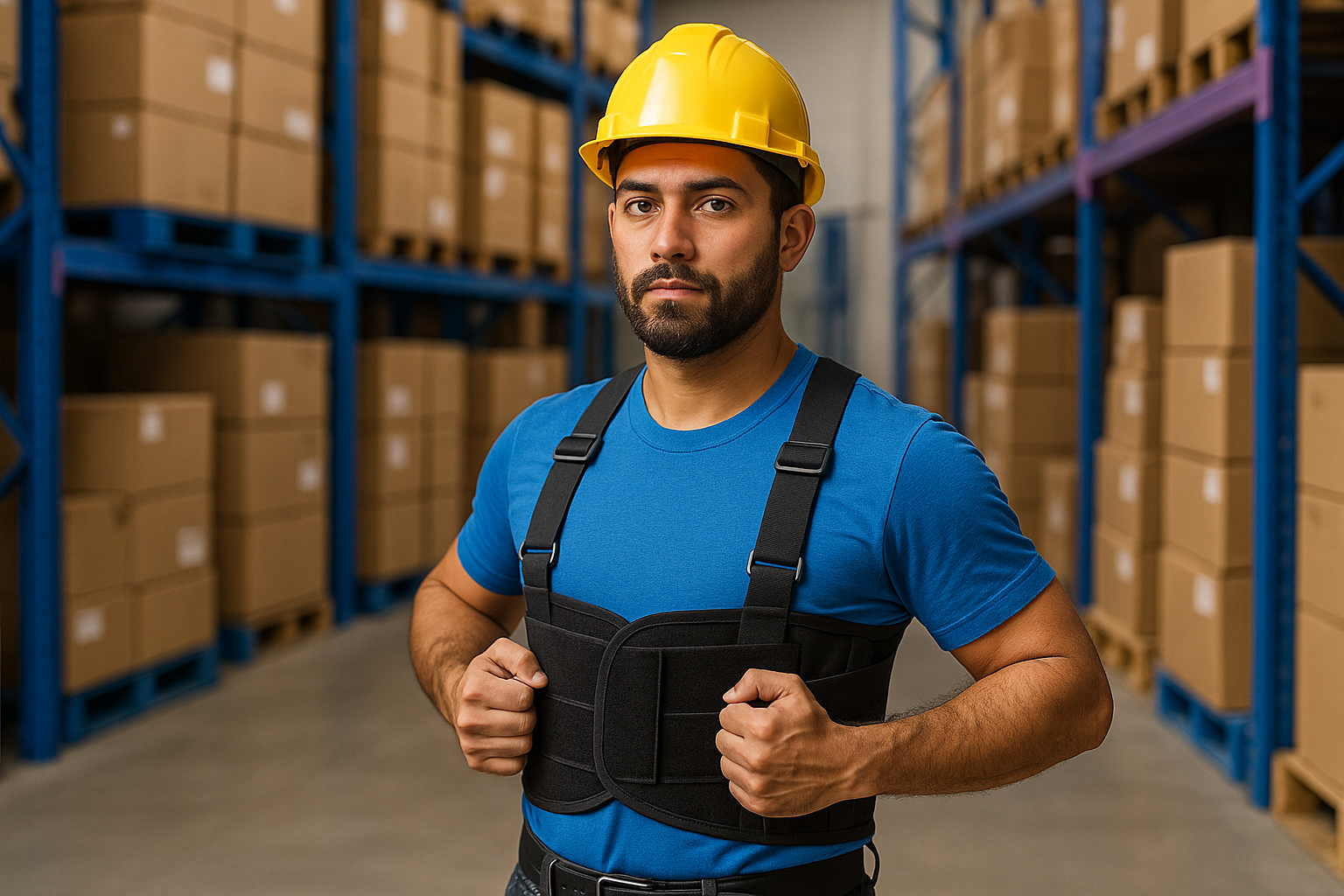
5 Essential Back Braces for Warehouse Workers
5 Essential Back Braces for Warehouse Workers
A warehouse worker lifting 50-pound boxes eight hours a day needs a different back brace than one doing repetitive bending at a conveyor belt. Wrong gear means pain. Right gear means you finish the shift and come back tomorrow. This guide cuts through the noise and matches the right support to the right task.
Why Back Braces Matter in Warehouse Work
Back injuries are one of the most costly occupational hazards in warehousing. They sideline workers, drain productivity, and pile up expenses for employers. A back brace is not a comfort accessory. It is protective equipment — the same category as steel-toed boots and high-visibility vests.
Warehouse work produces predictable injury patterns: muscle strains from heavy loads, repetitive motion damage from constant bending, and postural breakdown from long shifts. The right brace addresses the right pattern. That specificity is what separates workers who stay healthy from those who end up on modified duty.
Brace Type 1: Heavy Lifting Support (for high-load tasks)
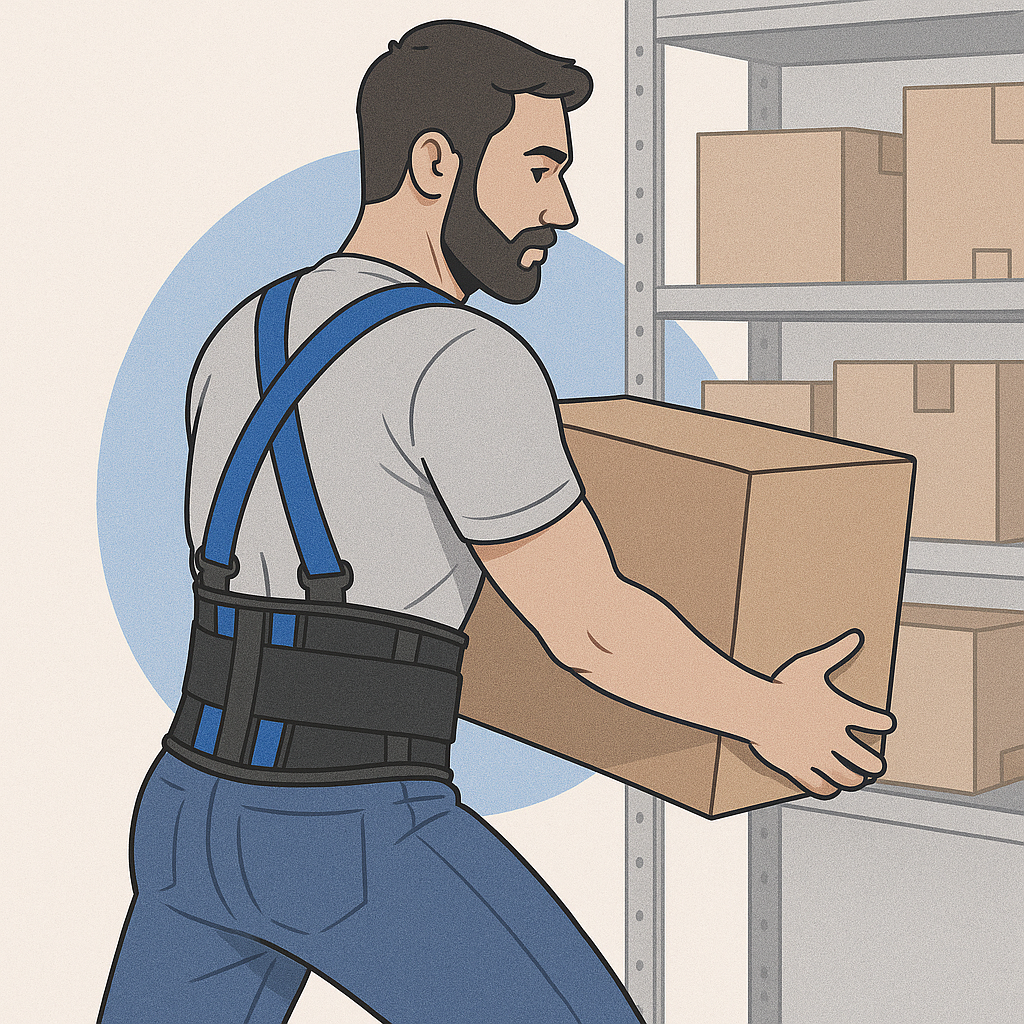
If you are regularly moving loads above 50 pounds, you need a heavy lifting support brace. These are built to stabilize the spine under load — reinforced panels, adjustable straps, and breathable materials that hold up across a full shift. They are engineered for one purpose: keeping your lumbar spine in a safe position when the weight gets serious.
Know the limits. A brace stabilizes. It does not replace proper lifting mechanics. Use it as part of a complete safety approach, not as a substitute for technique. The brace does its job when you do yours.
Brace Type 2: Lumbar Support for Repetitive Bending
Picking, packing, sorting — tasks that put you in constant flexion demand a different tool. A lumbar support brace protects the lower back without locking you down. You need to move. The brace needs to move with you while keeping your spine in a safe position through hundreds of repetitions.
Look for adjustable tension and flexible materials. Fit matters more than brand here. A lumbar brace that shifts or bunches during movement is worse than no brace at all. Try before you commit.
Brace Type 3: Posture Correction for Long Shifts
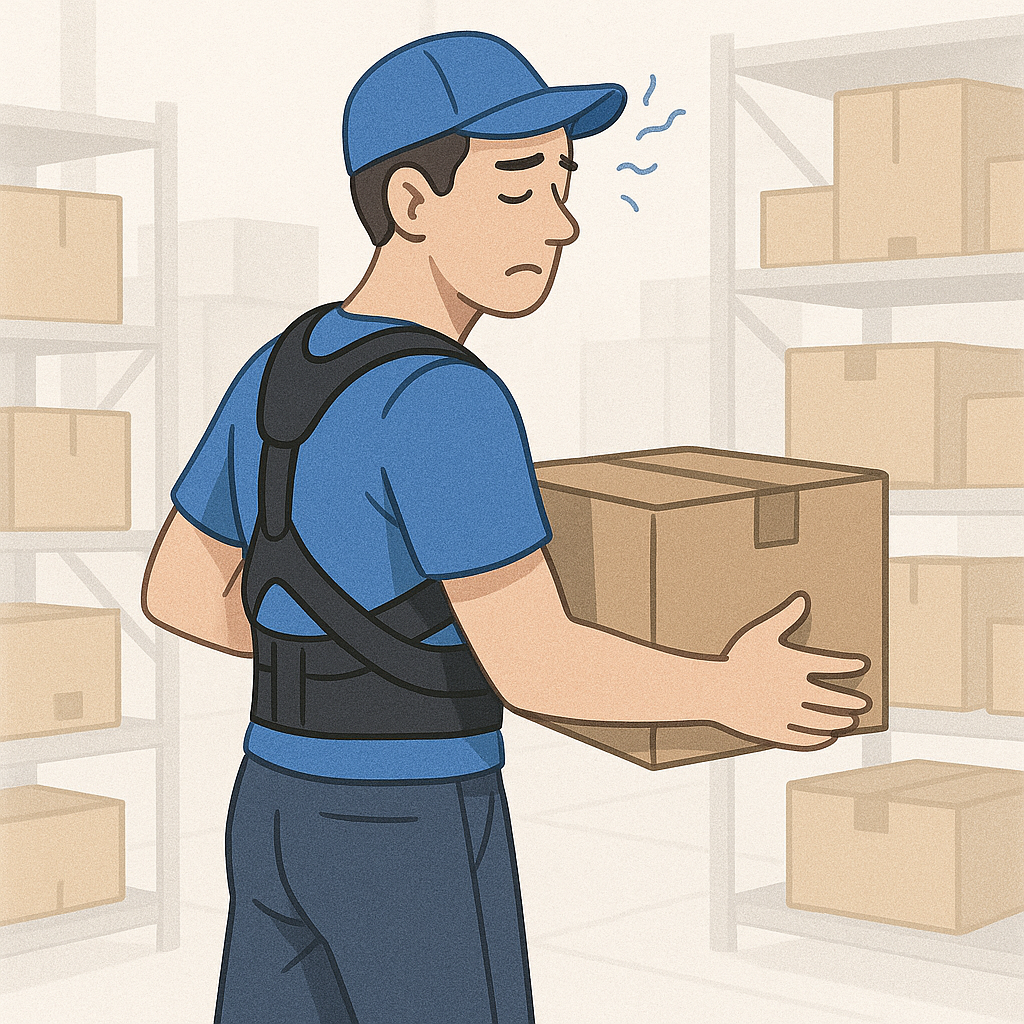
Eight hours in, fatigue wins. Your shoulders round, your lower back collapses, and pain sets in before the shift ends. A posture correction brace interrupts that pattern. It applies gentle, consistent feedback that cues your body back into alignment before the damage accumulates.
Expect an adjustment period. Your muscles are not used to holding the correct position. Think of this brace as a training tool — it builds the muscle memory that eventually lets you hold good posture without it. Use it consistently and the results compound over time.
Brace Type 4: Compression Wrap for Acute Pain
You already have an injury. You need to keep working while your body recovers. A compression wrap delivers targeted pressure to the affected area, reducing inflammation and dulling pain enough to get through the day.
This is short-term support, not a long-term solution. Compression wraps manage symptoms. They do not fix the underlying problem. If the pain persists, see a healthcare provider. Do not let short-term relief become a reason to delay necessary treatment.
Brace Type 5: Hybrid/Adjustable for Variable Tasks
Your role shifts throughout the day — heavy lifts in the morning, picking runs in the afternoon, extended standing at the end of the shift. A hybrid or adjustable brace is built for that reality. It combines lifting support and lumbar stabilization in one unit, so you are not swapping gear between tasks.
The trade-off is specialization. A hybrid brace does not outperform a dedicated lifting brace on maximum-load days or a dedicated lumbar brace during high-repetition tasks. Weigh the convenience against the specific demands of your role before deciding.
How to Choose the Right Brace for Your Role
The right brace starts with an honest assessment of what your body actually does all day. Work through these steps before you buy:
- Identify your primary daily tasks — heavy lifting, repetitive bending, extended standing, or a mix.
- Confirm the brace offers the right support level without restricting the movement your job requires.
- Try multiple models. Fit is non-negotiable. A brace that does not stay in place does not protect you.
- If you have existing back issues or are unsure which type fits your situation, consult a healthcare provider before purchasing.
Brace Care and Realistic Expectations
A back brace is one tool in a larger system. It does not replace proper lifting mechanics, ergonomic adjustments, or adequate rest. Treat it like any piece of protective equipment — clean it regularly, inspect it for wear, and replace it when the support degrades. Most braces have a finite lifespan. A worn-out brace is not a functional brace.
Stack the brace with the right habits. Proper technique, smart ergonomics, and scheduled breaks compound its effectiveness. No single piece of gear carries the whole load.
Identify your primary job task above, then confirm fit and sizing for your brace type before ordering. The right back brace matched to your specific demands is the difference between finishing the shift strong and sitting on the sideline.
Key Performance Indicators (KPIs) for Evaluating Back Brace Effectiveness
Introducing back braces across a warehouse operation is an investment. Track these KPIs to know whether it is paying off:
- Reduction in Injury Rates: Compare back-related injury reports before and after implementation. A measurable drop is the clearest signal the program is working.
- Employee Satisfaction Surveys: Regular feedback from workers reveals whether braces are actually being worn and whether they are delivering perceived support. Compliance drives results.
- Absenteeism Rates: Track absences tied to back pain. Fewer missed days signal that workers are staying healthier and staying on the floor.
- Productivity Metrics: Measure task speed and completion rates. Workers in less pain maintain focus longer and move more efficiently through their shifts.
- Cost-Benefit Analysis: Stack brace costs against savings from reduced injury claims, lower medical expenses, and recovered work hours. The numbers tell the real story.
Case Study: Successful Implementation of Back Braces in a Warehouse Environment
One large distribution center was bleeding productivity through high rates of back injuries. Workers were going down, shifts were short-staffed, and injury costs were climbing. Management decided to build a structured brace program instead of waiting for the problem to solve itself.
They started with a thorough assessment of warehouse tasks and the physical demands placed on each role. Heavy lifting support and lumbar support braces were selected based on task data, not guesswork. Workers received hands-on training covering proper use and maintenance before a single brace hit the floor.
Six months later, the numbers were clear: a 30% reduction in back injuries and a 15% increase in overall productivity. Workers reported greater comfort and confidence in their daily tasks. The workforce was more motivated because it was less beaten up. This case confirms what the data consistently shows — the right brace, deployed correctly and tracked rigorously, delivers returns that justify the investment.