
Daily Stretching Routines for Logistics Professionals
Daily Stretching Routines for Logistics Professionals
Logistics work does predictable damage to the body. Shortened hip flexors. Rounded shoulders. A lower back locked in chronic tension. These aren't random complaints — they are the direct result of how this job is structured. This guide gives you targeted routines built around those exact patterns, not generic advice copied from an office wellness poster.
Why Generic Stretching Fails Logistics Workers
Standard stretching programs are built for people sitting at desks. They miss the point entirely for logistics workers. Hours in a truck cab compress the hip flexors into a shortened state. Loading and unloading pull the shoulders forward. Repetitive bending loads the lower back shift after shift. Those patterns demand a specific response. A routine designed for someone staring at a monitor all day will not fix what your job is doing to your body.
The 5-Minute Pre-Shift Routine: Prep Your Body for the Day
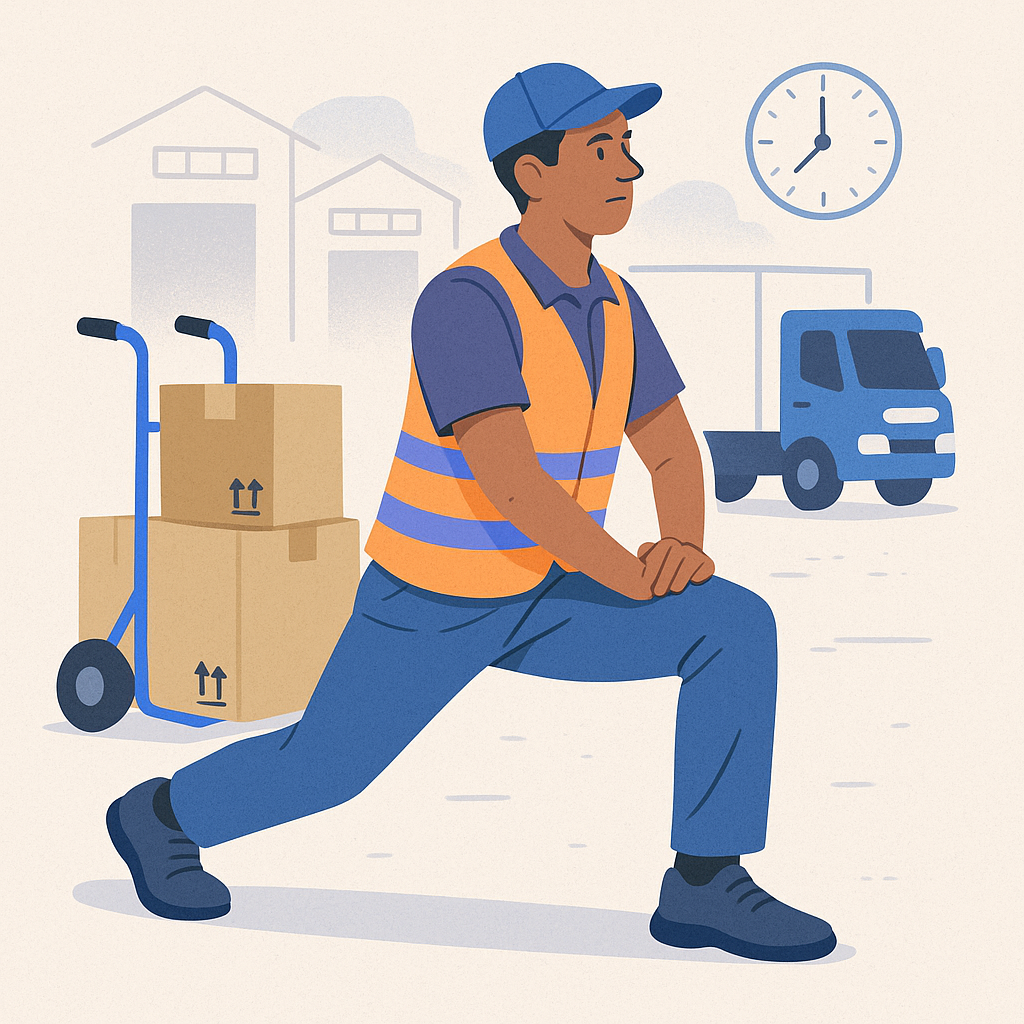
Five minutes before your shift starts is enough to change how your body handles the next eight hours. No equipment. No change of clothes. Just five deliberate moves:
- Hip Flexor Opener: Stand with one foot forward and the other back, pressing your hips forward to open the front of the hip.
- Thoracic Spine Rotation: Clasp your hands and rotate your upper body side to side from a standing position. Wake up the spine before it takes a beating.
- Shoulder Mobility Drill: Roll your shoulders forward and back. Release the tension before it builds.
- Glute Activation: A few controlled squats. Your glutes protect your lower back — activate them early.
- Spinal Decompression: Reach overhead and elongate your spine. Counteract the compression that's coming.
Do this before every shift. Consistency here compounds over weeks and months.
Mid-Shift Breaks: Stretches You Can Do in Work Clothes
Your breaks are not wasted time. They are recovery windows. Use them. Here are four stretches that require nothing but a doorway and two minutes:
- Standing Quad Stretch: Hold one ankle behind you to stretch the front of the thigh. Balance on the other foot.
- Doorway Chest Opener: Place your forearms on either side of a doorframe and step forward. Open the chest and pull the shoulders back where they belong.
- Standing Hamstring Reach: Hinge at the hips and reach toward your toes. Decompress the back of the legs.
- Neck and Shoulder Release: Tilt your head side to side, applying gentle hand pressure for a deeper stretch.
Every couple of hours, tension accumulates. These four moves interrupt that cycle before it locks in.
Post-Shift Routine: Undoing the Day's Damage
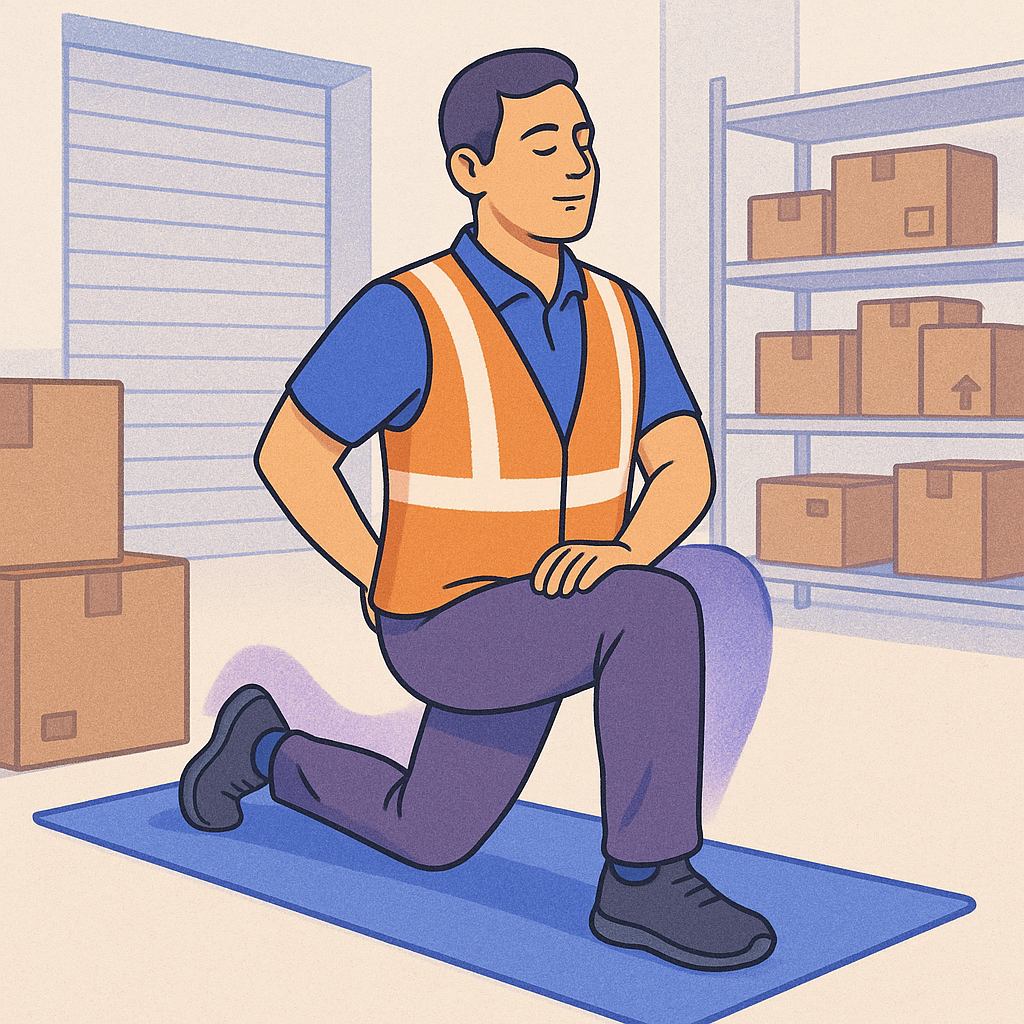
The shift is done. Now you undo what it did. This is where longer holds and deeper work pay off. Your muscles are warm. Use that.
- Hip Flexor and Psoas Release: Kneel with one knee down and the other foot forward. Press your hips forward and hold. This is the most important stretch in your arsenal after a driving shift.
- Spinal Twist Series: Sit or lie on your back and rotate your torso to each side. Let the spine decompress.
- Hamstring and Calf Lengthening: Sit with legs extended and reach forward. Hold the position. Don't bounce.
- Shoulder and Chest Opening: Lie on your back with arms extended to the sides. Roll gently from side to side.
Hold each stretch 30 seconds to a full minute. Breathe slowly. This is where recovery actually happens.
Stretching on Heavy Lifting Days vs. Light Days
Not every shift is the same. Your routine shouldn't be either. Adjust based on what the day actually demanded:
- High-Volume Days: Prioritize hip and lower back stretches. Heavy lifting compresses those areas most. Give them the most time.
- Light Days: Pull back on intensity. Maintenance work, not deep release. Let the body consolidate its recovery.
Track your soreness levels and range of motion week over week. The data tells you when to push and when to ease off.
Common Mistakes That Make Logistics Pain Worse
Most people stretch wrong. Here is what to stop doing immediately:
- Bouncing Instead of Holding: Ballistic movement triggers a protective reflex that tightens the muscle. Hold steady.
- Stretching Cold Muscles: Warm up first with light movement. Cold tissue tears, not lengthens.
- Ignoring Sharp Pain Signals: Discomfort is normal. Sharp pain is a stop sign. Respect the difference.
- Neglecting Breathing: Shallow breathing keeps the nervous system in a guarded state. Deep breathing unlocks the stretch.
- Skipping the Routine When Pain is Worst: That is exactly when consistency matters most. Don't negotiate with discomfort by doing nothing.
Build these routines into your daily schedule and the physical cost of logistics work drops measurably. This is not about feeling good in the moment. It is an investment in how long your body stays functional on the job.
For more tools built around the physical demands of this work, explore BackGuard Relief for targeted health and wellness solutions.
Start the pre-shift routine tomorrow morning. Add the post-shift work within the week. Let the results speak for themselves.
Integrating Stretching into a Busy Logistics Schedule
Time is the real constraint. You are not going to carve out a dedicated hour. You don't need to. The goal is embedding movement into the gaps that already exist in your day:
- Micro-Stretch Sessions: Waiting on a colleague or a shipment? That is 30 seconds of hip flexor work. Use it.
- Set Reminders: Put hourly alerts on your phone or watch. The reminder removes the decision. You just do it.
- Stretching Stations: Pick two or three spots at your facility where stretching makes sense. Anchor the habit to a location.
- Team Stretch Breaks: Get your crew involved. Group accountability raises follow-through rates and builds a culture that takes physical maintenance seriously.
Checklist for an Effective Stretching Routine
Before you start, run through this checklist. It keeps the routine safe and productive:
- Warm-Up First: Light movement before any stretching. Cold muscles do not respond well to being pulled.
- Focus on Form: Sloppy form produces sloppy results. Maintain posture throughout each movement.
- Breathe Deeply: Every exhale is an opportunity to release a little more tension. Use it deliberately.
- Listen to Your Body: Discomfort is part of the process. Sharp pain is not. Know the line.
- Progress Gradually: Add intensity and duration over weeks, not days. Overreach and you set yourself back.
FAQs About Stretching for Logistics Professionals
The same questions come up repeatedly. Here are direct answers:
- How long should each stretch be held? Minimum 20 to 30 seconds. That is the threshold where muscle fibers actually begin to lengthen.
- Is it necessary to stretch every day? Daily is ideal. A few sessions per week still produces measurable improvement in flexibility and tension reduction.
- What if I feel pain during a stretch? Stop. Sharp pain signals overstretching or injury. See a healthcare professional if it persists.
- Can stretching replace other forms of exercise? No. It complements strength training and cardio. It does not replace them.
KPIs and Metrics for Assessing Stretching Effectiveness
You cannot improve what you do not measure. Track these markers to know whether your routine is actually working:
- Range of Motion Improvement: Measure key joints regularly. Flexibility gains show up in the numbers before you feel them.
- Reduction in Pain Levels: Use a simple 1-to-10 pain scale before and after implementing the routine. Watch the trend line.
- Frequency of Stretching Sessions: Log sessions per week. Consistency is the variable that determines outcomes.
- Time Spent Stretching: Monitor session duration. Balance thoroughness against the time you actually have available.
Case Study: Stretching Success in a Logistics Team
One logistics company built a structured stretching program across its entire workforce. The results were concrete: a 30% reduction in reported musculoskeletal complaints within six months. The approach combined daily group stretches with individualized guidance tailored to each worker's specific strain patterns. The outcome was not just fewer injuries. It was a measurable lift in productivity and a workforce that stayed on the floor longer without breaking down. That is what a systematic, consistently applied routine produces at scale.