The Right Way to Lift: Techniques Every Warehouse Worker Should Know
The Right Way to Lift: Techniques Every Warehouse Worker Should Know
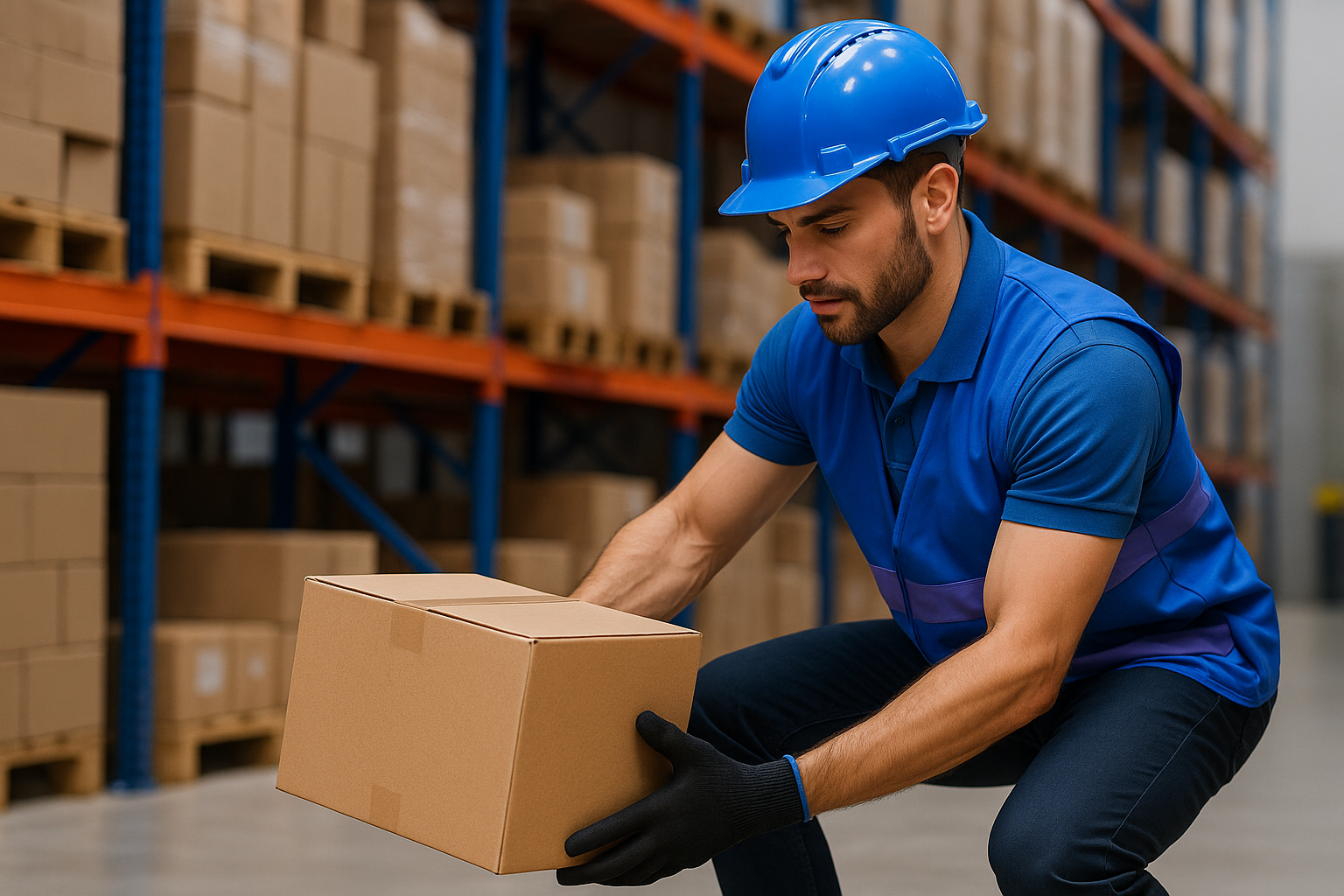
One bad lift can herniate a disc before you feel a thing. By the time the pain arrives, the damage is done. For warehouse workers, proper lifting technique is not about comfort at the end of a shift. It is about keeping your career intact. This guide gives you the mechanics, the habits, and the physical foundation to protect your spine every single time you move a load.
Why Warehouse Workers Blow Out Their Backs
Most back injuries are not dramatic. They are quiet. Vertebrae sit separated by discs that absorb shock and distribute load. Lift wrong repeatedly, and those discs and the ligaments around them accumulate stress. The result is either an acute injury — a herniated disc that drops you mid-shift — or chronic degeneration that compounds silently over years of bad form.
That distinction matters. Acute injuries announce themselves. Chronic damage does not. It builds invisibly with every rounded back, every twisted torso, every load pulled too far from your center. You will not feel the tipping point coming. That is exactly why consistent technique is non-negotiable, not just on hard days, but on every lift.
The Mechanics of a Safe Lift
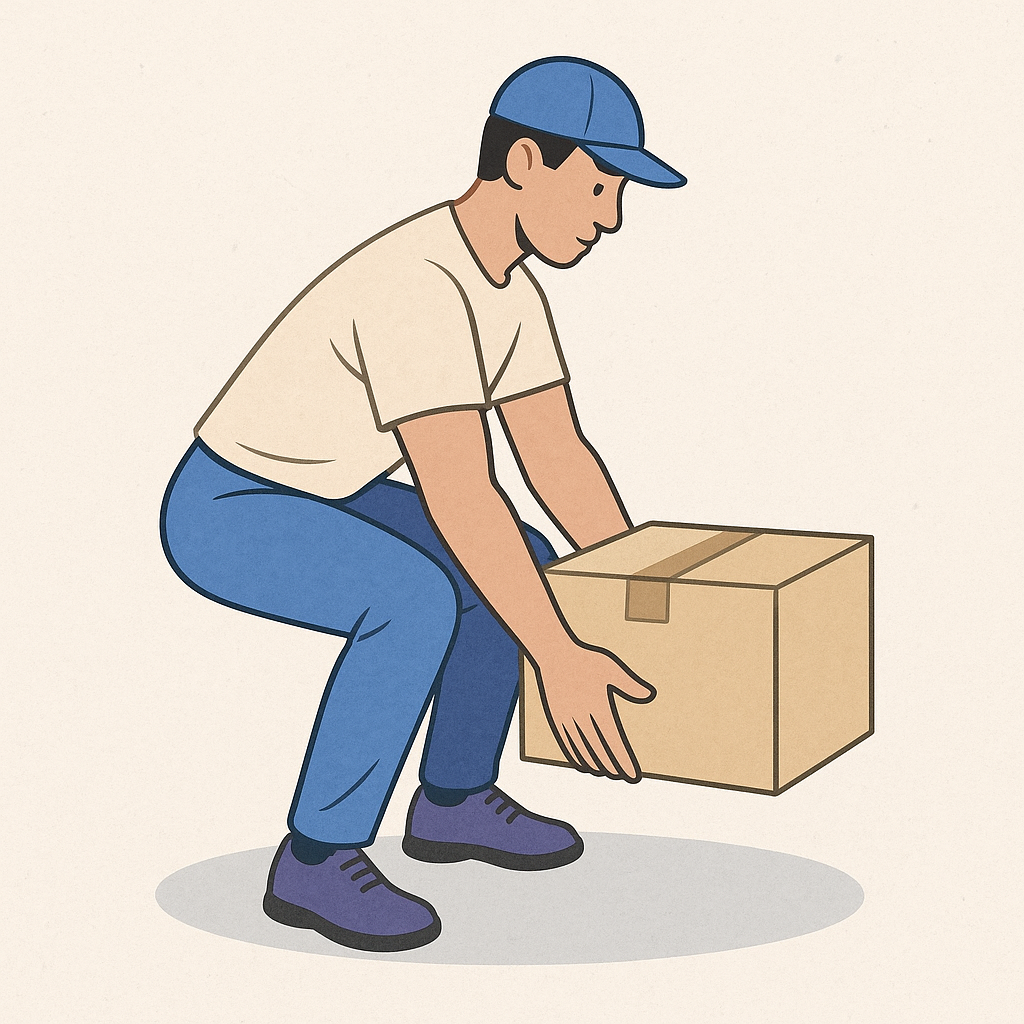
A safe lift is a coordinated sequence. Every element works together. Skip one step and the whole system breaks down.
- Foot Placement and Stance Width: Set your feet shoulder-width apart before you touch the load. Toes point slightly outward, tracking with your knees. This is your foundation. Get it wrong and nothing else matters.
- Spine Neutrality: Keep the natural curve of your back intact. No excessive arch. No rounding. Neutral spine means the discs carry load the way they were designed to — evenly, not at an angle.
- Core Engagement: Before the lift begins, brace your core. Think of it as creating internal pressure that stabilizes your spine and distributes the load across your entire trunk, not just your lower back.
- Hip Hinge vs. Squat Mechanics: Lighter loads call for a hip hinge — bend at the hips, keep the back flat. Heavier loads require a squat — bend at both knees and hips, keeping your knees behind your toes. Know which tool fits the job.
Execute these steps in sequence and you lift safely. Cut corners and you are borrowing against your spine's future.
Common Lifting Mistakes That Wreck Your Spine
Experience does not make you immune to bad habits. It can make them harder to see. Here are the mistakes that cause the most damage:
- Rounding the Lower Back: This is the most common and most destructive error. It concentrates force directly on the discs. Keep your back straight on every lift, regardless of how light the load feels.
- Twisting While Loaded: Rotating your torso while holding weight shears the spinal discs. Turn your whole body — feet first — instead of pivoting at the waist.
- Lifting with Arms Instead of Legs: Your legs generate far more force than your arms and are built to handle it. Bend your knees, drive through your heels, and let your legs do the work.
- Reaching Too Far from Your Body: Distance multiplies the effective weight of any load. Keep it close to your center of gravity. The farther the load drifts from your body, the harder your spine works to compensate.
Eliminating these four mistakes alone will dramatically reduce your injury risk over a career.
How to Lift Awkward and Oversize Items
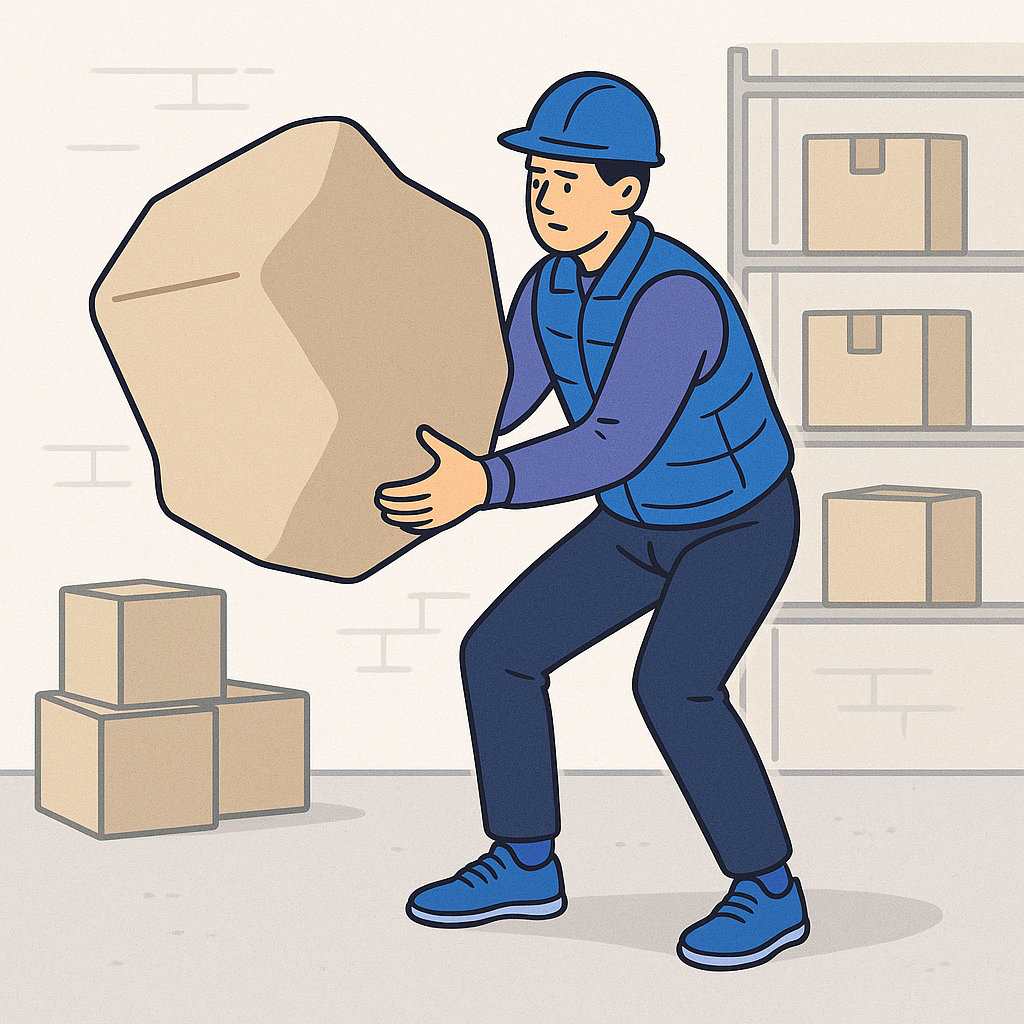
Not every load is a clean rectangle. Warehouse work means irregular shapes, shifting weight, and items that fight you. Here is how you handle them:
- Adjusting Stance for Irregular Shapes: Widen your stance to match the item's footprint. The goal is stability before the load leaves the ground. If you cannot find a stable position, you are not ready to lift.
- When to Ask for Help or Use Equipment: If a load is too heavy or too awkward to control safely, that is not a judgment call — it is a rule. Use a dolly, a pallet jack, or a second set of hands. Equipment exists for exactly this reason.
- Carrying vs. Lifting for Different Distances: Short distances may allow you to carry. Longer distances demand a cart or other aid. Fatigue degrades form. Degraded form causes injuries. Do not let distance turn a safe lift into a dangerous one.
Adapting your approach to the specific load in front of you is a skill. Build it deliberately.
Building Strength That Protects Your Back
Technique is the foundation. Strength is what makes it sustainable. Build the right physical base and your body becomes a system that supports safe lifting automatically.
- Core Stability Work: Planks and bridges are not glamorous. They are effective. A strong core creates the internal pressure that shields your spine under load. Do them consistently.
- Posterior Chain Strength: Your back, glutes, and hamstrings are the engine of every safe lift. Deadlifts and back extensions build exactly the strength you need. A weak posterior chain is a liability on the warehouse floor.
- Exercises That Fit into a Warehouse Schedule: Bodyweight squats and lunges can be done during breaks. You do not need a gym. You need consistency. Ten minutes of targeted movement repeated daily compounds into real protection over months.
Strength training is not separate from injury prevention. It is injury prevention.
Mastering proper lifting technique is the difference between a long career and one cut short by a preventable injury. Follow the mechanics in this guide, eliminate the common mistakes, and build the physical foundation that makes safe lifting repeatable. It is not just about lifting with your legs. It is about lifting smart, every time, without exception.
For additional guidance on occupational safety and spinal health, explore the resources available through BackGuard Relief to strengthen your workplace safety practices.
Implementing Ergonomic Solutions in the Warehouse
Individual technique only goes so far. The environment you work in either supports safe lifting or works against it. Ergonomic solutions close the gap between what workers know and what the physical space allows them to do.
Ergonomic Equipment and Tools
The right equipment removes the conditions that cause injuries in the first place:
- Height-Adjustable Workstations: When workers can set their own surface height, they eliminate the awkward bending and reaching that accumulates into chronic damage over time.
- Ergonomic Lifting Aids: Lift tables, pallet jacks, and adjustable carts handle the mechanical work that should never fall entirely on the human spine. Use them. That is what they are for.
- Supportive Footwear: Proper arch support and cushioning reduce the stress transmitted up through the lower limbs and into the spine during long shifts. It is a small investment with compounding returns.
Better equipment does not just reduce injuries. It reduces fatigue, and reduced fatigue means better form at hour eight than at hour one.
Layout and Workflow Optimization
How a warehouse is arranged determines how much unnecessary strain workers absorb every day:
- Strategic Placement of Heavy Items: Store heavy loads at waist height. Eliminating the need to bend low or reach high on heavy items removes two of the most dangerous lifting positions from the equation entirely.
- Clear Pathways: Cluttered aisles create trip hazards and force workers to compensate their posture while carrying loads. Clear paths are not a housekeeping issue — they are a spinal health issue.
- Efficient Workflow Design: Minimize repetitive lifting sequences and unnecessary movement. Cumulative stress injuries are built one redundant motion at a time. Design the workflow to eliminate them before they accumulate.
A well-designed warehouse layout is a safety system. Treat it like one.
Training and Continuous Education
Knowledge without reinforcement fades. A single onboarding session does not build a culture of safe lifting. Sustained education does.
- Initial Training Programs: Every new worker needs comprehensive instruction on lifting mechanics, ergonomic practices, and equipment use before they handle their first load. No exceptions.
- Ongoing Safety Workshops: Regular workshops keep safe practices sharp and introduce workers to updated equipment or revised procedures. Repetition is not redundancy — it is how habits get built.
- Feedback and Improvement Sessions: The workers on the floor see what supervisors miss. Create structured opportunities for them to report what is not working. The best safety improvements come from the people doing the lifting.
Continuous education signals that safety is a standing priority, not a box checked during onboarding.
Monitoring and Evaluating Lifting Practices
You cannot improve what you do not measure. Active monitoring turns safety from a policy into a practice.
- Routine Observations: Supervisors who regularly watch lifting activity catch form breakdowns before they become injuries. Observation is not surveillance — it is accountability that protects workers.
- Incident Analysis: Every lifting-related injury or near-miss contains information. Analyze root causes systematically. The same conditions that caused one injury will cause another if nothing changes.
- Performance Metrics: Track injury frequency, back-pain-related absenteeism, and productivity trends. These numbers tell you whether your safety systems are working or just existing on paper.
A responsive safety program adapts based on data. Build the feedback loop and let it run continuously.
Advanced Lifting Techniques for Specialized Tasks
Some lifts require more than standard mechanics. When the task is complex, your approach needs to match it.
- Team Lifting Coordination: Two people lifting without communication is more dangerous than one person lifting alone. Establish a clear lead, agree on the count, and move in sync. Synchronized movement distributes load evenly and eliminates the sudden shifts that cause acute injuries.
- Utilizing Leverage and Pivot Points: Identify natural balance points on irregular items before you lift. Using leverage correctly reduces the raw force required and gives you more control throughout the movement.
Advanced technique is not reserved for elite athletes. It is available to any worker willing to think before they lift.