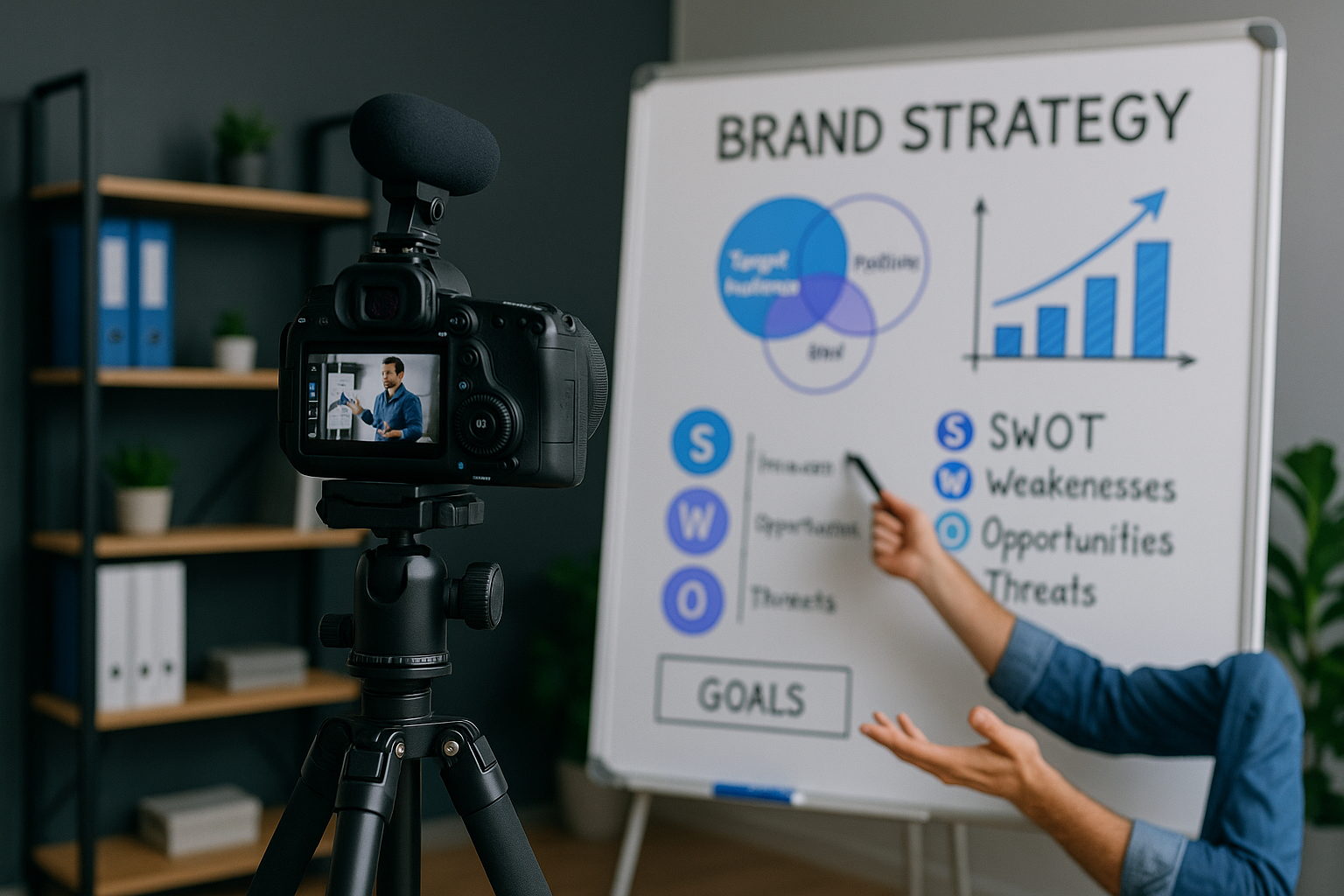
Behind the Scenes: Crafting a Winning Brand Strategy
Behind the Scenes: Crafting a Winning Brand Strategy
Behind the Scenes: Crafting a Brand Strategy That Actually Holds
A brand strategy is not a logo. It is not a tagline. It is a repeatable system for making your audience trust you before they ever hand you money. The silent operators who build durable online businesses understand this. They do not chase aesthetics. They build frameworks, test them against real data, and let compounding do the loud talking. This guide shows you exactly how to do that.
Step 1: Understand Your Market and Audience

Before you build anything, you need to know the terrain. That means real market research — not assumptions. Tools like SEMrush and Google Analytics give you hard data on what your audience is searching for, where they drop off, and what gaps your competitors are leaving open.
- Market Research: Use SEMrush to map competitor positioning and surface unmet demand in your niche.
- Audience Insights: Google Analytics reveals the demographics, behaviors, and organic traffic patterns that tell you who is actually showing up.
This is your foundation. Get it wrong and every step after it drifts. Revisit it regularly — markets shift, and the silent operator who tracks those shifts early wins the positioning game.
Step 2: Define Your Brand's Core Values and Mission

Once you know your market, you need to know what you stand for. Not in a vague, feel-good way. In a specific, decision-making way. Your core values are the filter every piece of content, every product, every partnership runs through.
- Core Values: Name the principles that govern your decisions. If you cannot use them to say no to something, they are not values — they are decoration.
- Mission Statement: One or two sentences. What you do, who you do it for, and why it matters. No corporate filler.
At The Silent Webmaster, the mission is direct: equip everyday operators to build real income systems backed by data, not hype. That single sentence shapes every editorial decision we make.
Step 3: Develop a Unique Brand Identity

Your brand identity is what your audience sees before they read a single word. Visuals, tone, consistency — these signals tell people whether you are worth their attention. Inconsistency kills trust faster than a bad product.
- Visual Identity: Use tools like Canva or hire a designer to lock in a cohesive visual system — colors, typography, imagery style — and apply it everywhere.
- Brand Voice: Develop a tone that matches your positioning. Direct. Confident. Evidence-first. Your voice should sound the same whether you are writing a headline or a follow-up email.
Authenticity is not a buzzword here. If your identity does not reflect the actual business you are running, your audience will feel the gap. Build in silence, but build with intention.
Step 4: Craft a Content Strategy

Content is how your brand earns authority before the sale. Done right, it drives organic traffic, builds trust, and compounds over time. Done wrong, it is just noise. The difference is a strategy built around what your audience actually needs to know.
- Content Pillars: Identify three to five core themes that map directly to your mission and your audience's real problems. Everything you publish lives inside those pillars.
- Content Calendar: Schedule your output. Consistency signals reliability — to your audience and to search engines.
At The Silent Webmaster, our pillars run through niche site portfolio building, AI content systems, and app development. Our blogs deliver actionable blueprints — not theory. Every post is designed to move the reader one step closer to a working system.
Step 5: Implement and Optimize Your Strategy

Strategy on paper means nothing. Execution is where the gap between operators widens. Deploy your brand identity across every touchpoint, run your content calendar, and measure everything from day one.
- Launch: Audit every customer-facing surface — website, social profiles, email templates — and enforce consistency before you go live.
- Analytics: Use Google Analytics and SEMrush to track what is working. Watch organic traffic trends, engagement rates, and conversion data. Let the numbers tell you where to push harder.
Optimization never stops. The silent operator does not set and forget — they run quarterly reviews, kill what is not converting, and double down on what compounds.
Conclusion: Build the System, Then Let It Run
A brand strategy is not a one-time deliverable. It is a living system that you test, refine, and improve as your market evolves. Start with the five steps above. Measure early. Adjust without ego.
When you are ready to sharpen your content systems and build a more durable online presence, visit ArcanoLabs for the tools that make it repeatable.
The operators who win do not announce it. They show results. Build the system, earn in peace, and let the data speak.
Leveraging Brand Storytelling for Deeper Engagement

Data earns attention. Story earns loyalty. The brands that hold their audience over time are not just publishing information — they are sharing a perspective, a journey, a point of view that makes the reader feel like an insider. Here is how to wire storytelling into your strategy without losing credibility.
- Identify Your Brand Narrative: Map the real story of your brand — the problems you hit, the pivots you made, the wins you earned. Ground it in your core values. Audiences can tell the difference between a manufactured origin story and a real one.
- Engage Emotionally: Emotion is not fluff. It is the mechanism that converts a reader into a repeat visitor. Humor, conviction, hard-won insight — pick the register that fits your brand and use it consistently.
- Incorporate Customer Stories: Real results from real people carry more weight than any claim you make about yourself. Testimonials and documented wins build credibility and generate content your audience trusts.
Weave storytelling through your content pillars and your brand stops being a site. It becomes a destination people return to.
Checklist: Evaluating Your Brand Strategy's Effectiveness
Run this audit on a regular cadence. Quarterly at minimum. More often if you are scaling fast.
- Brand Consistency: Are your visual identity and voice uniform across every channel and touchpoint?
- Audience Feedback: Are you actively collecting and acting on what your audience tells you — through comments, surveys, and behavior data?
- Performance Metrics: Are you tracking brand awareness, organic traffic growth, engagement rates, and conversion rates against clear benchmarks?
- Adaptability: Can your strategy absorb a market shift without falling apart? If not, it is too rigid.
- Innovation: Are you testing new formats, tools, and distribution channels before your competitors force you to?
These checkpoints keep your strategy honest. Skip them and you are operating on assumptions instead of data.
Case Study: Successful Brand Strategy in Action

Look at how Brand X, a tech startup, executed a brand strategy that drove measurable growth. They did not rely on ad spend or viral moments. They built systems.
- Community Engagement: Brand X built an owned platform where users could share ideas and flag problems directly. That feedback loop shortened their product iteration cycle and made customers feel invested in the outcome.
- Innovative Products: They shipped continuously — small improvements, documented publicly. Each release reinforced their positioning as the operator who moves while others talk.
- Transparent Communication: Regular behind-the-scenes updates and honest progress reports built the kind of trust that advertising cannot buy.
The result was compounding brand loyalty and expanding market share. Not from a single campaign — from a repeatable system executed consistently over time.
FAQs: Common Brand Strategy Questions
Direct answers to the questions operators ask most.
- How often should I revisit my brand strategy? At minimum, annually. If your market shifts or your business model changes significantly, do not wait — review immediately.
- Can a small business implement a brand strategy effectively? Yes. In fact, smaller operators have an advantage. You can move faster, stay closer to your audience, and build an authentic niche site portfolio identity that larger brands cannot replicate.
- What role does social media play in brand strategy? It is a distribution channel and a feedback mechanism. Use it to amplify content, monitor audience sentiment, and test messaging before you commit to it at scale.
These are not edge cases. They are the questions that determine whether your strategy stays sharp or goes stale.
KPIs and Metrics for Brand Strategy Success

You cannot optimize what you do not measure. Pick your KPIs before you launch, not after. Here are the numbers that matter.
- Brand Awareness: Track organic traffic growth, search engine rankings, and social reach. These tell you whether your brand is expanding its footprint without paid amplification.
- Customer Engagement: Monitor comments, shares, time-on-page, and return visit rates. High engagement means your content is earning attention, not just receiving it.
- Conversion Rates: Measure the percentage of visitors who take a defined action — email opt-ins, purchases, trial signups. This is where brand trust converts to revenue.
- Customer Retention: Repeat purchase rates and subscriber retention reveal whether your brand is building loyalty or just generating one-time transactions.
Track these consistently. The silent operator who watches the numbers weekly spots the inflection points early — and moves before the window closes.