
What a $200K Site Exit Actually Looks Like
What a $200K Site Exit Actually Looks Like
A website pulls in traffic while you sleep. Month after month it compounds. Then one day you sell it for $200,000. That's not a hypothetical — it's a documented outcome for solo operators who built the right system and let it run. Here's exactly what the receipts look like, and how the mechanics work.
The Anatomy of a $200K Site Exit
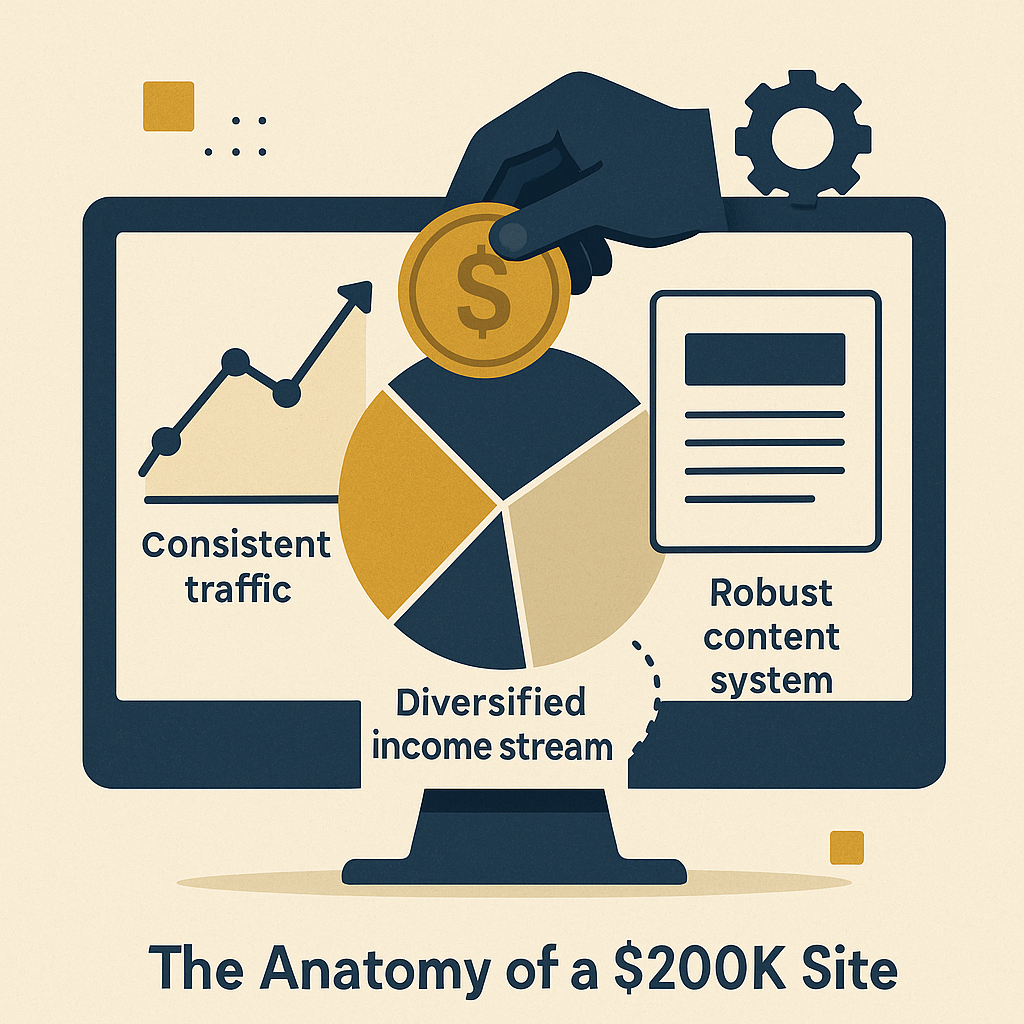
A site worth $200,000 at exit is built on three things: consistent traffic, more than one income stream, and a content system that doesn't need you in it every day. The real answer isn't a single clever move — it's owned traffic that compounds over time, not rented attention you have to keep paying for.
1. Consistent Traffic
For a site to clear $200K at sale, you're looking at tens of thousands of monthly visitors at minimum — often more. That traffic has to be owned, not borrowed. You build it through SEO and content marketing, with social media as a secondary layer. Buyers pay a premium for traffic that shows up whether you're working or not.
2. Diversified Income Streams
One revenue source is a liability. Sites that exit at this level typically run affiliate marketing, display ad revenue, and digital products in parallel. Using a reliable domain registrar like Namecheap keeps your infrastructure solid and your income streams uninterrupted — a detail buyers notice.
3. Robust Content System
Your content is the asset a buyer is actually purchasing. Regularly updated, high-quality content that holds its search rankings is what makes the numbers defensible. AI content automation handles the volume so you can focus on the decisions that move the needle, not the daily output.
Case Study: A Real $200K Site Exit
She made forty-four thousand dollars in a single month from a food blog. No team. No face on camera. No paid ads. Just a site that quietly pulled in six hundred and twenty thousand visitors while she slept. That's not luck and it's not a trick. It's a system. The receipts add up because the owned traffic compounds — and when she was ready to sell, buyers could see exactly how it worked.
That outcome isn't a one-off. Operators who focus on owned traffic and a systemized content strategy hit these numbers repeatedly. Expanding into an adjacent product — like a mobile app for beginners — added another layer of value before the exit. That's the real answer to pushing your site's sale price higher.
How to Build Your Own $200K Site

Step 1: Niche Selection
Pick a niche you understand that also has proven demand. Use Google Trends and keyword planners to find topics with real search volume and manageable competition. The numbers have to support the business before you write a single word.
Step 2: Content Strategy
Build a content calendar around evergreen topics — the kind that pull search traffic for years, not weeks. AI content automation keeps your publishing consistent without burning you out, so the system keeps running while you sleep.
Step 3: Monetization Plan
Stack your revenue sources from day one. Affiliate marketing, ad placements, and digital products each add a line to your income statement. Check The Silent Webmaster's blog for specifics on optimizing each one.
Step 4: Traffic Generation
SEO is where you put your energy. A steady flow of organic visitors is owned traffic — it doesn't disappear when you stop paying for it. Guest blogging and social media support the effort, but search is the foundation.
Step 5: Systemize and Scale
Once the site is producing, build the system around it. Outsource content creation, automate routine tasks, and remove yourself from the daily operations. A site that runs without you is worth more to a buyer than one that needs you in it every day. That's where the $200K number comes from.
Conclusion: Your Path to a $200K Exit
A $200K exit is a math problem, not a luck problem. Owned traffic plus multiple income streams plus a content system that compounds — those three things produce the number. Start with the resources at The Silent Webmaster's tutorials and work the steps in order.
The receipts speak for themselves. Build the system, let it run, and the exit takes care of itself.
Advanced SEO Techniques for Maximizing Traffic
Basic SEO gets you in the game. These techniques push the numbers further:
- Schema Markup: Adding schema to your pages gives search engines more context about your content. The payoff is rich snippets in results, which lift click-through rates without any additional traffic spend.
- Voice Search Optimization: Smart speakers and voice assistants now handle a real share of searches. Long-tail keywords and natural language phrasing capture that traffic before your competitors notice it.
- Video SEO: Video content indexed properly can pull search traffic on its own. Use relevant keywords in titles and descriptions, and make sure your videos load fast on mobile.
- Content Clusters: Organize your content around a pillar page that covers a broad topic, with supporting articles linking back to it. Search engines read that structure as depth, and depth improves rankings.
Essential Metrics for Evaluating Site Value
Buyers look at specific numbers. Know these before you list:
- Monthly Revenue: Steady or growing revenue over the past twelve months is the single strongest signal of site value. Flat or declining numbers lower your multiple.
- Traffic Sources: A mix of organic, direct, and referral traffic is more attractive than a site dependent on one channel. Owned traffic from multiple sources reduces buyer risk.
- User Engagement: Time on site, bounce rate, and pages per session tell buyers whether your audience actually reads what you publish. Strong engagement supports a higher asking price.
- Domain Authority: Higher domain authority signals better search positioning and makes the traffic numbers more defensible to a buyer doing due diligence.
Checklist for Preparing Your Site for Sale
Before you list, make sure these are in order:
- Financial Records: Twelve months of clean revenue and expense statements. Buyers will ask for them on day one.
- Traffic Analytics: Compiled reports showing consistent traffic patterns and growth trends over time.
- Legal Considerations: Privacy policy, terms of service, and any other compliance requirements fully in place.
- Asset Inventory: A documented list of everything included — domain names, content, social media accounts, and any tools or subscriptions tied to the site.
- Operational Procedures: A written guide covering how the site runs day to day, including content creation and maintenance. The easier the handoff, the smoother the close.
FAQs on Selling a Website
What is the best platform for selling a website?
Flippa, Empire Flippers, and FE International each handle different price ranges and offer different levels of service. Match the platform to your site's size and the kind of buyer you're looking for.
How long does it take to sell a website?
Anywhere from a few weeks to several months. The site's value, the demand in your niche, and the platform you use all affect the timeline.
How do I determine the asking price?
The standard method is a multiple of monthly net revenue — typically 20x to 40x, depending on niche stability, growth trajectory, and how clean the operations are. A site pulling $5,000 a month in a stable niche can reasonably list at $150,000 to $200,000.
What should I do after the sale?
Give the buyer a clean transition — full documentation, a handoff period, and answers to their questions. Then decide what comes next: a new site, a new system, or putting the proceeds to work somewhere else.
Disclosure: this article may contain affiliate links. If you buy through them, we may earn a small commission at no extra cost to you.