The Quiet Operator's Full Audio Stack: Yeti, MV7 & XM5
The Quiet Operator's Full Audio Stack: Yeti, MV7 & XM5
The Quiet Operator's Full Audio Stack: Yeti, MV7 & XM5
The Quiet Operator's Full Audio Stack: Yeti, MV7 & XM5
You're building a passive income system that runs while you sleep. You're juggling other work, watching your margins, and trying to put every dollar where it earns. Before the content compounds, though, you need one thing working correctly: your audio. Not the fanciest setup money can buy — the right system. Here's how the receipts break down on this three-piece stack, and exactly how to put it together.
Why Audio Quality Is the Real Answer
A creator I know pulled in just over twenty thousand dollars last year from podcasting alone. No paid ads, no team, no face on camera. She built owned traffic — an audience that came back every week because the experience was clean and consistent. The real answer to why it worked isn't her topic or her personality. It's that listeners never had a reason to leave.
Your voice is the product. Whether you're recording a podcast, producing videos, or running webinars, poor audio gives people an easy exit. A solid audio stack removes that exit. It's not glamorous, but the numbers are clear: quality audio keeps listeners around longer, and longer listeners compound into a bigger, more loyal audience over time.
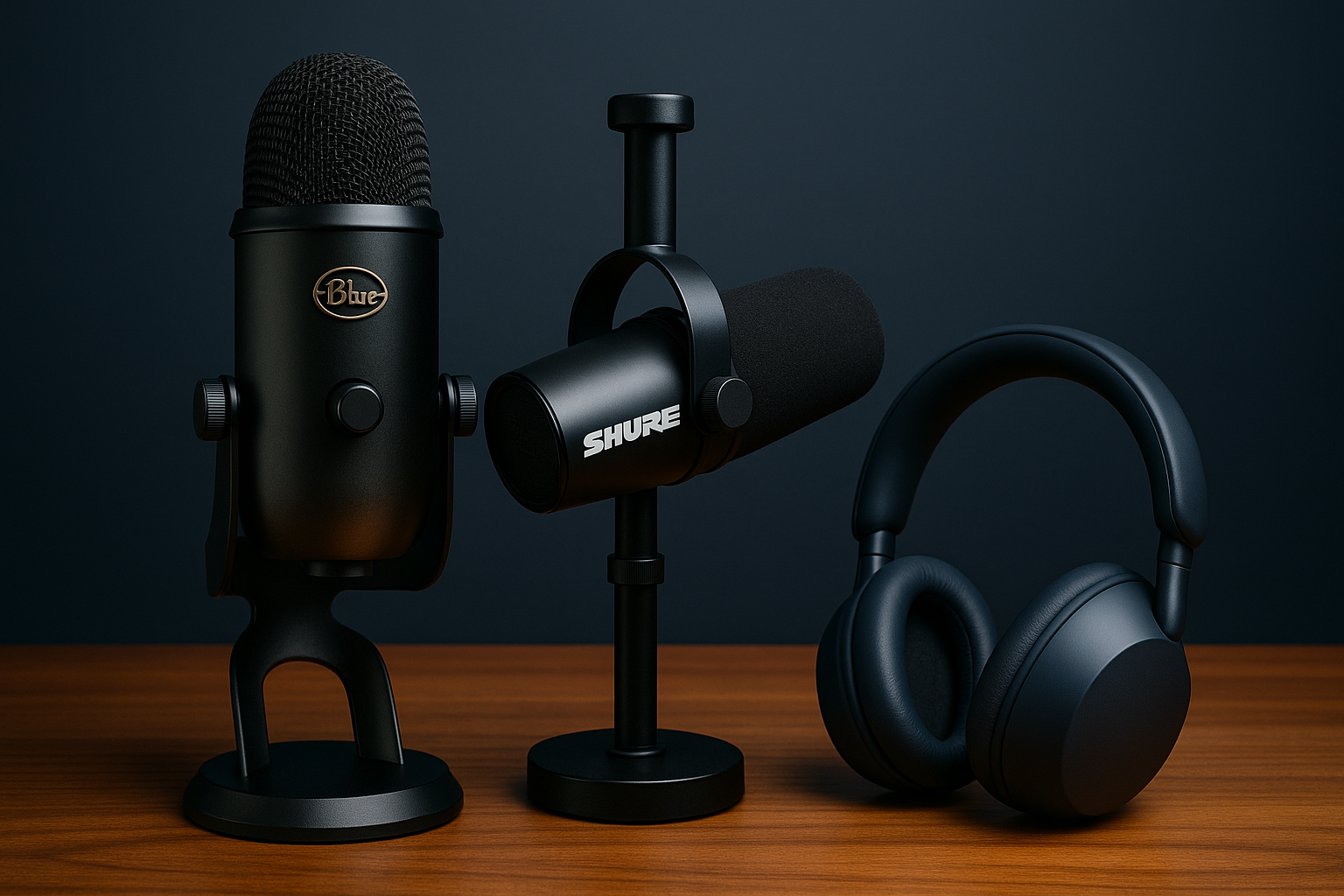
The Core Components: Blue Yeti, Shure MV7, and Sony WH-1000XM5
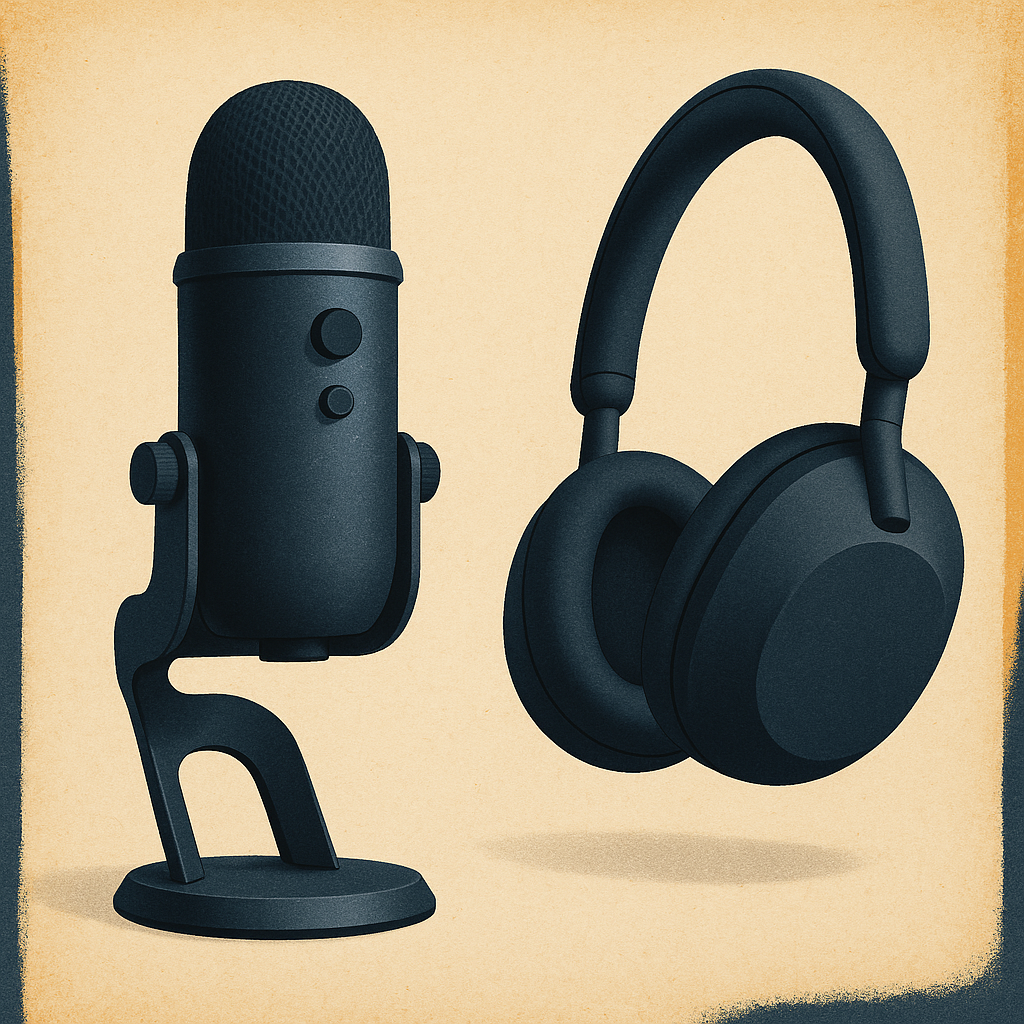
Three pieces. Each one chosen because it earns its place in the system without requiring you to become a sound engineer to use it.
Blue Yeti Microphone
The Blue Yeti Microphone is where most operators start, and for good reason. It plugs straight into USB, handles multiple polar patterns, and delivers clean, studio-level sound whether you're recording solo or sitting across from a guest. It's priced to make sense at the beginning, and it doesn't ask much of you technically.
Shure MV7
When you're ready to scale, the Shure MV7 is the next move. It runs both USB and XLR, so it grows with your setup rather than forcing you to replace it. The touch panel controls are straightforward, and the built-in headphone monitoring means you hear exactly what your audience will hear — in real time.
Sony WH-1000XM5
The Sony WH-1000XM5 headphones close the loop. Noise cancellation this precise means you catch problems during editing that cheaper headphones let slip through. That matters because one rough episode can cost you listeners you spent months earning. The investment is higher, but the clarity and comfort hold up across long editing sessions.
Building Your System: Step-by-Step
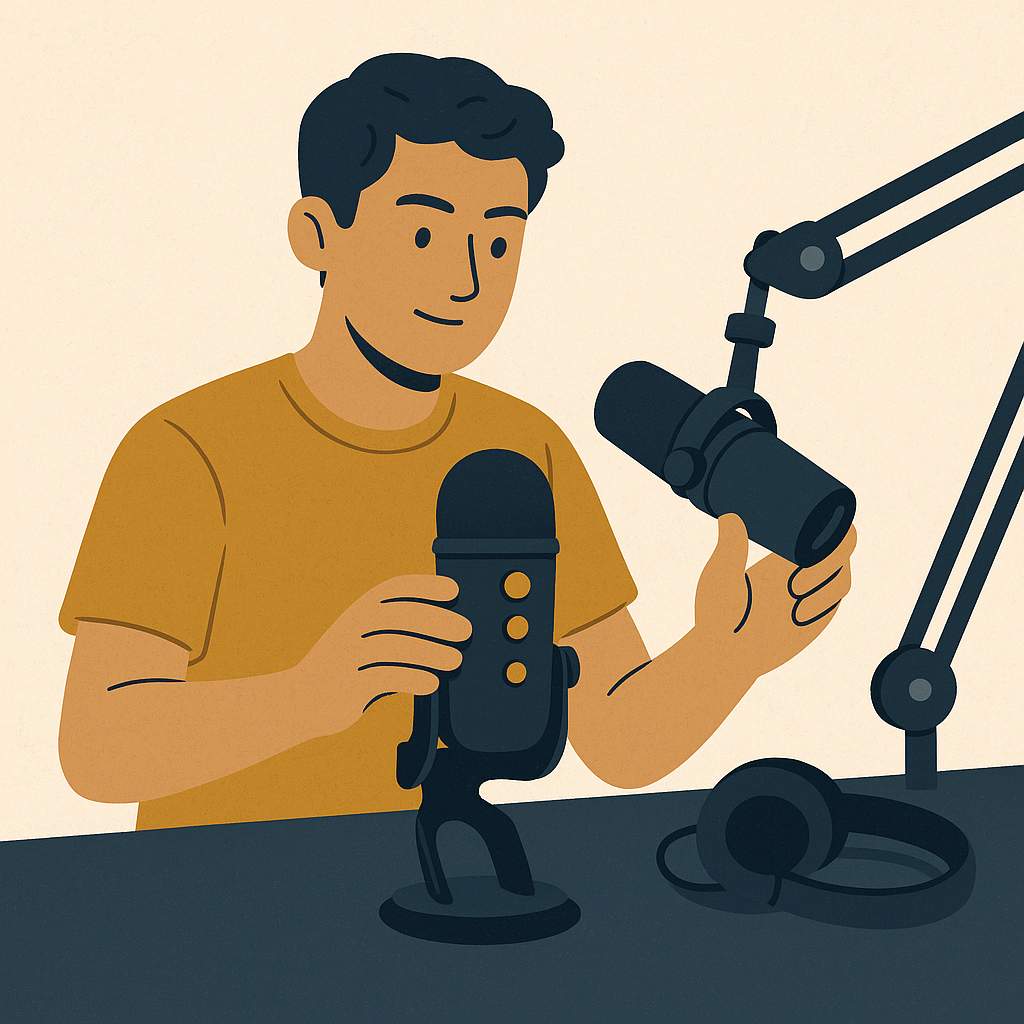
Here's how you put it together without overcomplicating it.
- Step 1: Choose Your Microphone — If you're starting out, take the Blue Yeti. If you already know you'll be adding an audio interface or mixing board down the road, the Shure MV7's dual output saves you a future purchase.
- Step 2: Optimize Your Recording Space — Find the quietest room you have. Add rugs, curtains, or a few books on shelves to break up echo. Soundproofing panels help if you're serious about the long term.
- Step 3: Connect and Configure — Plug in and use the software that ships with your mic. The Blue Yeti has a built-in control panel. The Shure MV7 pairs with the ShurePlus MOTIV app for deeper adjustments.
- Step 4: Test Your Setup — Record two or three short clips before you commit to a full session. Play them back through the Sony WH-1000XM5 and listen for hiss, room noise, or clipping.
- Step 5: Start Creating — The system only compounds if you feed it consistently. Block time on your calendar for recording and treat it like any other part of the operation.
Getting More Out of the System
The hardware is only part of it. Here's where operators pull ahead:
- Leverage AI Tools — AI-powered editing software cuts post-production time significantly. Less time editing means more time publishing, and more publishing is how the system compounds.
- Build a Mobile App — A dedicated app puts your content directly in your audience's pocket. That's owned traffic — no algorithm standing between you and your listeners. Our tutorials walk beginners through the build process step by step.
- Network with Other Creators — Find communities where people share real numbers and real processes. The right conversation can surface a workflow or a partnership that moves the needle faster than going it alone.
Conclusion: Build the System, Then Let It Run
A quality audio stack isn't a purchase — it's the foundation of a system that works while you sleep. Pick the right tools, set them up correctly, and then publish consistently. That's how owned traffic builds. That's how the receipts start adding up. When you're ready to go deeper, the blog has more of the mechanics laid out in plain terms.
Advanced Recording Techniques for Cleaner Audio
Once the stack is in place, small technique adjustments produce noticeable results without costing you anything extra.
Microphone Positioning
Keep the microphone six to twelve inches from your mouth and angle it slightly off-axis. That small offset reduces the hard pops from consonants like "p" and "b" without softening your voice. Spend ten minutes testing positions before your first real session — you'll hear the difference immediately.
Room Acoustics
Rugs, curtains, and full bookshelves absorb sound reflections better than most people expect. If you want tighter control, acoustic foam panels on the walls behind and beside you will get you close to a treated studio without the cost of building one.
Pop Filters and Windshields
A pop filter in front of the capsule handles plosive sounds before they hit the mic. If you ever record outdoors or near an open window, a foam windshield does the same job against moving air. Both are inexpensive and both save you cleanup time in post.
Measuring Whether the System Is Working
Three numbers tell you most of what you need to know:
- Listener Retention Rate — How long do people actually stay? High retention means the audio and the content are holding attention. A drop-off in the first two minutes usually points to an audio problem, not a content problem.
- Audience Growth — A steady week-over-week increase in subscribers tells you that new listeners are finding you and that the quality is good enough to make them stay. Flat numbers after a setup upgrade are worth investigating.
- User Feedback — Read the comments and reviews. When listeners mention sound quality unprompted, that's a signal the system is doing its job. When they don't mention it at all, that's also a good sign — it means nothing pulled them out of the experience.
Case Study: What a Better Setup Actually Produced
Jane is a freelance consultant who launched a podcast to share industry knowledge. She started with a basic headset. The audio was average, and her numbers reflected it. After she moved to the Blue Yeti and Sony WH-1000XM5, the clarity of each episode improved in a way listeners noticed without being told to notice.
Within three months, her listener base doubled. Collaboration requests and sponsorship inquiries followed. The receipts were straightforward: better audio kept people listening longer, longer listeners told other people, and the audience compounded from there. The equipment didn't create the content — it just stopped getting in the way of it.
FAQs About The Quiet Operator's Full Audio Stack
- Do I need both the Blue Yeti and Shure MV7? — No. Start with one. The Blue Yeti is the right call if you're new to this. Move to the Shure MV7 when you're ready to add an interface or want XLR flexibility built in from the start.
- How do I reduce background noise during recording? — Record in the quietest space you have, use the Sony WH-1000XM5 to monitor in real time, and run a noise gate in your editing software. Those three steps handle most of the problem.
- Is the more expensive equipment worth it? — The real answer is: it depends on how seriously you're building the system. If you're publishing consistently and growing an audience, professional audio quality pays for itself in retention and credibility. If you're still testing whether this is for you, the Blue Yeti is enough to find out.
Disclosure: this article may contain affiliate links. If you buy through them, we may earn a small commission at no extra cost to you.
Disclosure: this article may contain affiliate links. If you buy through them, we may earn a small commission at no extra cost to you.