RPM vs EPMV: Which Ad Metric Actually Pays You
RPM vs EPMV: Which Ad Metric Actually Pays You
You check your earnings dashboard in the morning and the number is higher than when you went to bed. That's owned traffic doing its job. But the metric you watch while that happens matters more than most people realize. Should you track RPM or EPMV? The real answer is in understanding exactly what each number measures — and which one actually reflects money hitting your account.
Setting the Scene: RPM and EPMV Explained
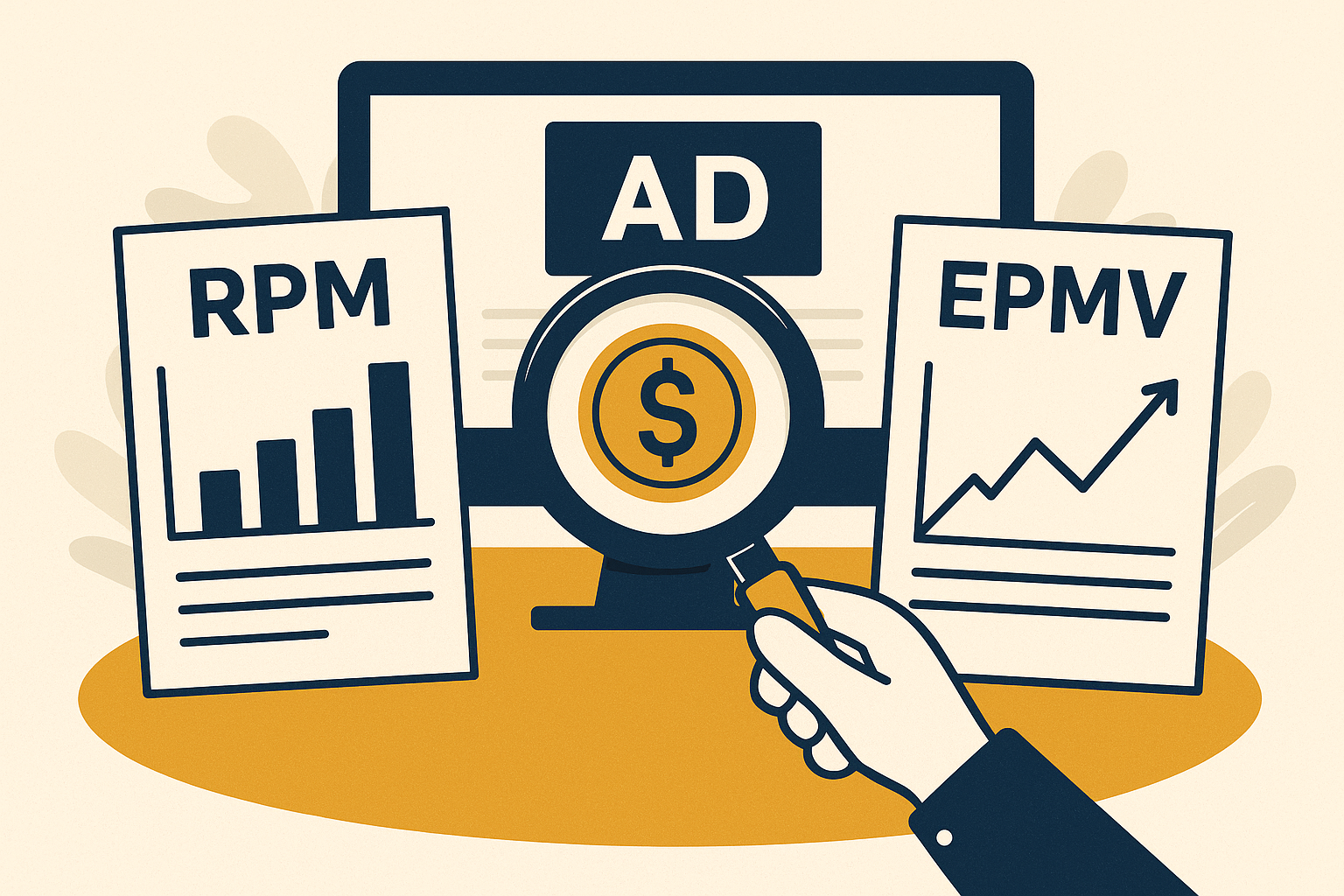
RPM — Revenue Per Mille — tells you how much you earned per 1,000 ad impressions. It's a fast read on ad performance and most networks report it by default. The problem is it only counts impressions, not visitors. EPMV — Earnings Per Mille Visitors — is the number platforms like Ezoic built their reporting around. It tracks what a visitor is worth across their entire session: every page they load, every ad they see, every click they make. That's a meaningfully different calculation, and for sites where visitors read more than one page, it's the number that tells the real story.
Numbers That Talk: RPM vs EPMV
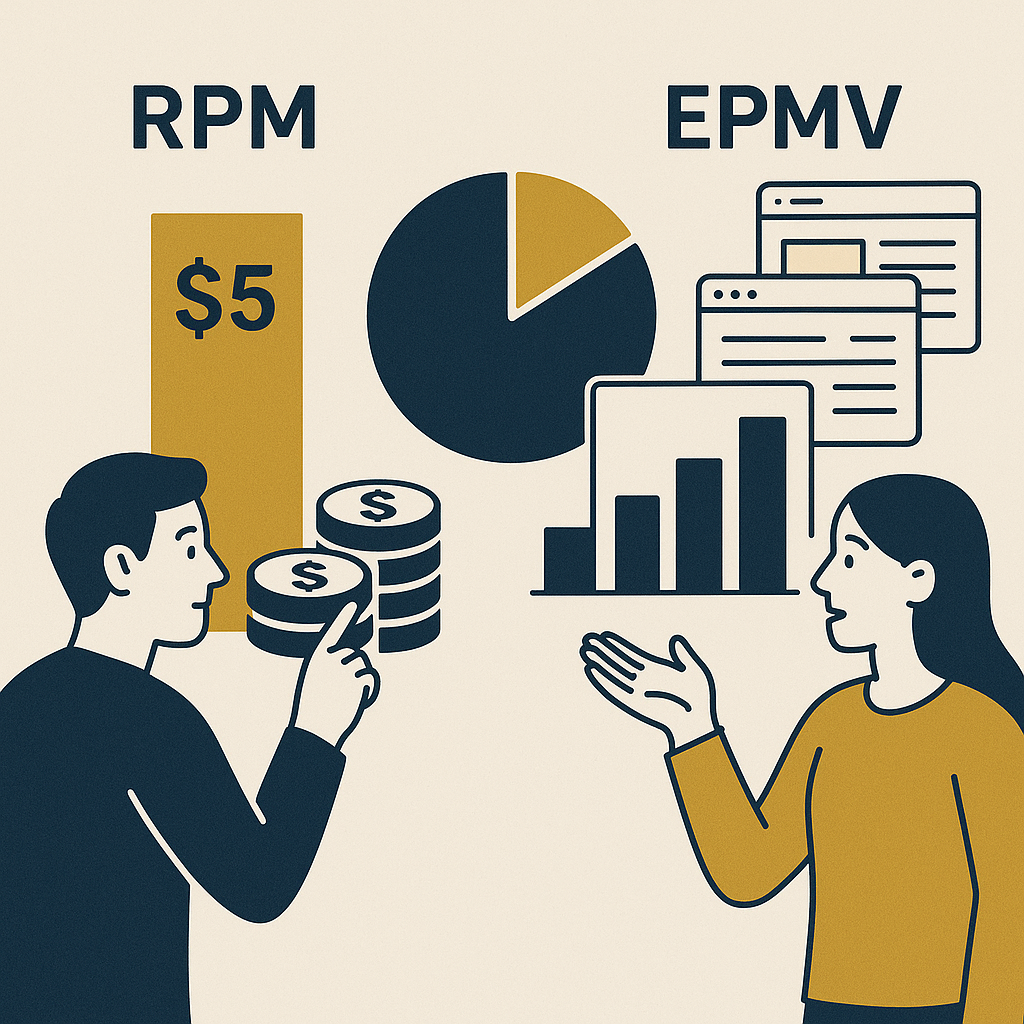
Here's how the receipts look side by side. A site with an RPM of $5 earns $5 for every 1,000 ad impressions served. Straightforward. But say your visitors average three pages per session. Your EPMV could sit at $12 — meaning you're pulling $12 for every 1,000 people who walk through the door, because the system counts every impression across that full visit. For a site drawing 100,000 visitors a month, the difference between optimizing for RPM versus EPMV can mean thousands of dollars. EPMV compounds the value of good content. RPM doesn't.
Breaking Down the Metrics: How They Work
Here's how you put both metrics to work:
- Analyze Your Traffic: Pull visitor behavior data in Google Analytics. If your average session hits two or more pages, EPMV is the metric that reflects your actual earning system.
- Optimize Ad Placement: Test different ad sizes and positions. Small layout changes can move both RPM and EPMV by measurable amounts — track which metric shifts when you make a change.
- Content Strategy: Write content that pulls visitors deeper into the site. More pages per session means more impressions per visitor, and that's what pushes EPMV up while you sleep.
Real Receipts: Tools and Resources
A few tools worth having in the system:
- Namecheap (domain registrar): A clean domain builds trust with search engines and visitors from day one.
- Logitech MX Master 3S: Solid hardware keeps the workflow moving when you're deep in analytics or layout testing.
- Keychron K2: A mechanical keyboard that holds up through long content sessions.
None of these are flashy. They're just the kind of reliable setup that supports a system designed to compound earnings while you sleep.
Step-by-Step Guide: Implementing EPMV

- Sign Up for an Ad Platform: Ezoic uses AI to test ad placements automatically and reports EPMV natively. That matters because you can see exactly which changes move the number.
- Analyze Visitor Data: Track session depth and time on site. The data tells you which content keeps people reading — write more of that.
- Test and Iterate: Run ad configuration tests on a regular schedule. What works for one audience segment won't always work for another. Let the data decide.
Work through those steps consistently and you have a system that earns on its own schedule, not yours.
Conclusion: Choosing the Right Metric for You
RPM and EPMV both have a place in your dashboard. But if you're building a site around owned traffic and long-form content, EPMV is the number that reflects what your system is actually producing. It accounts for the full visitor journey. It rewards content that keeps people reading. And it compounds as your traffic grows. Start tracking it seriously, and the receipts will tell you everything you need to know about where to go next.
Ready to go deeper? The The Silent Webmaster Blog has more breakdowns, tested strategies, and the kind of specific numbers that make the next step obvious.
Advanced Strategies for Maximizing EPMV
Once you understand how EPMV is calculated, the next move is pushing it higher with intention. Here are the approaches that actually show up in the receipts.
Visitor Segmentation and Personalization
Segmenting your audience by behavior, demographics, and interests lets you match ad experiences to the people most likely to engage with them. Use Google Analytics to build segments and see which content earns the most per visitor group. When the right ad reaches the right reader, session value goes up — and so does EPMV.
- Demographic Insights: Age, location, and gender data help you shape both content and ad targeting toward your highest-value readers.
- Behavioral Patterns: Identify visitors who return regularly and look at what keeps them coming back. Longer sessions mean more impressions per visitor.
- Interest-Based Targeting: Match ad categories to the interests your analytics already show. Relevance drives clicks, and clicks drive EPMV.
Leveraging A/B Testing for Ad Placements
Consistent A/B testing is how you stop guessing and start knowing. Run tests on ad sizes, formats, and positions. Compare the EPMV results across variations — not just CTR, not just RPM — and let that number make the call.
- Ad Formats: Banners, native ads, and video ads each perform differently depending on your audience. Test them against each other with real traffic.
- Placement Optimization: Above the fold, in-content, and sidebar placements all produce different results. The winning position is the one your data picks, not the one that looks right.
- Frequency Capping: Too many ads per session pushes visitors out the door. Find the number that maximizes revenue without killing session depth.
Case Study: Successful EPMV Optimization
Take John's Tech Blog as a concrete example. John started out chasing ad impressions — more impressions, more RPM, more money. Simple enough on paper. But when he looked at his visitor data, he saw that tutorial content kept people on the site significantly longer than news posts did. That was the signal.
- Visitor Journey Analysis: Tracking user paths showed that tech tutorials generated three to four page views per session, while single-topic news posts averaged one.
- Content Diversification: John added product reviews and related how-to content alongside tutorials. Visitors who came for one stayed for the other.
- Ad Placement Refinement: A/B testing revealed that ads placed inside tutorial content — not above or below it — produced the highest click-through rates.
The result: a 40% increase in monthly revenue. Same traffic. Better system.
Key Performance Indicators (KPIs) for Monitoring Success
Track these numbers consistently and you'll know exactly where your EPMV is coming from — and where it's leaking.
- Page Views per Visitor: The clearest signal of content depth. More pages per session means more ad impressions per visitor.
- Session Duration: Longer sessions correlate directly with higher EPMV. Visitors who read more see more ads.
- Bounce Rate: A high bounce rate means visitors are leaving before the system has a chance to earn. Lower it by improving content relevance on entry pages.
- Ad Click-Through Rate (CTR): CTR tells you whether your ad placements are working. Low CTR on high-traffic placements is a test waiting to happen.
FAQs on RPM and EPMV Optimization
What is the primary difference between RPM and EPMV?
RPM measures earnings per 1,000 ad impressions. EPMV measures earnings per 1,000 visitors and accounts for everything that visitor does during their session — every page, every impression, every click. EPMV gives you a fuller picture of what your owned traffic is actually worth.
Can I use both RPM and EPMV on my site?
Yes, and most serious operators do. RPM tells you how individual ad units are performing. EPMV tells you how the whole system is performing. You need both to know where to make changes.
How often should I review my EPMV strategy?
Monthly is the floor. Visitor behavior shifts, ad markets move seasonally, and content performance changes over time. A monthly review keeps your strategy current and catches drops before they compound in the wrong direction.
Checklist for EPMV Optimization
- Set up detailed visitor segments in your analytics platform.
- Run A/B tests on ad placements and formats with enough traffic to get clean data.
- Publish and update content that matches what your highest-value visitor segments actually read.
- Monitor your core KPIs monthly and note what changed when numbers move.
- Adjust your strategy based on what the data shows, not what feels right.
Follow that checklist consistently and the system compounds. The receipts get bigger. That's how this works.
Content Monetization Beyond Ads
Ads are a solid foundation, but a site that earns from only one source is one algorithm update away from a bad month. Affiliate marketing, sponsored content, and digital product sales each add a revenue layer that runs independently of ad network fluctuations. They also tend to reward the same things EPMV rewards — engaged visitors, deep content, and a site people return to. Build those income streams alongside your ad system and you end up with something more stable: owned traffic that earns in multiple directions while you sleep.
Disclosure: this article may contain affiliate links. If you buy through them, we may earn a small commission at no extra cost to you.