
Real Recovery Stories: How These Workers Overcame Back Injuries
Real Recovery Stories: How These Workers Overcame Back Injuries
Marcus was six weeks into a warehouse job when a lifting mistake left him unable to stand for more than ten minutes. His first thought: career over. He was wrong. Back injury recovery is not one-size-fits-all. Each outcome is shaped by specific decisions, specific support, and the willingness to follow a plan even when progress is invisible.
Marcus: The Warehouse Worker Who Returned to Full Duty
The injury was serious. One misstep under a heavy load sent sharp pain radiating from his lower back down both legs. The initial prognosis was bleak — possible nerve damage, extended recovery. Most people in that position wait and hope. Marcus did not.
He sought medical advice the same day. His doctor prescribed a structured physical therapy program built specifically around his injury — not a generic protocol, but a targeted plan to rebuild core strength and correct posture mechanics.
Three months. That was the timeline. Within the first month, he could stand and walk for extended periods. By month two, he was handling light duties on the floor. By month three, he was back to full duty. The difference was not luck. It was early action, consistent execution, and an employer willing to meet him halfway.
Sarah: Managing Chronic Pain Without Stopping Work
Sarah's situation developed differently. No single incident. Years of repetitive tasks and poor posture compounded quietly until chronic back pain became her baseline. She never stopped working. She adapted.
Her first move was her workstation. An adjustable chair. A standing desk. Small changes that removed sustained pressure from her spine throughout the day. She also built scheduled movement breaks into her routine — not optional, not when she remembered, but locked into her schedule every thirty minutes.
Exercise did the rest. Low-impact, consistent — swimming and yoga kept her pain manageable and her flexibility intact. Today she works effectively, with a job environment shaped around what her body actually needs. That is not compromise. That is smart engineering.
James: The Long Road Back After Surgery
For James, conservative treatment was not enough. A severe accident left him with a condition that was deteriorating despite every non-surgical option. Surgery was the only path that prevented permanent damage.
The early post-surgery weeks were hard. Limited mobility. Significant pain. A recovery timeline measured in months, not weeks. But structured rehabilitation moved him forward, one milestone at a time.
The psychological weight was real. Frustration and impatience are predictable at that stage. James worked with both a physical therapist and a psychologist — not because he was weak, but because he understood that mental clarity drives physical consistency. Over a year, he rebuilt his strength, his confidence, and his career, returning to work with modified responsibilities and a clear-eyed view of what recovery actually costs.
The Common Thread: What All Three Did Differently
Three different injuries. Three different timelines. One shared operating system.
- Early professional assessment: All three sought medical advice immediately, which opened the door to timely, targeted intervention.
- Active participation in recovery: They did not wait to be fixed. They engaged fully — in therapy, in workplace adjustments, in the process.
- Workplace communication: Open conversations with employers produced real accommodations. Silence would have cost them weeks.
- Consistency over intensity: Regular, moderate effort outperformed sporadic bursts every time. Compounding works in recovery too.
What These Stories Don't Cover (And What You Should Ask Your Doctor)
These accounts are instructive. They are not universal. Age, job type, injury severity, and access to care all shift the equation significantly. Your recovery will not mirror Marcus's or Sarah's or James's. It will be yours.
Set realistic expectations. Build a personalized plan. Start by asking your healthcare provider the right questions:
- What is the expected recovery timeline for my specific injury?
- Are there alternative treatments worth considering in my case?
- How should I modify my work environment to support recovery?
- What warning signs should send me back to you immediately?
Recovery is possible. The evidence is right here. But it requires the right approach, professional guidance, and the discipline to follow through when progress feels slow.
Incorporating Ergonomics for Long-Term Recovery
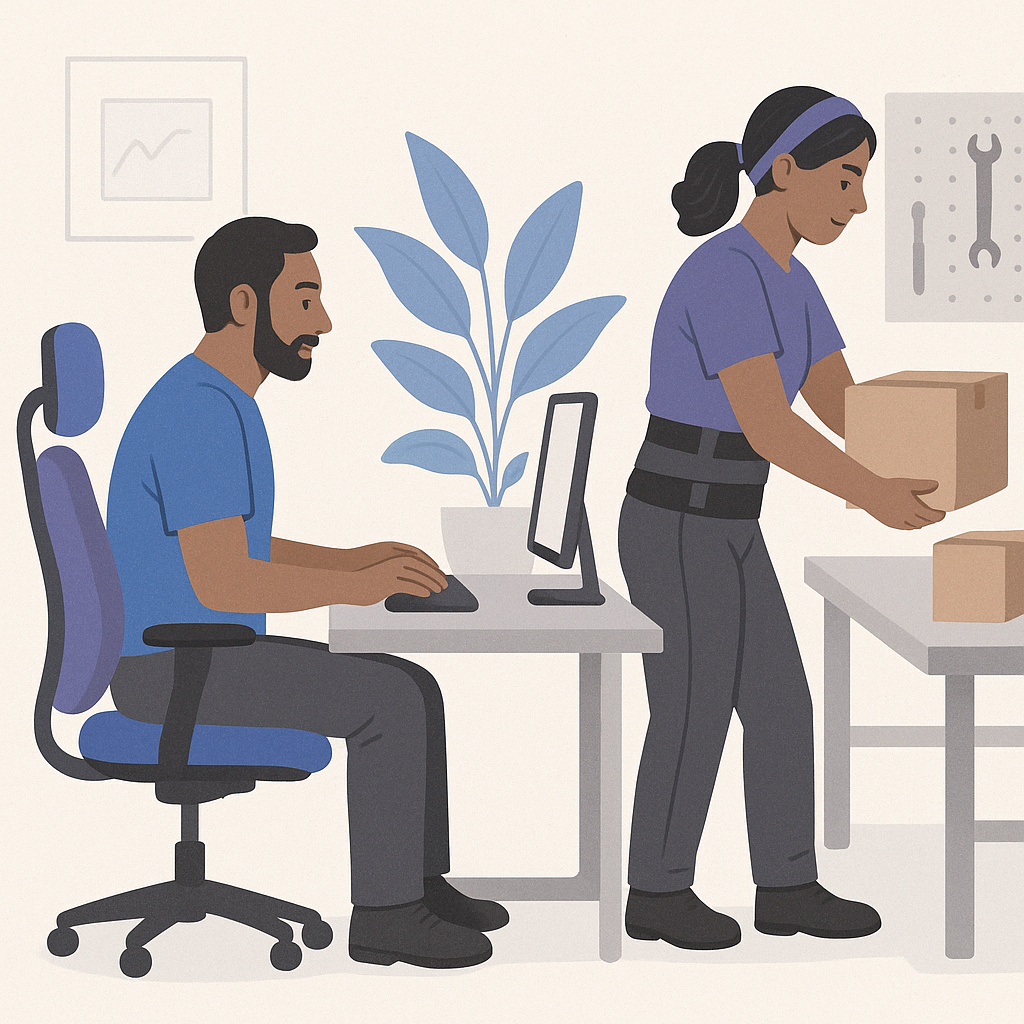
Ergonomics is not a luxury add-on. For workers like Marcus and Sarah, it was a core part of the recovery system — and a direct line of defense against re-injury. Here is what that looks like in practice.
Workstation Adjustments
- Chair and Desk Height: Your chair and desk must support a neutral spine. Feet flat on the floor. Knees at ninety degrees. No negotiation on this.
- Monitor Position: Eye level, arm's length away. Anything lower or higher creates neck strain that compounds over time.
- Keyboard and Mouse Placement: Elbows close to your body, wrists straight, forearms level. Small misalignments repeated thousands of times become injuries.
Movement and Breaks
- Scheduled Breaks: Every thirty minutes, stand, stretch, walk. This is not optional recovery behavior — it is maintenance.
- Micro-movements: Shoulder rolls, seated leg lifts, small deliberate movements throughout the day keep muscles active and blood moving.
Technology Aids in Recovery
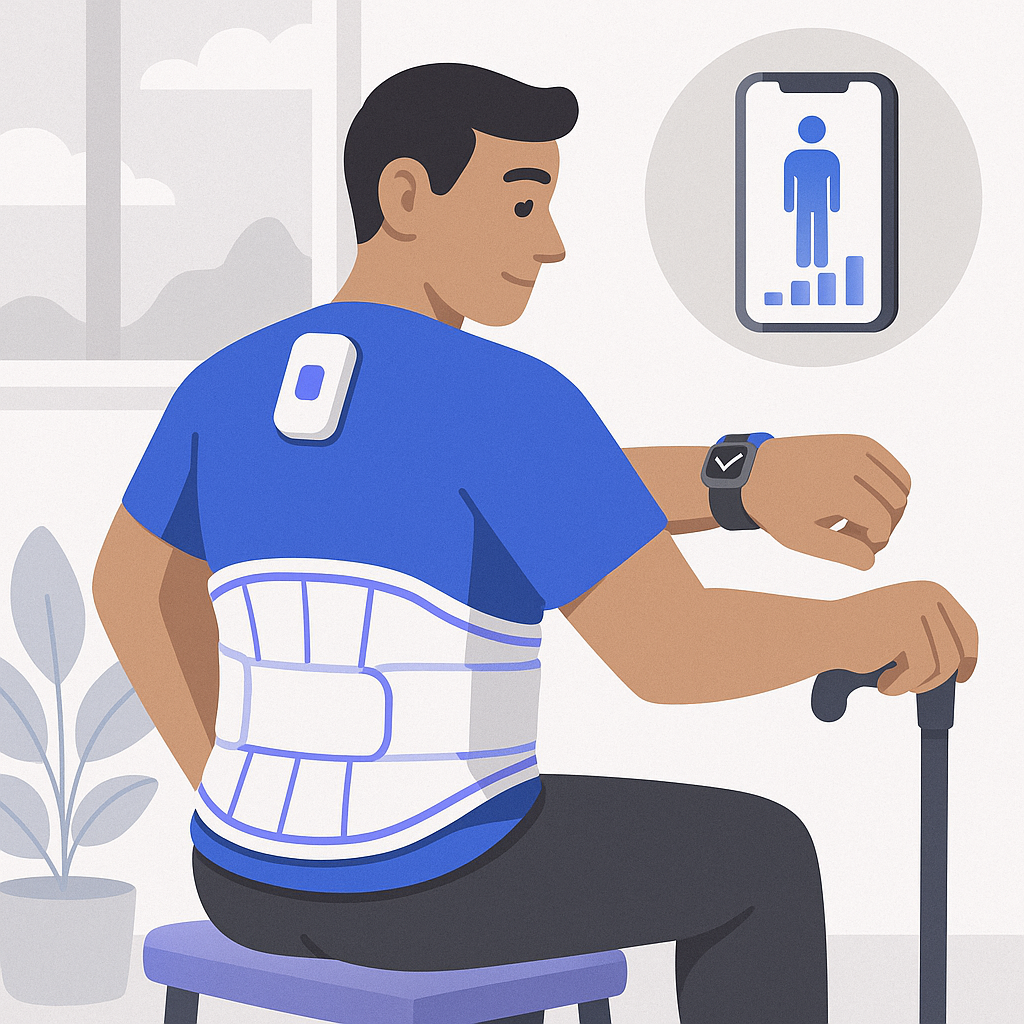
The tools available to recovering workers today are genuinely useful. Wearable devices now monitor posture and activity in real time, delivering feedback before bad habits calcify into new injuries.
- Posture Correctors: Wearable devices that prompt you to realign before strain accumulates. Passive correction built into your day.
- Activity Trackers: Movement reminders triggered by inactivity. Simple, effective, and easy to ignore — which is why you should not.
- Mobile Apps: Physical therapy apps guide you through prescribed routines with enough structure to keep form consistent and progress measurable.
Success Metrics for Recovery
Returning to work is a milestone, not the finish line. Real recovery is measured across multiple dimensions. Track these:
- Pain Levels: Document intensity and frequency on a consistent scale. Trends matter more than single data points.
- Mobility Improvements: Range of motion and the ability to complete daily tasks without discomfort are concrete, trackable markers.
- Work Performance: Can you handle your responsibilities without aggravating the injury? Productivity is a recovery indicator.
- Quality of Life: Sleep quality, mood, and social engagement all reflect how fully you are recovering — not just physically, but as a whole person.
Case Study: Implementing a Comprehensive Recovery Program
One corporate office faced a surge in back injury claims and decided to treat it as a systems problem rather than an individual one. The company deployed ergonomic assessments across departments, opened access to physical therapy, and ran employee education workshops on body mechanics.
Twelve months later, injury-related absenteeism dropped 30 percent. Employees reported stronger awareness of how they moved through their workday and a genuine shift in daily habits. The program did not just accelerate individual recovery — it raised the floor for the entire workplace.
That is what a proactive, integrated approach produces. Not just fewer injuries. A fundamentally healthier operating environment.
Psychological Resilience in Back Injury Recovery
Physical recovery does not happen in a mental vacuum. The frustration of limited mobility, the anxiety of an uncertain timeline, the slow erosion of confidence — these are real forces that slow healing if left unaddressed. Mindfulness practice and cognitive behavioral therapy are not soft additions to a recovery plan. They are load-bearing components. Workplaces that normalize mental wellness support during injury recovery see better outcomes, faster returns, and employees who come back genuinely ready to perform.