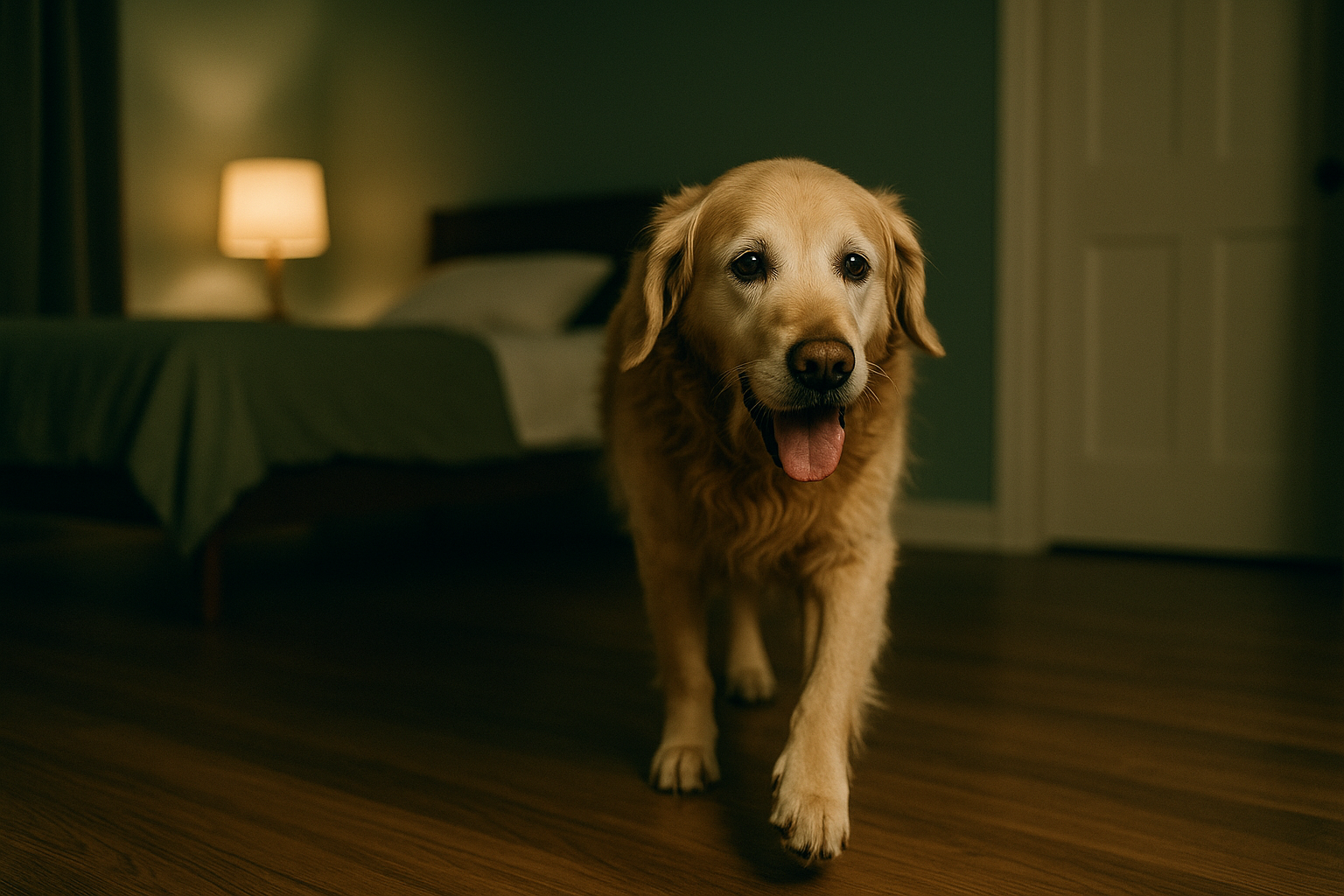
Why Is My Senior Dog Suddenly Pacing and Panting at Night?
Why Is My Senior Dog Suddenly Pacing and Panting at Night?
Your senior dog used to sleep through the night without a sound. Now they're circling the room at 2 a.m., panting like they just ran a mile. Something changed. It's almost always one of five things—and knowing which one lets you act instead of worry.
The Five Most Common Causes (and How to Tell Them Apart)
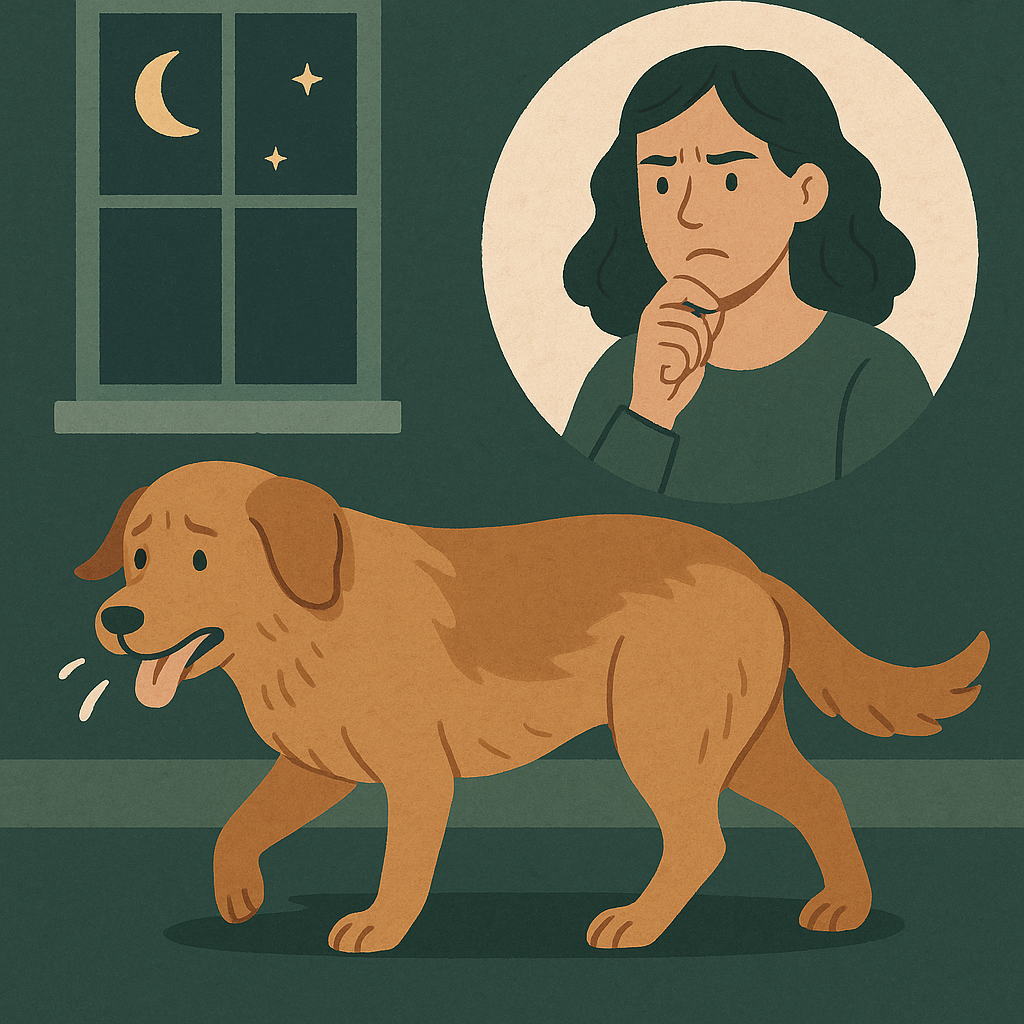
Pin the root cause and you stop the guessing. Here is what you are most likely dealing with:
- Arthritis and Joint Pain: Dogs pace to escape discomfort and pant because pain is exhausting. Watch for reluctance to jump, stiffness after rest, or slow rising from the floor.
- Cognitive Dysfunction: Think of it as canine sundowning. Disorientation without a clear trigger, restlessness that peaks after dark, no obvious physical cause.
- Urinary or Digestive Urgency: Your dog moves toward the door, whines, or has indoor accidents. This is a medical signal, not a behavior problem.
- Anxiety or Fear: Specific sounds or times of night set it off. Pacing in tight circles, panting, and scanning the room are the tells.
- Medical Emergencies: Labored breathing, collapse, or sudden confusion mean one thing—call the vet tonight, not tomorrow.
Pain: The Most Overlooked Reason
Most owners see pacing and think behavioral. The more likely answer is pain. Senior dogs in discomfort move constantly, searching for a position that hurts less. They avoid pressure on sore joints. They pant at rest because pain is physically taxing.
You will not always see a limp. Look instead for slow rising, reluctance to jump onto furniture, or stiffness in the first few steps after lying down. Nighttime makes it worse—cooler temperatures tighten joints, and without daytime distractions, there is nothing to take the edge off.
Cognitive Dysfunction: When It's Not Pain
Cognitive dysfunction looks different from pain-driven pacing. These dogs move without purpose. They do not limp. They do not head for the door. They simply wander, sometimes stopping to stare at walls, sometimes reversing their day-night cycle entirely.
At night, the absence of light and routine cues removes the anchors that help an aging brain orient itself. The confusion deepens. The pacing continues. Recognizing this pattern early matters because there are management strategies that work—but only if you know what you are dealing with.
Bathroom Issues: The Urgent Nighttime Problem
This is not a training failure. It is a medical reality. Senior dogs lose bladder control at night for concrete reasons: weakened sphincter muscles, urinary tract infections, or age-related incontinence. The distinction worth making is between urgency and true incontinence.
Urgency looks like pacing toward the door, whining, or circling near an exit. Incontinence looks like accidents during sleep—your dog wakes up wet and confused. Both warrant a vet conversation. In the short term, more frequent late-night potty breaks and washable floor pads reduce the damage while you sort out the cause.
When to Call the Vet Tonight (and When Morning Is Okay)
This is the decision that matters most. Get it wrong in the wrong direction and you are looking at a preventable crisis.
Call tonight if you see severe panting that will not slow down, collapse, inability to stand, or disorientation paired with confusion. These are not wait-and-see situations. A same-day appointment is the right call for new-onset pacing with no obvious cause, visible pain, or a first-time indoor accident. Mild panting you have seen before, a known arthritis flare, or low-level restlessness tied to a specific trigger—those can hold until a scheduled visit, provided nothing escalates overnight.
What You Can Do Tonight to Help
You have more options right now than you think. Start with the environment. A cooler room reduces panting driven by discomfort or overheating. An orthopedic bed takes pressure off aching joints. A soft nightlight gives a cognitively impaired dog enough visual information to orient without full brightness disrupting sleep.
Short potty breaks before bed reduce urgency-driven pacing. A gentle joint massage can ease stiffness and help your dog settle. Over-the-counter pain support exists, but run it by your vet first—some options are safe, others are not, and the wrong choice creates a new problem.
Address the cause, adjust the environment, and your dog's nighttime comfort improves. So does yours. For deeper guidance on managing aging dogs day to day, resources like Senior Dog Comfort offer practical, condition-specific advice worth bookmarking.
Environmental Factors Affecting Nighttime Comfort
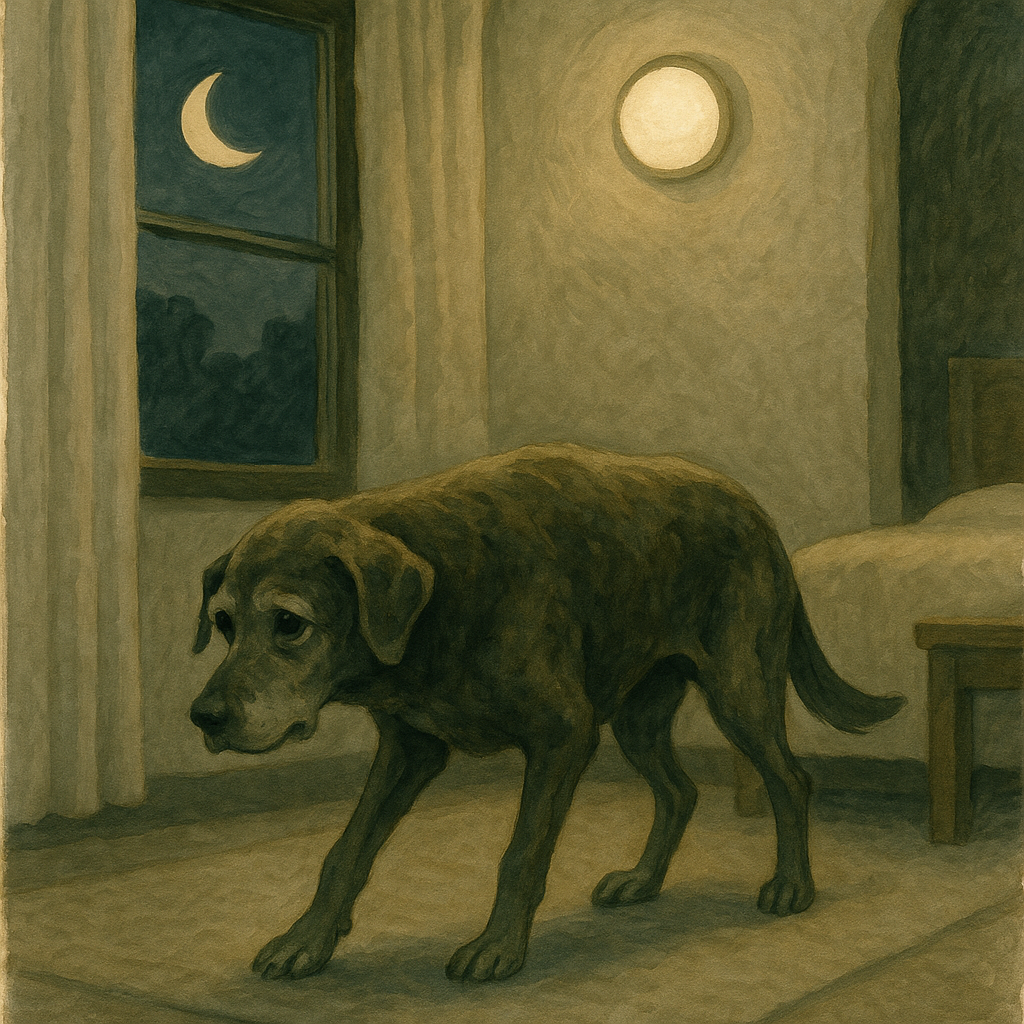
Medical causes get the headlines. But the room your dog sleeps in can quietly make everything worse. Temperature, light, and noise are controllable variables. Most owners never touch them.
Temperature Control
Senior dogs regulate body temperature poorly. A room that runs hot triggers panting. A room that runs cold tightens arthritic joints and disrupts sleep. A fan, air conditioning, or a warm blanket costs almost nothing and can make a measurable difference overnight. Check the room temperature before you assume the problem is purely medical.
Lighting Adjustments
A pitch-black room disorients a dog with cognitive dysfunction. There are no visual anchors, no reference points. A low-wattage nightlight gives them enough to navigate without flooding the room with stimulation. If your dog is light-sensitive rather than cognitively impaired, dim without going completely dark. The goal is calm, not sensory deprivation.
Noise Reduction
Unexpected sounds trigger anxiety in senior dogs faster than in younger ones. A white noise machine masks the sudden spikes—a car door, a neighbor's dog, a garbage truck at 3 a.m.—that send an anxious dog into a pacing spiral. Soft, species-appropriate calming audio is another option that has shown real results for noise-sensitive animals.
Dietary Considerations for Nighttime Calm
What your dog eats—and when—has a direct line to how they sleep. Most owners focus on ingredients and ignore timing entirely. Both matter.
Meal Timing
A heavy meal too close to bedtime creates digestive discomfort that keeps dogs awake and restless. A meal too early leaves them hungry by midnight. A lighter meal timed one to two hours before bed tends to hit the right balance. Cut late-night treats that spike energy or upset digestion right before sleep.
Dietary Supplements
Omega-3 fatty acids support both joint health and cognitive function—two of the most common drivers of nighttime restlessness in senior dogs. Glucosamine and chondroitin address joint degradation directly. Natural calming agents like melatonin or valerian root can reduce anxiety-driven panting. None of these replace a vet conversation. Run the full list by your veterinarian before adding anything new—interactions and contraindications are real.
Creating a Nighttime Routine
Predictability is medicine for an aging dog. A consistent routine signals safety. It reduces the ambient anxiety that makes cognitive dysfunction and noise sensitivity worse. Build one and stick to it.
Evening Walks
A short, unhurried walk before bed serves two purposes. It burns off residual energy and gives your dog a final chance to relieve themselves—cutting the odds of urgency-driven pacing at 2 a.m. Keep it leisurely. The goal is calm, not cardio.
Wind-Down Activities
Gentle petting or a slow joint massage in the thirty minutes before bed lowers cortisol and relaxes stiff muscles. It also reinforces the signal that the day is ending. Dogs read routine better than most people give them credit for. Use that.
Consistent Bedtime
Same time every night. It sounds simple because it is. A consistent bedtime regulates your dog's internal clock, improves sleep quality over time, and makes the wind-down routine land harder. The longer you hold the pattern, the more automatic the association becomes.
Frequently Asked Questions
Can a change in routine cause my senior dog to pace and pant at night?
Yes. Routine is a structural support for an aging dog's sense of security. Disrupt it—new schedule, new home, new household member—and stress-driven behaviors like pacing and panting follow. Restore consistency in feeding, walking, and bedtime and you typically see improvement within days.
Are there any medical conditions that exclusively cause nighttime pacing and panting?
Cognitive dysfunction is the closest match—it tends to peak at night when daytime stimuli disappear and disorientation deepens. But most conditions that cause pain or physical discomfort, arthritis being the clearest example, simply become harder to ignore at night. The absence of distraction amplifies what was already there.
How can I tell if my dog's panting is due to anxiety or a medical issue?
Context is your best diagnostic tool. Anxiety-driven panting usually comes with behavioral signals—whining, scanning, pacing in response to a specific trigger. Medical panting tends to arrive with physical symptoms: limping, appetite changes, or labored breathing that does not slow when the environment calms. When in doubt, document what you observe and bring it to your vet. Patterns tell the story.