
Deconstructing Successful Campaigns: Lessons from Industry Leaders
Deconstructing Successful Campaigns: Lessons from Industry Leaders
Deconstructing Successful Campaigns: Lessons from Industry Leaders
Most marketers chase what worked last quarter. The operators who actually win do something different — they pull apart the campaigns that moved markets, extract the repeatable mechanics, and build systems around them. That is what this breakdown is for. No trend-chasing. Just the anatomy of what works and exactly how you apply it.
The Power of Storytelling in Marketing

Every campaign that sticks is built on a story. Nike's "Just Do It" did not sell shoes. It sold a belief about who you could become. That distinction is everything. The brands that dominate long-term are not the loudest — they are the ones whose narrative lands with precision.
Start by locking in your core message before you write a single word of copy. Then let real customer testimonials carry the weight. Tools like StoryChief make content distribution manageable from one dashboard, with plans starting around $10 per month.
Step-by-Step Guide to Crafting Your Story
- Identify Your Core Message: What do you want your audience to feel?
- Gather Real Stories: Use customer testimonials and case studies.
- Create a Narrative Arc: Introduce a conflict and resolution.
- Distribute Consistently: Use platforms like StoryChief for seamless distribution.
Leveraging Data-Driven Insights

Opinions are cheap. Data is not. Spotify's Wrapped campaign is the clearest proof of this principle at scale. They took behavioral data their users were already generating and turned it into a personalized experience that spread organically every December. No ad spend required for the viral layer.
You do not need Spotify's engineering team to run data-driven campaigns. Google Analytics tells you what your audience does on your site. Sprout Social tells you how they behave off it. Use both. Let the numbers tell you where to double down.
Steps to Implement Data-Driven Strategies
- Set Clear Objectives: Determine what you want to achieve with your data.
- Choose the Right Tools: Use Google Analytics for web data and Sprout Social for social insights.
- Analyze and Iterate: Regularly review data and adjust campaigns accordingly.
Harnessing the Power of AI and Automation

The silent operator's edge right now is speed. AI tools let you produce and test content at a volume that was impossible three years ago. Jasper and Copy.ai are the tools most serious content operations are running. Both start around $30 per month. That is a rounding error compared to the output they unlock.
The play is not to automate everything. It is to automate the repetitive work so your strategic thinking goes further. Identify the tasks eating your time, hand them to the machine, and redirect your focus to decisions only you can make.
Guide to Implementing AI in Your Campaigns
- Identify Repetitive Tasks: List tasks that can be automated.
- Select AI Tools: Choose platforms like Jasper or Copy.ai based on your needs.
- Integrate and Test: Implement AI solutions and monitor their performance.
The Importance of Owned Traffic
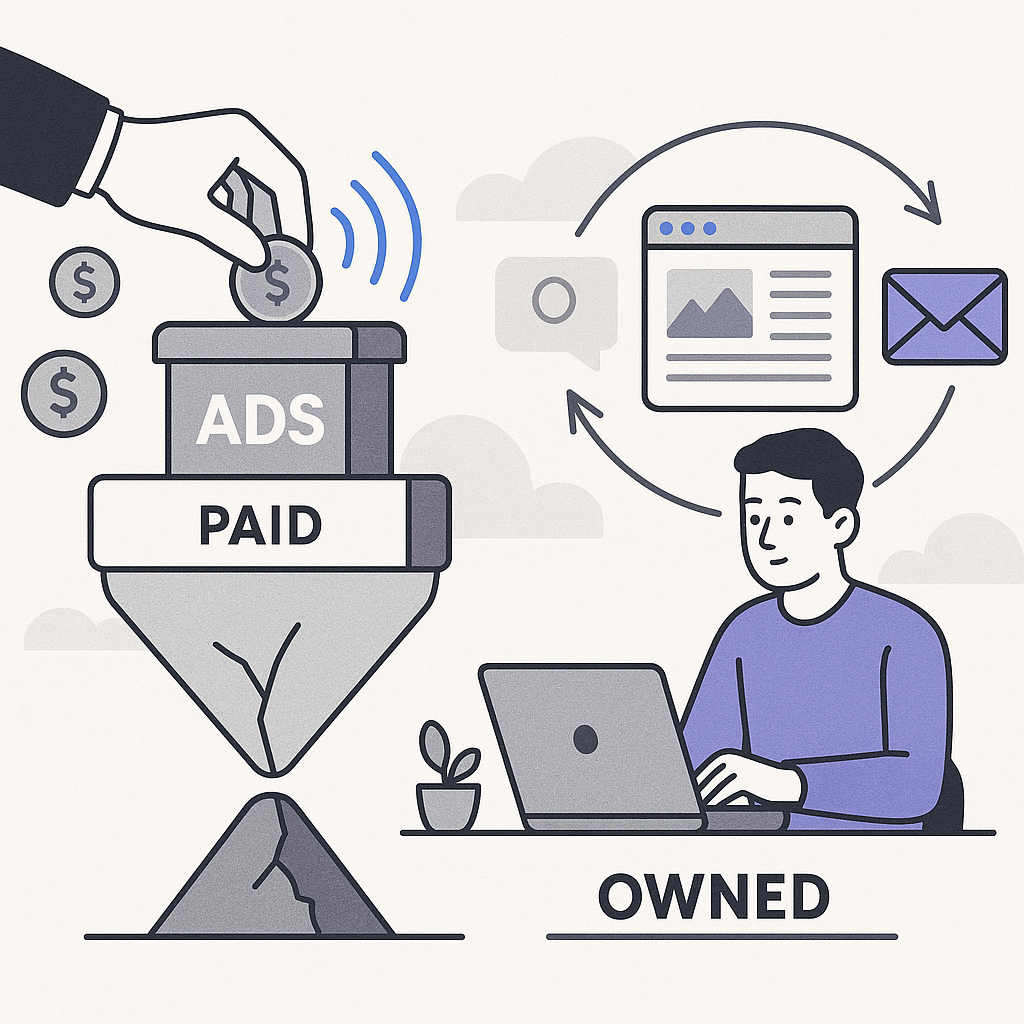
Paid ads rent attention. Organic traffic owns it. Every dollar you pour into ads disappears the moment you stop paying. Every page that ranks keeps working. HubSpot built a nine-figure business on this principle — create content that answers real questions, earn the visit, nurture the relationship. That is a compounding asset, not a recurring expense.
Build your email list with Mailchimp. Publish on WordPress. Treat both as infrastructure, not tactics. The silent operator who controls their own traffic channel does not panic when ad costs spike.
Steps to Build Owned Traffic
- Create Valuable Content: Focus on quality over quantity.
- Build an Email List: Use Mailchimp for effective email campaigns.
- Optimize for SEO: Ensure your content is easily discoverable.
Understanding Audience Segmentation for Targeted Campaigns

Broadcasting to everyone means converting no one. The campaigns that drive real results speak to a specific person with a specific problem. Audience segmentation is how you get there. Break your market into groups by demographics, behavior, and intent. Then build messaging that fits each group like a key fits a lock.
Steps to Implement Audience Segmentation
- Identify Key Segments: Analyze your current customer base. Look at age, location, buying behavior, and interests.
- Develop Buyer Personas: Build detailed profiles for each segment — demographics, preferences, pain points.
- Customize Messaging: Write copy that speaks directly to each persona's specific situation.
- Utilize Segmentation Tools: Use HubSpot and Salesforce to automate and sharpen your segmentation over time.
Tighter segmentation means higher engagement rates and better conversion rates. It is not more work — it is smarter work that compounds.
Utilizing Influencer Partnerships for Campaign Amplification

Follower counts are vanity. Engagement is signal. The right influencer partnership puts your message in front of an audience that already trusts the messenger. That trust transfers — and it converts at rates cold traffic rarely matches.
Steps to Establish Influencer Partnerships
- Identify Relevant Influencers: Use Influencer Marketing Hub to find creators whose niche and audience align with yours.
- Assess Engagement Levels: Look past follower counts. Evaluate comment quality, reply rates, and genuine audience interaction.
- Craft a Win-Win Proposal: Structure the deal so both sides gain — product access, exclusive content, or a revenue-sharing model.
- Monitor and Measure Impact: Track results through Google Analytics or Later. Measure ROI. Cut what does not perform.
The right partnership drives organic traffic and builds credibility faster than most paid channels. Choose partners who build in silence and earn real influence — not those chasing viral moments.
Building Emotional Connections Through Visual Content

A single image can do what three paragraphs cannot. Visuals bypass the analytical brain and land directly in the emotional one. That is where buying decisions actually get made. Your visual content needs to do more than look good — it needs to mean something.
Best Practices for Visual Content Creation
- Focus on Quality: Use professional tools like Adobe Photoshop and Final Cut Pro. Cheap visuals signal a cheap brand.
- Tell a Story: Behind-the-scenes footage, customer success moments, real outcomes — these outperform polished stock imagery every time.
- Incorporate Branding Elements: Consistent colors, logos, and fonts build recognition across every touchpoint.
- Leverage User-Generated Content: Your audience creating content around your brand is the highest-trust signal you can earn.
Visual content that connects emotionally builds the kind of brand loyalty that no ad budget can manufacture. Earn it once, and it compounds.
Real-World Case Study: Airbnb's Innovative Campaign Strategies

Airbnb's "Live There" campaign is a masterclass in positioning. Instead of competing on price or inventory, they reframed the entire category. Tourists stay in hotels. Their customers live like locals. That single shift in narrative changed how millions of people thought about travel — and about Airbnb.
Key Takeaways from Airbnb's Campaign
- Localized Storytelling: Airbnb used city-specific content to surface authentic experiences, tapping directly into the desire for something real over something packaged.
- Community Engagement: Real stories from real hosts and guests did more for brand trust than any polished ad creative could.
- Cross-Channel Promotion: The campaign ran across social, email, and traditional media simultaneously — consistent message, maximum reach.
- Leveraging Data: User data shaped personalized recommendations and ads, making every touchpoint feel relevant rather than generic.
Airbnb's approach proves the point: authenticity, community, and data working together is not a formula — it is a system. Build the system, and the results follow.
Actionable Next Steps

You now have the blueprint. Pick one or two areas — storytelling, data, owned traffic, segmentation — and go deep before you go wide. Implement the steps. Watch the numbers. Adjust without ego.
For more frameworks built for operators who build in silence and earn in peace, go to ArcanoLabs Blogs. The playbooks are there. What you do with them is on you.
The operators who win are not waiting for the perfect moment. They are publishing pages that rank, tightening funnels that convert, and letting compounding do the loud talking. Start now. Stay consistent. The results will follow.