Essential Metrics for Measuring Marketing ROI: A Comprehensive Guide
Essential Metrics for Measuring Marketing ROI: A Comprehensive Guide
Essential Metrics for Measuring Marketing ROI: A Comprehensive Guide
Most operators track vanity numbers and wonder why revenue stays flat. Marketing ROI cuts through the noise. It tells you exactly which campaigns are pulling weight and which ones are burning budget. This guide covers the metrics that actually matter—the ones silent operators use to make sharper decisions and build systems that compound over time.
Understanding Marketing ROI
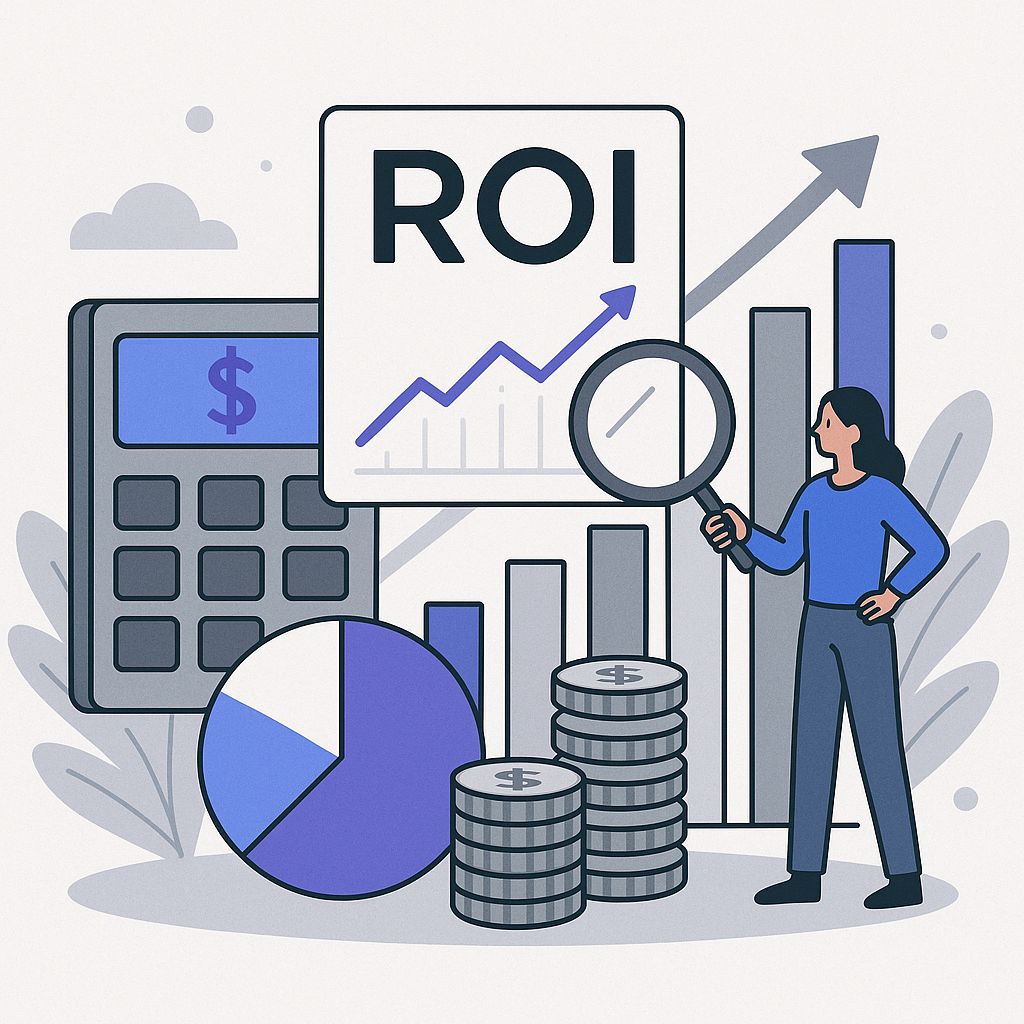
Marketing ROI is a performance measurement that tells you whether your spend is generating returns. Divide net profit from a campaign by the cost of that campaign. The result shows you which strategies are working and which need to be cut or rebuilt from scratch.
Why Marketing ROI Matters
Knowing your marketing ROI lets you do three things that separate disciplined operators from everyone else:
- Identify what's working and replicate it systematically.
- Move budget toward high-performing channels without guessing.
- Back every spending decision with concrete data when stakeholders ask questions.
Key Metrics for Measuring Marketing ROI

Start with these. They form the foundation of any honest ROI measurement system.
1. Customer Acquisition Cost (CAC)
CAC is the total cost of winning a new customer—every marketing and sales dollar included. Divide total acquisition costs by the number of new customers brought in during a set period.
Example: You spent $10,000 on marketing and acquired 100 new customers. Your CAC is $100. That number needs to be weighed against what those customers are actually worth.
2. Customer Lifetime Value (CLV)
CLV is the total revenue you can expect from a single customer over the full course of their relationship with your business. It sets the ceiling on what you can rationally spend to acquire them. Track it over time using platforms like Google Analytics to keep your acquisition math honest.
3. Conversion Rate
Your conversion rate is the percentage of visitors who take the action you want—a purchase, a sign-up, a form submission. A rising conversion rate means your funnel is tightening. Use A/B testing tools like Optimizely to run controlled experiments on page elements and move that number deliberately.
Advanced Metrics for Deeper Insights

4. Return on Ad Spend (ROAS)
ROAS tells you how much revenue each advertising dollar generates. Divide total revenue by total ad spend. It's the clearest signal you have on whether a paid campaign deserves more budget or a hard stop.
5. Net Promoter Score (NPS)
NPS measures how likely customers are to recommend you. A high score signals real satisfaction—the kind that drives organic traffic and word-of-mouth without additional spend. Run regular surveys through platforms like SurveyMonkey to keep a pulse on where you stand.
6. Social Media Engagement
Likes, shares, and comments reveal how well your content connects with your audience. High engagement often precedes broader reach and stronger brand recognition. Tools like Hootsuite or Buffer make it straightforward to track and analyze performance across channels.
Implementing a Measurement Strategy

A measurement strategy without structure is just a spreadsheet nobody trusts. Build yours around these four steps:
- Define Clear Goals: Know exactly what success looks like before a campaign launches.
- Select Relevant Metrics: Choose metrics that map directly to your business objectives—not metrics that just look good in a report.
- Use Analytics Tools: Platforms like Google Analytics and HubSpot give you the data infrastructure to track what matters at scale.
- Regularly Review and Adjust: Data is only useful if you act on it. Build a review cadence and cut what isn't working.
Conclusion and Next Steps
Measuring marketing ROI is how you stop spending on faith and start building on evidence. Focus on CAC, CLV, and conversion rates first. Let those numbers guide where your budget goes next.
If you want to streamline content creation and tighten your ROI at the same time, ArcanoLabs offers AI-powered tools built to automate and optimize your content strategy end to end.
Your next move: audit your current marketing spend, install a measurement framework built around your actual goals, then track, analyze, and adjust. The operators who win do this on repeat. The numbers do the rest.
Integrating Qualitative Metrics for Comprehensive Insights

Quantitative metrics show you what happened. Qualitative data tells you why. Understanding the reasoning behind the numbers leads to sharper decisions and strategies that hold up over time.
1. Customer Feedback and Sentiment Analysis
Your audience is telling you what they think—in reviews, surveys, and comment sections. Collect it systematically. Sentiment analysis tools categorize feedback as positive, negative, or neutral automatically, so you can spot patterns without reading every line.
Example: Platforms like Trustpilot or Yotpo let you collect and analyze customer reviews at scale, surfacing both the problems worth fixing and the strengths worth doubling down on.
2. Brand Awareness and Perception
Brand awareness measures how familiar your target market is with what you do. Perception studies go further—they show you how you stack up against competitors in the minds of buyers. Use tools like Brandwatch to monitor mentions and sentiment across channels and get an honest read on your market position.
Checklist for Effective Marketing ROI Measurement

Run through this before every campaign cycle. Miss one item and your measurement breaks down somewhere downstream.
- Define Clear Objectives: Set specific, measurable goals for each campaign before it goes live.
- Choose Appropriate Metrics: Select both quantitative and qualitative metrics that connect directly to your objectives.
- Leverage Technology: Use analytics and automation tools to remove manual friction from data collection and analysis.
- Regularly Update Data: Stale data produces bad decisions. Keep your numbers current.
- Review Competitor Performance: Benchmark your metrics against industry standards and what competitors are putting up.
- Incorporate Customer Feedback: Gather audience insights on a regular cadence and let them inform your next move.
- Iterate and Optimize: Every data cycle should produce at least one concrete improvement to your next campaign.
Case Study: Successful Implementation of Marketing ROI Metrics

A leading e-commerce company rebuilt its measurement system around both quantitative and qualitative signals—CAC, CLV, and conversion rates alongside sentiment analysis and brand perception studies. The results were specific and repeatable:
- Improve Targeting: Identified high-value customer segments and cut CAC by 20%.
- Enhance Customer Experience: Grew CLV by 15% through targeted promotions and personalized content.
- Boost Brand Loyalty: Pushed NPS up 25% by acting directly on customer feedback and strengthening product offerings.
The combined approach produced a 30% increase in overall marketing ROI. That's what happens when you build in silence and let the data do the talking.
Key Performance Indicators (KPIs) for Long-term Success
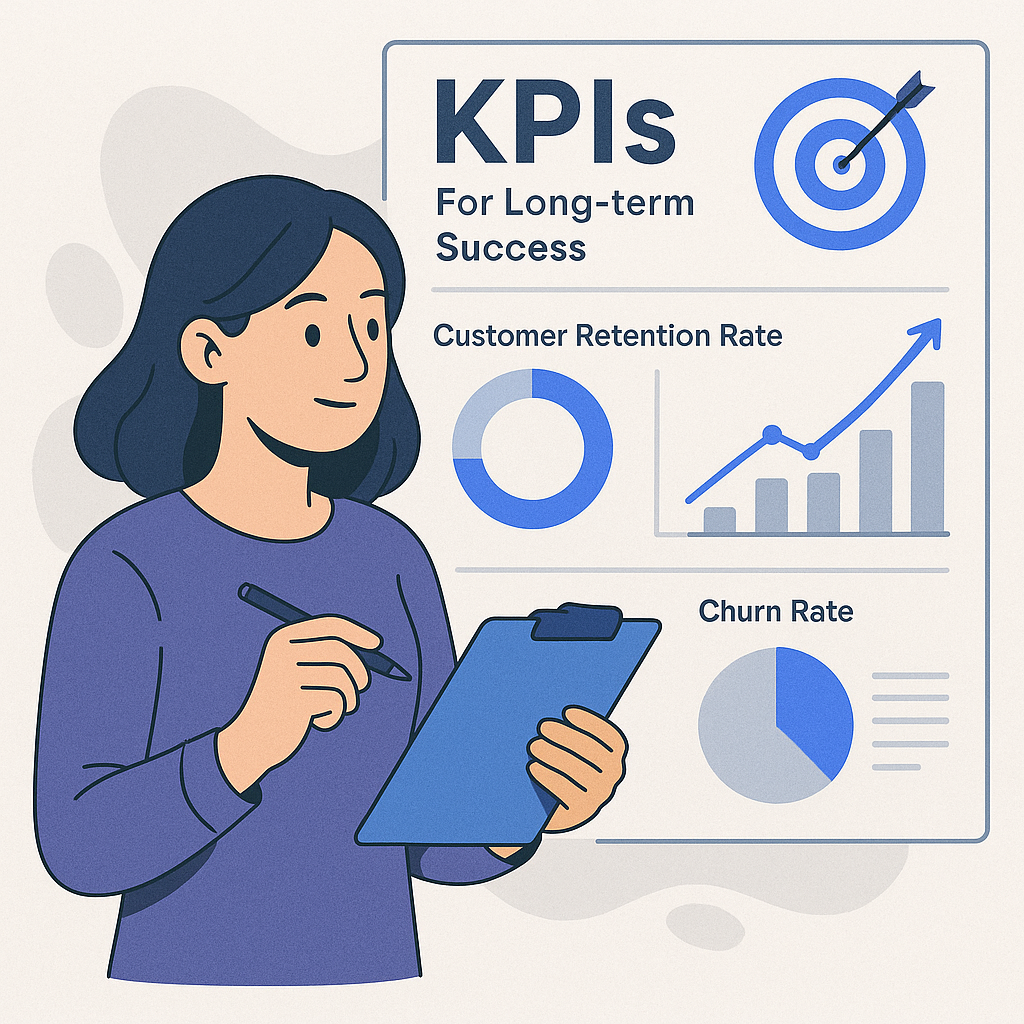
Short-term wins matter. But these KPIs are what keep your marketing ROI compounding over the long run:
- Customer Retention Rate: Track the percentage of customers who keep buying from you over time. Retention is cheaper than acquisition every time.
- Churn Rate: Monitor how fast customers are leaving. A rising churn rate is a warning signal that demands attention before it erodes your numbers.
- Marketing-Originated Customer Percentage: Measure how many new customers your marketing efforts are actually responsible for generating.
- Lead-to-Customer Conversion Rate: Track how efficiently your funnel turns leads into paying customers. This is where most operators lose money without realizing it.
Track these consistently and your marketing strategy stays aligned with where the business actually needs to go.
Leveraging Predictive Analytics for Proactive Marketing Strategies

Reactive marketing is expensive. Predictive analytics lets you get ahead of trends instead of chasing them. By analyzing historical data, you can forecast outcomes and shape campaigns around where your audience is heading—not where they've already been.
Implementation: Tools like IBM Watson or SAS Analytics let you build predictive models that surface high-value customer segments and map out likely buying patterns. The result is more targeted spend and less wasted budget.
Benefit: Operators who use predictive analytics can adapt to market shifts before competitors notice them, optimize budget allocation in real time, and drive measurable improvements in marketing ROI.
Evaluating Multi-touch Attribution Models for Accurate ROI Measurement

No customer converts from a single touchpoint. Multi-touch attribution models distribute conversion credit across every channel that played a role, giving you a clearer picture of what's actually driving results.
Types of Multi-touch Attribution Models
- Linear Model: Spreads credit equally across all touchpoints. Balanced, but it treats every interaction as equally important.
- Time Decay Model: Assigns more credit to touchpoints closest to the conversion. Useful when recent interactions carry more weight in the buying decision.
- Position-based Model: Weights the first and last interactions most heavily. Good for understanding what opens the door and what closes the deal.
Pick the model that fits your funnel. The right attribution framework sharpens your view of channel performance, directs spend where it earns, and makes your overall ROI measurement far more accurate.