The $0 to $3,000/Month Content Site Timeline: What the First 18 Months Actually Look Like
The $0 to $3,000/Month Content Site Timeline: What the First 18 Months Actually Look Like
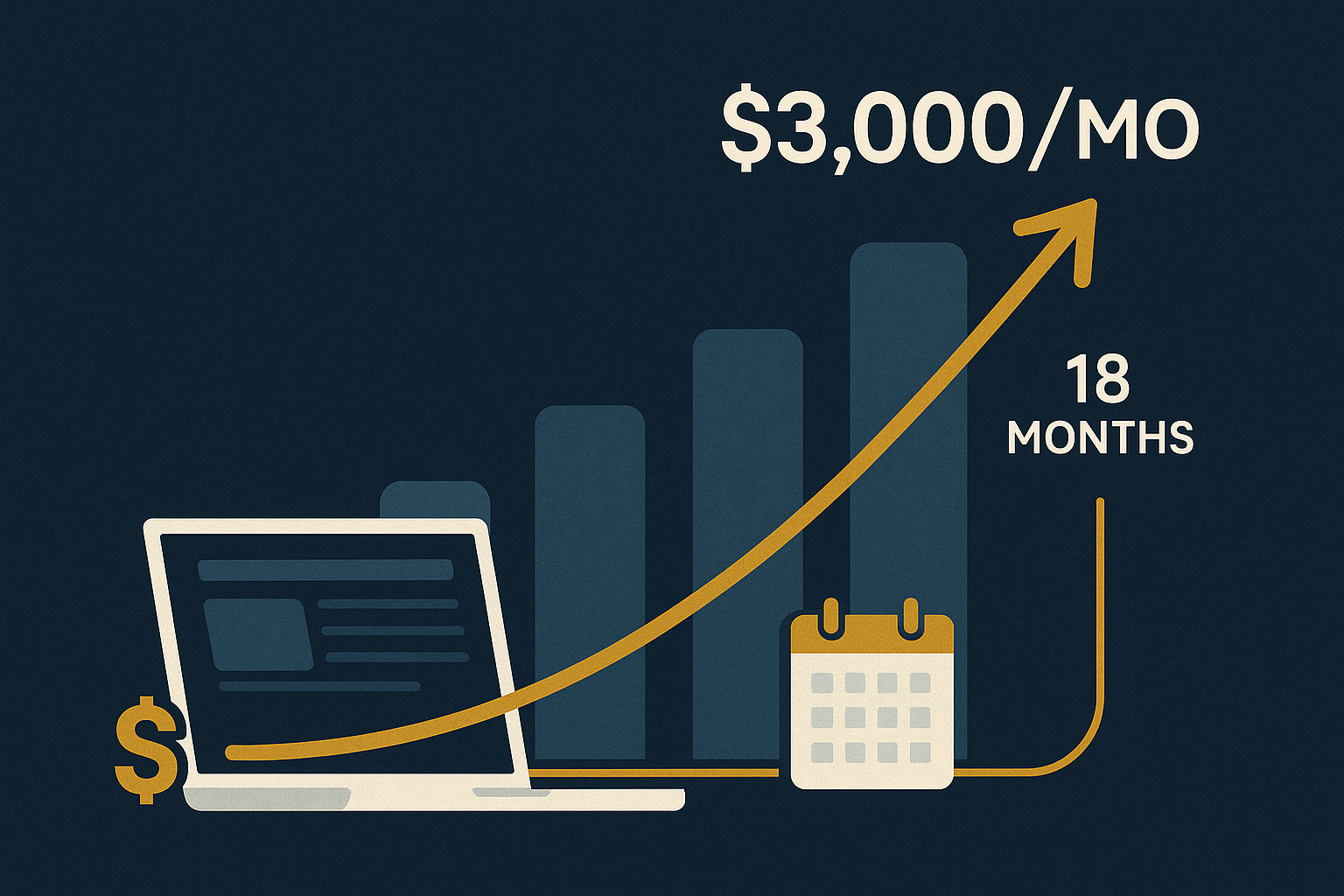
Someone built a content site from zero and hit $3,000 a month by month eighteen. No team, no ad budget, no face on camera. Just owned traffic that compounds while you sleep. The receipts are straightforward once you see the system laid out month by month. Here is exactly what that timeline looks like.
Month 1–3: Laying the Foundation
The first three months are about getting the infrastructure right. You need a domain, hosting, and a content management system. Most operators use WordPress because it is flexible and well-documented. Start by registering your domain with Namecheap — it is the option we point to consistently across this site.
- Choose a Niche: Pick a topic you can write about for two years without running dry. Passion keeps you publishing when the traffic numbers are still small.
- Set Up Your Site: Install WordPress and choose a theme that fits the niche. Free themes work fine at the start. Premium options give you more control later.
- Create Initial Content: Aim for 5 to 10 solid articles before you do anything else. These are the foundation the rest of the system builds on.
Month 4–6: Building Content and Traffic

Your site is live. Now the job is consistent output and pulling in your first real visitors. Search engines need to see an active site before they send you owned traffic that compounds over time.
- Consistent Publishing Schedule: One new article per week is a workable floor. Consistency signals to search engines that the site is maintained and growing.
- SEO Optimization: Use a tool like Yoast SEO to make sure each article is structured correctly for search.
- Promotion: Share articles on social platforms and relevant forums. At this stage you are seeding the system, not expecting it to run on its own yet.
Month 7–9: Monetization Begins
By month seven you have a content library and a growing audience. That is when you wire in the revenue side. The real answer here is not to wait for perfect traffic numbers — start monetizing as soon as the audience is real.
- Affiliate Marketing: Join affiliate programs that match your niche. Drop relevant product links naturally inside articles that already rank.
- Advertising: Google AdSense is a straightforward starting point. It pays while you sleep once the traffic volume is there.
- Build an Email List: Use a tool like Mailchimp to collect addresses from day one. A direct line to your audience is owned traffic that no algorithm can take away.
Month 10–12: Scaling Up
Monetization is running. Now you focus on pushing more traffic through the same system and expanding the content library so the compounding effect accelerates.
- Guest Posting: Write for other sites in your niche. Each placement puts your work in front of an audience that does not know you yet.
- Content Diversification: Test video or audio formats if they fit the niche. Different formats reach different readers.
- Analyze and Adjust: Pull your analytics every month. Double down on what the numbers say is working and cut what is not.
Month 13–18: Reaping the Rewards
At this point the system is doing most of the work. Articles you wrote in month two are still pulling traffic. The job now is refinement, not reinvention.
- Optimize for Passive Income: Prioritize evergreen content — articles that stay relevant for years and keep earning while you sleep.
- Expand Your Reach: Consider adjacent niches or a second site to spread your income across more than one source.
- Keep Learning: The tactics that work in search shift over time. Stay current so the system does not stall.
Conclusion: Your Next Steps
Getting a content site to $3,000 a month takes eighteen months of consistent work. The system is not complicated — foundation, content, monetization, scale. Each phase builds on the one before it. The receipts show up when you do not skip steps.
Start by locking in your domain at Namecheap and get the foundation in place today. For more guides on building this kind of system, browse our blog and tutorials at The Silent Webmaster.
Understanding the Importance of Niche Selection
Your niche choice determines whether the system works or stalls. Passion matters, but so do audience size and monetization potential. Here is how to check both before you commit.
- Market Research: Use Google Trends and SEMrush to measure search volume and interest trajectory. You want a topic with steady or growing demand, not one that peaked three years ago.
- Competition Analysis: Look at who already ranks in your niche. Tools like Ahrefs show you their traffic sources and keyword strategies. Gaps in their coverage are your opportunity.
- Monetization Opportunities: Confirm that affiliate programs, digital products, or ad revenue are available in the niche before you build. Monetization needs to be baked into the plan from the start.
Creating a Content Calendar
A content calendar keeps the publishing system running without you having to make decisions from scratch every week. Plan it once, then execute.
- Define Your Goals: Know whether you are optimizing for traffic volume, audience engagement, or direct revenue. Each goal points to a different content mix.
- Plan Content Themes: Map out recurring themes or series that fit the niche. A coherent content strategy makes the site feel authoritative rather than scattered.
- Schedule Posts: Use Trello or Google Calendar to slot articles in advance. Mix evergreen pieces with timely content to keep both new and returning visitors engaged.
Leveraging Social Media for Traffic and Engagement
Social platforms are a traffic lever, not a replacement for owned traffic. Use them to seed your content and drive readers back to the site.
- Platform Selection: Go where your audience already is. Instagram and Pinterest work for visual niches. LinkedIn suits professional topics. Spreading thin across every platform is a waste of time.
- Content Strategy: Adapt your content to each platform's format. Strong visuals, short hooks, and clear calls-to-action move people from the feed to your site.
- Community Engagement: Show up in relevant groups and discussions. Consistent participation builds authority and drives steady referral traffic.
Advanced SEO Techniques for Content Growth
Basic on-page SEO gets you started. These additional tactics are what push the traffic numbers from modest to meaningful.
- Long-Tail Keywords: Target phrases with lower competition and clear buyer intent. Tools like Ubersuggest surface these quickly. A page ranking for ten long-tail terms often outearns one chasing a broad keyword.
- Internal Linking Strategy: Build a deliberate internal linking structure. It improves navigation and distributes authority across your pages so more of them rank.
- Content Refreshing: Old articles that once ranked can slip. Update them with current information, tighten the keywords, and improve readability. The traffic often comes back within weeks.
Case Study: From Zero to $3,000 in 18 Months

Here is a real example of the system working as described.
Background:
Jane, a solo operator, built a site in the home gardening niche. She paired genuine interest in the topic with a deliberate approach to content and monetization from month one.
Key Strategies:
- Content Focus: Jane wrote detailed how-to guides aimed at beginners and hobbyists — people with specific questions and real buying intent.
- Monetization: She ran affiliate links to gardening tool brands and created a digital product, a comprehensive gardening e-book, to add a second revenue stream.
- Traffic Growth: Pinterest was her primary traffic lever. Visually strong pins linked directly to her articles drove consistent referral volume.
Results:
By month eighteen, Jane's site was pulling over 50,000 visitors per month and generating a consistent $3,000 a month in revenue. The receipts came from strategic planning, real niche knowledge, and a system she kept refining as the numbers grew.
Key Performance Indicators (KPIs) to Track
You cannot improve what you do not measure. These are the numbers that tell you whether the system is working.
- Traffic Volume: Track monthly visitors and watch the trend line. Google Analytics gives you the full picture. Flat or declining traffic is a signal to act, not wait.
- Bounce Rate: A high bounce rate usually means the content is not matching what the visitor expected. Keep it below 50% as a general target.
- Conversion Rate: Measure how many visitors take a desired action — newsletter signup, affiliate click, product purchase. This is where traffic turns into revenue.
- Revenue Per Visitor (RPV): Divide total revenue by total visitors. This single number tells you how efficiently the system is converting owned traffic into income.
Frequently Asked Questions
How long should my articles be?
Aim for 1,000 to 2,500 words as a working range. Longer articles tend to rank better, but the real answer is that quality and relevance matter more than hitting a word count target.
Is it necessary to invest in paid tools?
You can start with free tools and get real results. As the site grows, paid options like Ahrefs or SEMrush give you data that speeds up decisions and surfaces opportunities you would otherwise miss.
How often should I update my content?
Review your top-performing articles at least once every six months. Keeping them current protects their rankings and keeps the traffic flowing without you having to write new content from scratch.
Effective Email Marketing Strategies for Content Sites
Email is the most underused tool in a content site operator's stack. It drives repeat traffic and converts readers into buyers without depending on any algorithm.
- Build Your Email List Early: Start collecting addresses from day one. A free e-book, checklist, or piece of exclusive content gives visitors a reason to subscribe before you have a large audience.
- Segment Your Audience: Not every subscriber wants the same content. Segment by behavior and interest so the emails you send are relevant to the person receiving them.
- Automate Email Campaigns: Tools like Mailchimp or ConvertKit let you set up automated sequences. A welcome series that introduces your best content does the work while you sleep.
- Personalize Your Emails: Use the subscriber's name. Tailor recommendations based on what they have already read or clicked. Small personalization details improve open rates meaningfully.
- Track Email Performance: Watch open rates, click-through rates, and conversions. The numbers tell you what content lands and what to cut. Adjust based on the receipts, not assumptions.
Analyzing Competitor Sites for Strategic Insights
Your competitors have already run experiments you have not. Their results — traffic, content gaps, monetization choices — are data you can use.
- Identify Key Competitors: SimilarWeb and Ahrefs both surface sites in your niche with comparable audiences and content strategies. Start there.
- Evaluate Content Quality: Look at what they publish, how often, and how deep they go. Gaps in their coverage are direct opportunities for you to own that ground.
- Assess Engagement Levels: Check their social presence and engagement numbers — likes, shares, comments. What resonates with their audience will likely resonate with yours.
- Study Monetization Strategies: Note whether they lean on affiliate links, sponsored content, or their own products. This gives you a map of what the market will support.
- Learn from Their SEO Tactics: Analyze their backlink profiles and keyword targets. Where they are strong tells you where competition is stiff. Where they are thin is where you move.
Checklist for Maintaining Content Quality and Consistency
The system only compounds if the content stays good. Use this checklist to keep quality from slipping as output increases.
- Establish Content Guidelines: Write a style guide that covers tone, voice, and formatting. Every article should feel like it came from the same operator.
- Review Content Regularly: Check each piece for accuracy, grammar, and alignment with your guidelines before it goes live. A second pass catches what the first misses.
- Utilize Editing Tools: Grammarly and Hemingway catch errors and flag readability problems. Use them as a floor, not a ceiling.
- Encourage Feedback: Ask your audience what they want more of and what is not landing. Direct feedback is faster than waiting for the analytics to tell you the same thing.
- Update Old Content: Schedule regular audits of existing articles. Refresh the information, update the visuals, and tighten the SEO. Old content that ranks is owned traffic that costs you nothing new to maintain.
Disclosure: this article may contain affiliate links. If you buy through them, we may earn a small commission at no extra cost to you.