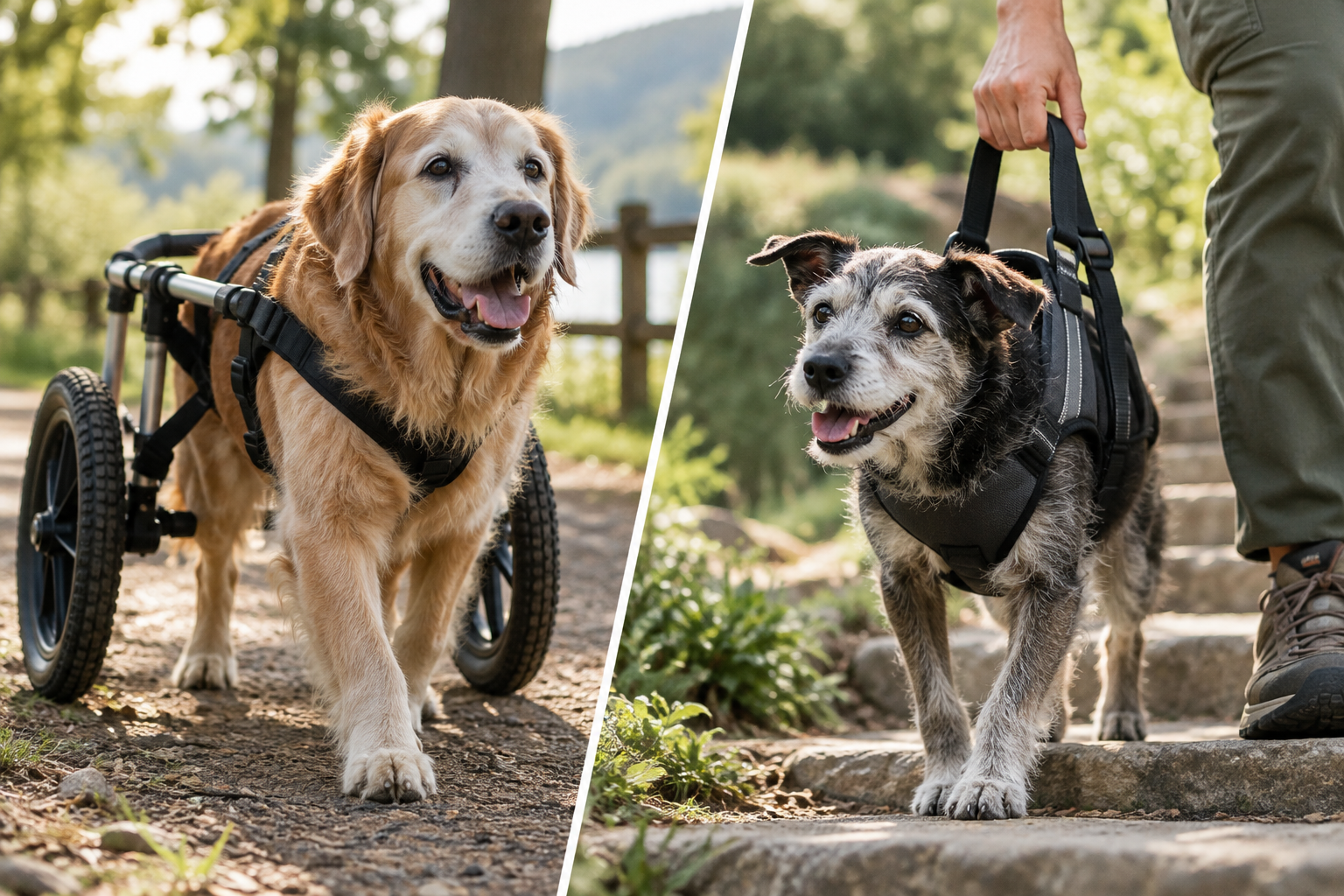
Dog Wheelchairs vs. Support Harnesses: Which Does Your Senior Dog Need?
Dog Wheelchairs vs. Support Harnesses: Which Does Your Senior Dog Need?
Your senior dog is struggling on stairs or dragging a back leg, and you've found yourself at 2 a.m. reading about wheelchairs and harnesses, trying to figure out which one won't make things worse. The dog wheelchair vs harness question is one of the most common dilemmas for dog owners as their pets age. Understanding your dog's specific mobility issues can help you make the right choice.
Why You Can't Just Pick One Without Knowing Your Dog's Mobility Loss
Before you decide, it's crucial to understand that wheelchairs and harnesses address different mobility problems. Wheelchairs are primarily designed for dogs with rear-end weakness or paralysis, allowing them to move independently without dragging their hind legs. On the other hand, support harnesses are more suitable for dogs experiencing front-end weakness or balance issues, offering support when they walk or stand.
Using the wrong tool can lead to frustration for both you and your dog. For instance, a wheelchair won't help a dog with front-leg weakness; it might even increase strain on their already compromised front limbs. Conversely, a harness won't prevent a dog with rear-leg paralysis from dragging and possibly injuring themselves. Understanding these distinctions helps ensure you choose the right tool for your dog's needs. For more insights, check out our guide on senior dog's back legs suddenly giving out.
The Three Questions That Tell You What Your Dog Actually Needs
To determine whether your dog needs a wheelchair or a harness, start by asking these three questions:
- Where is the weakness? Is it in the front legs, back legs, or does your dog have balance or coordination issues?
- Can your dog still stand and walk? Or is standing itself a struggle?
- How much of your home is stairs, ramps, or uneven ground? This affects which tool will be more practical.
By answering these questions, you can better assess your dog's mobility needs. Remember, while this guide provides a framework, a consultation with your vet is always recommended to tailor the approach to your dog's specific situation.
Support Harnesses: When Your Dog Needs a Hand Up, Not a Seat
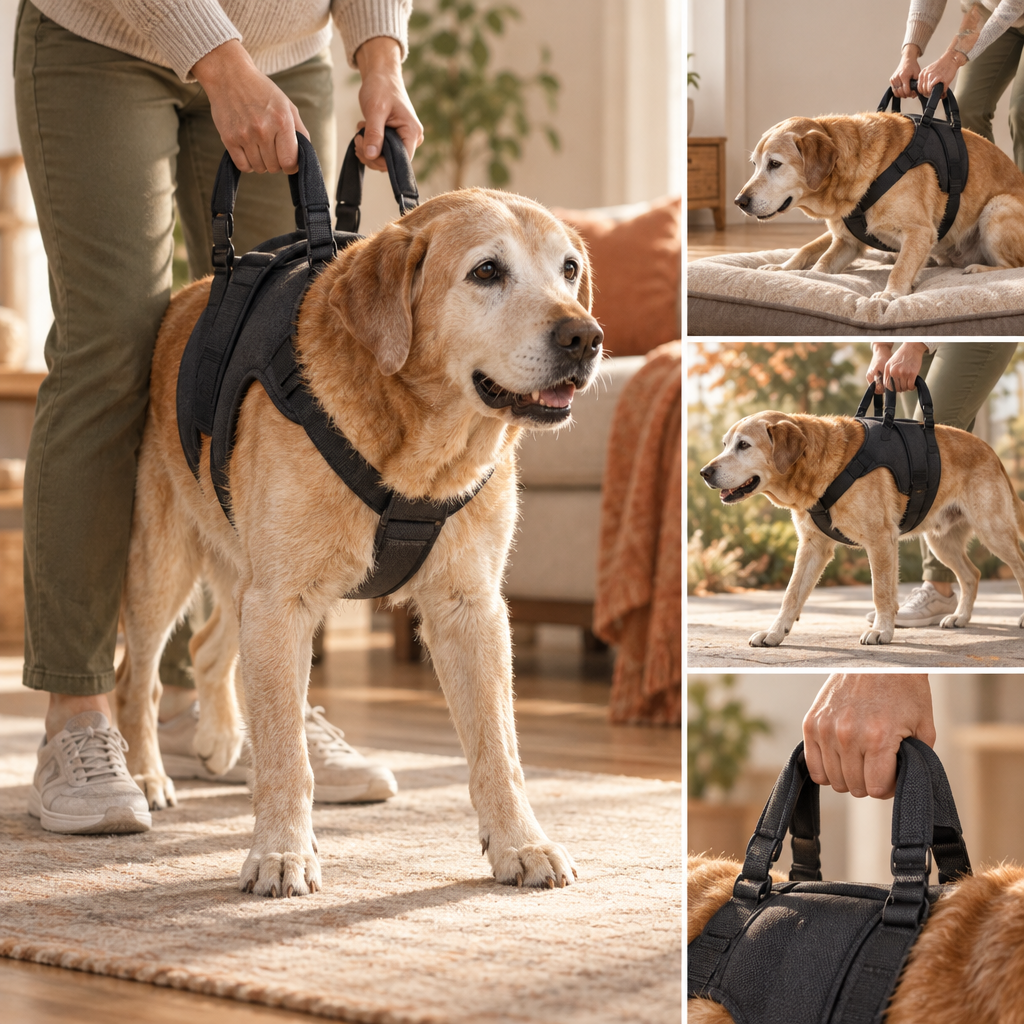
Support harnesses are ideal for dogs who need help with front-leg weakness, balance issues, or those who can walk but struggle to rise. They offer a way to assist your dog without completely taking over their mobility. However, if your dog can't bear weight on their back legs, a harness won't be effective.
Fit and placement are crucial; a poorly fitted harness can cause rubbing and discomfort, defeating its purpose. When considering a harness, focus on how it fits your dog and the areas it supports. For guidance on helping a senior dog stand up safely, read our article on help a senior dog stand up.
Dog Wheelchairs: What They Actually Do (and When Your Dog Is Ready)
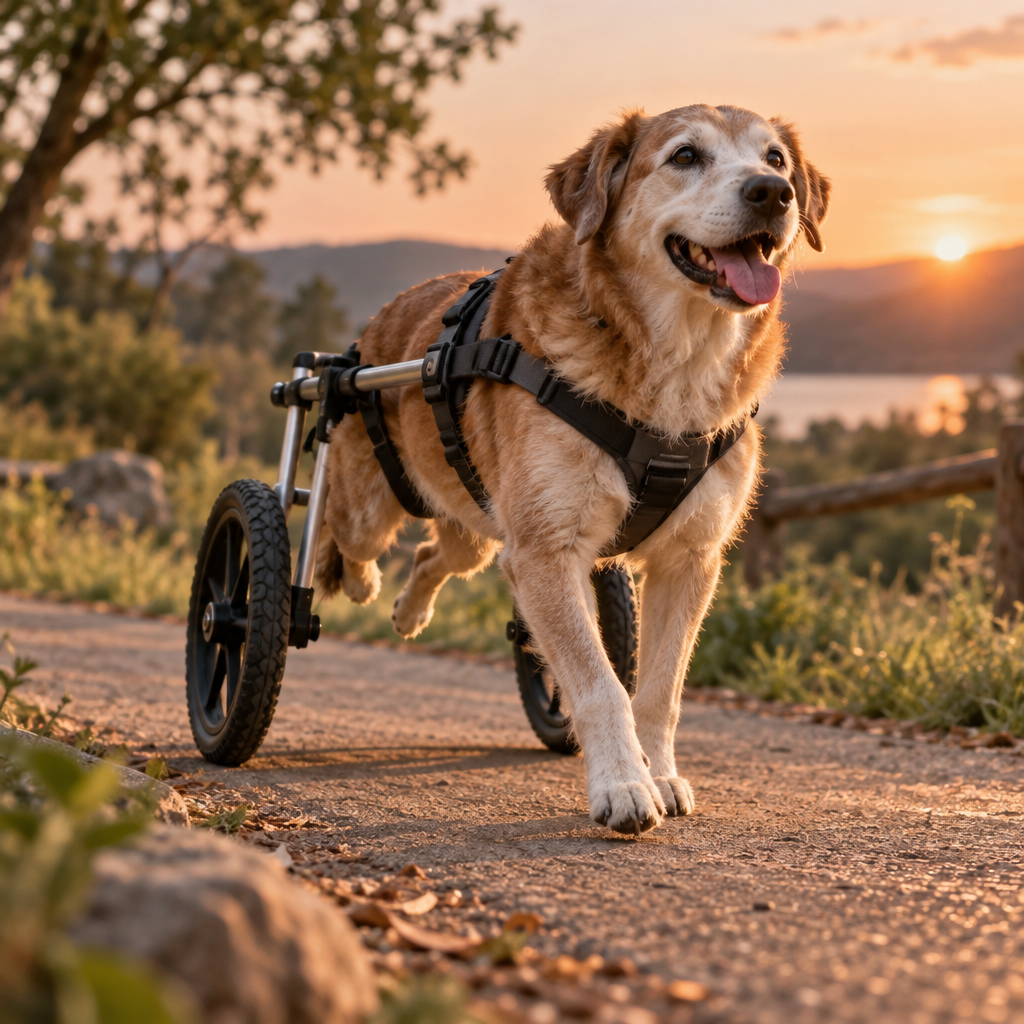
Dog wheelchairs are designed for pets with rear-end paralysis or severe hind leg weakness. They allow dogs to move independently, which can help maintain muscle tone in their front legs. While some owners see wheelchairs as a last resort, they can significantly extend your dog's active life.
It's important to note that there's an adjustment period. Most dogs adapt to wheelchairs within days to weeks, not hours. Patience and positive reinforcement during this time are key to a successful transition.
The Hidden Costs Nobody Talks About (Time, Space, and Maintenance)
Both wheelchairs and harnesses come with hidden costs that go beyond the initial purchase price. Harnesses require frequent fittings and adjustments, and they need regular washing, especially if your dog has accidents. Wheelchairs necessitate a terrain assessment and adequate storage space. They also don't work well on stairs or narrow hallways without modifications, and wheel maintenance is essential for smooth operation.
Before making a decision, consider these factors to ensure the tool you choose aligns with your lifestyle and home environment.
Signs Your Dog Might Need Both (and That's Okay)
Sometimes, a combination of both tools is necessary. For example, a dog might use a harness for short walks around the house and a wheelchair for longer outdoor excursions. As mobility declines, starting with a harness and adding a wheelchair later might be the best approach.
In multi-level homes, both tools can be beneficial. Recognizing that your dog might need both isn't overdoing it; it's about providing the best possible quality of life.
How to Know If It's Actually Working (Or If You Need to Switch)
After choosing a tool, it's important to evaluate its effectiveness. Signs that the tool is working include increased mobility, reduced frustration, and fewer accidents. If your dog shows signs of rubbing, avoidance, increased immobility, or behavioral changes, it might be time to reassess.
A trial period of 2-3 weeks is reasonable to determine if the chosen tool is the right fit. If it's not helping by then, consider exploring other options.
When it comes to the dog wheelchair vs harness decision, once you've identified where your dog's weakness is, Senior Dog Comfort recommends starting with a consultation-style vet visit focused on mobility, not just age. Bring this article with you to discuss the best options for your beloved pet.
Understanding Different Types of Support Harnesses
Support harnesses come in a variety of styles, each designed to address specific mobility needs. Choosing the right type can significantly enhance your senior dog's comfort and mobility. Here are some common options:
- Rear Support Harness: This type is ideal for dogs with hind leg weakness. It supports the rear end, helping your dog to stand and walk with ease. It's particularly useful for dogs recovering from surgery or dealing with arthritis.
- Front Support Harness: Designed for dogs with front leg or shoulder weakness, this harness helps distribute weight evenly across the body, reducing strain on the front limbs and aiding in balance.
- Full Support Harness: For dogs needing comprehensive support, this harness provides assistance to both the front and rear, making it suitable for dogs with generalized weakness or severe mobility issues.
When selecting a harness, consider your dog's specific needs and consult with a veterinarian or a canine mobility specialist. Proper fit and material are also crucial to prevent chafing and ensure ease of use for both you and your pet.
Customizing Support for Different Breeds and Sizes
When choosing between a wheelchair or harness, consider your dog's breed and size, as these factors can influence the effectiveness of mobility aids. Larger breeds may benefit from sturdier, more supportive structures, while smaller dogs might require more lightweight options tailored to their frame. For instance, a Great Dane may need a heavy-duty wheelchair with reinforced joints, whereas a Dachshund might find a lighter harness more comfortable for spinal support. Consulting breed-specific forums or communities can provide valuable insights and recommendations based on real-life experiences from other dog owners.