
How to Budget for Repairs on a 2–4 Unit Property
How to Budget for Repairs on a 2–4 Unit Property
Effective Repair Budgeting for Property Management
Why a Repair Budget Matters (and What Happens Without One)
Most small landlords find out they've underfunded repairs the moment the furnace dies in January. Without a repair budget, unexpected expenses can quickly spiral out of control. Imagine a scenario where a roof leak leads to water damage, which then requires mold remediation. Deferred maintenance not only compounds costs but also risks tenant dissatisfaction and potential income loss. Understanding how to budget for rental property repairs is crucial to avoid these pitfalls.
Planned repairs and emergency repairs serve different purposes. Planned repairs are predictable and can be scheduled, while emergency repairs demand immediate attention and funds. Guessing at repair costs often leaves landlords short, leading to reliance on credit or delayed fixes, which can be more expensive in the long run.
The Percentage Method: How Much to Set Aside

The percentage method offers a straightforward approach to budgeting for repairs. A commonly used rule is to set aside 1% of the property's value annually. For instance, if your property is valued at $300,000, aim to reserve $3,000 each year for repairs. However, older buildings often require more funds due to wear and tear, so adjust your budget accordingly.
Consider upcoming expenses such as roof replacements or HVAC upgrades. By anticipating these costs, you can adjust your repair budget to ensure you're not caught off guard. This proactive approach helps maintain the property's condition and tenant satisfaction.
Sorting Repairs: Emergency, Urgent, and Planned
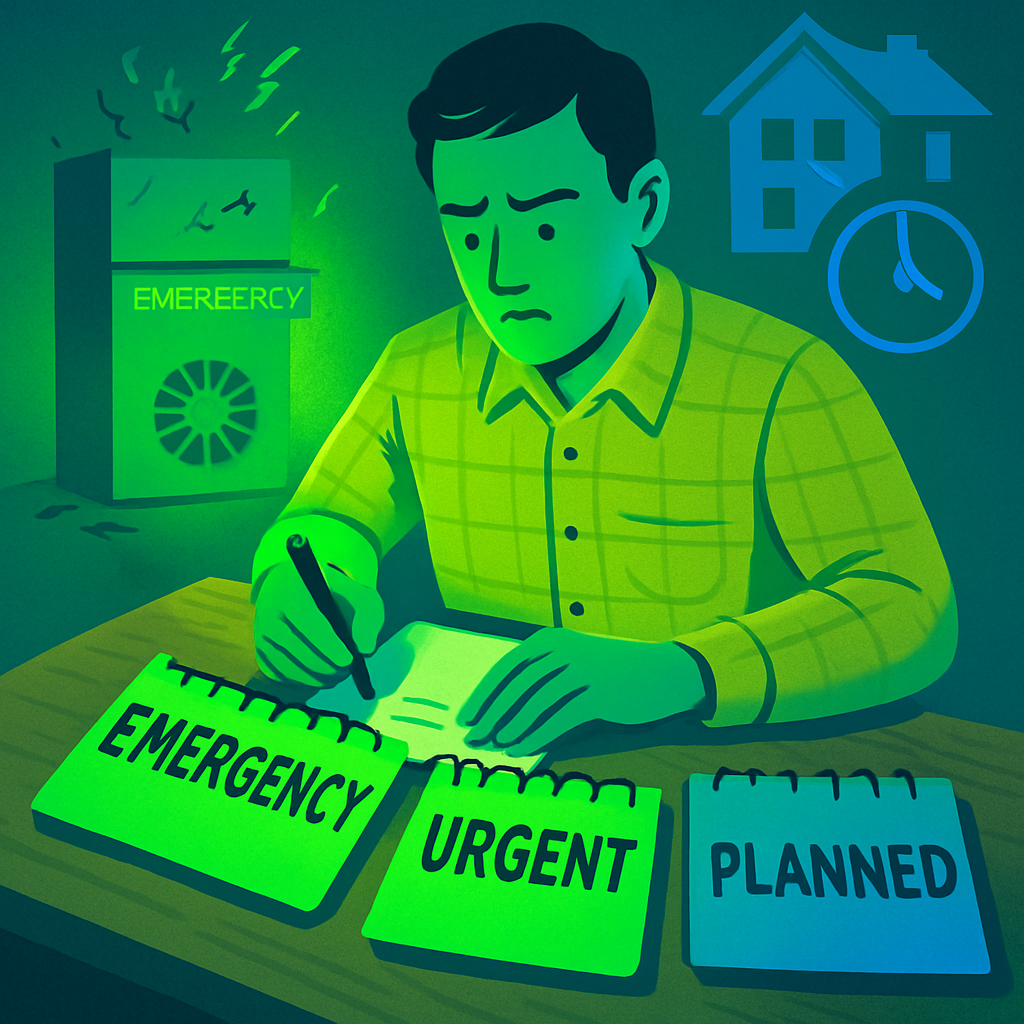
Effective repair budgeting involves categorizing repairs by urgency. Emergencies, like a broken furnace in winter, affect safety and habitability and require immediate action. Urgent repairs address issues that, while not critical, could deteriorate if ignored, such as a minor roof leak.
Planned repairs can be scheduled and batched together for cost efficiency. By grouping non-urgent tasks, landlords can save on labor costs and minimize disruption to tenants. For more insights on securing your property cost-effectively, consider exploring best door reinforcement kits.
Building Your Repair Reserve Account
Separating your repair funds from your operating cash is crucial to ensure availability when needed. Consider establishing a separate savings account specifically for repairs. Regularly contribute to this account, ideally monthly, to build a reserve that covers both planned and unexpected expenses.
Alternatively, a line of credit can provide flexibility for larger repairs. Use tools to track allocations and expenditures to maintain clarity over your repair budget. For a guide on securing your home on a budget, check out secure your home on a budget.
Tracking Actual Spending to Forecast Next Year
Accurate record-keeping transforms this year's repair chaos into next year's precise budget. Log every repair, noting the date, unit, cost, and category. This practice not only helps in identifying spending patterns but also aids in forecasting future budget needs.
Spotting trends, such as frequent plumbing issues or seasonal spikes, allows for better planning. Use last year's data to adjust your reserve, ensuring you're prepared for recurring expenses and mitigating the risk of budget shortfalls.
Common Repair Budget Mistakes to Avoid
Avoid the pitfalls many landlords face, such as budgeting based on hope rather than property history. Mixing repair reserves with operating cash often leads to funds being unavailable when needed. Ignoring seasonal patterns, like increased heating costs in winter, can also disrupt your budget.
Effective tenant screening, as discussed in screening tenants effectively, can prevent some repair issues by ensuring tenants treat the property with care. By learning from these common mistakes, you can maintain a healthy repair budget and ensure the longevity of your property.
Start tracking your repairs this month. Write down every expense—unit, date, category, cost—so you have real data for next year's budget instead of a guess.
Leveraging Technology for Efficient Repair Management
In today's digital age, leveraging technology can significantly enhance the efficiency of managing repair budgets for multi-unit properties. Property management software and mobile applications offer robust tools to streamline repair tracking, budget allocation, and contractor management. These platforms provide features such as real-time alerts for maintenance requests, digital record-keeping, and automated budget updates.
Using technology, landlords can easily categorize repairs, schedule maintenance, and track spending across multiple units. Some advanced software solutions even offer predictive maintenance capabilities, analyzing historical data to forecast future repair needs. By integrating these tools, landlords can not only improve operational efficiency but also enhance tenant satisfaction through timely and effective repairs.
Understanding Local Regulations and Their Impact on Repair Budgets
Local regulations and ordinances can have a significant impact on repair budgets for rental properties. Different municipalities may have specific requirements regarding property maintenance, safety standards, and tenant rights, which can affect the prioritization and cost of repairs.
Landlords should familiarize themselves with local building codes and rental property regulations to avoid costly fines and ensure compliance. For example, some areas may require routine inspections for systems like fire alarms or elevators, necessitating regular maintenance that should be factored into the budget. Additionally, understanding tenant rights regarding repair requests can help landlords prioritize appropriately and manage expectations.
Case Study: Budgeting for Repairs in a Historic Property
Consider a case study of a landlord managing a historic 4-unit property. These properties often present unique challenges due to their age and construction materials. For example, maintaining original architectural elements like wooden floors or vintage plumbing systems can be more costly and require specialized skills.
In this scenario, the landlord decided to set aside a higher percentage of the property’s value, around 3%, due to the anticipated need for specialized repairs. They also employed a dedicated property manager with experience in historic properties to ensure that repairs were both timely and in line with preservation standards. By anticipating these unique needs and budgeting accordingly, the landlord was able to maintain the property's integrity and tenant satisfaction while avoiding unexpected financial strain.
Checklist for Establishing a Robust Repair Budget
- Assess Property Condition: Conduct a thorough inspection to identify potential repair needs.
- Understand Local Regulations: Research local laws that may impact maintenance requirements and costs.
- Choose a Budgeting Method: Decide between percentage-based or detailed line-item budgets based on property specifics.
- Set Up a Reserve Account: Establish a separate account for repair funds to prevent misallocation.
- Leverage Technology: Implement property management software to streamline repair tracking and budgeting.
- Review Annually: Analyze past repair data to adjust the budget and prepare for future needs.
Frequently Asked Questions (FAQs) on Repair Budgeting
What is the best way to predict unexpected repair costs?
While it's impossible to predict every repair, using historical data and technological tools can help. Consider past repair trends and consult with professionals for an assessment of potential issues. Predictive maintenance software can also provide insights into future repair needs based on current property conditions.
How can I handle repair requests efficiently?
Implement a streamlined process for handling repair requests, such as utilizing an online portal where tenants can submit issues. Ensure that you have a reliable network of contractors who can address these requests promptly. Regularly communicate with tenants to keep them informed about repair timelines.
Should I hire a property manager to handle repairs?
Hiring a property manager can be beneficial, especially for landlords with multiple properties or those who lack the time to manage repairs directly. A property manager can handle maintenance requests, coordinate with contractors, and ensure that the repair budget is adhered to. However, weigh the cost of their services against potential savings in time and efficiency.
Evaluating Repair Budget Performance with Key Performance Indicators (KPIs)
To measure the effectiveness of your repair budget, consider establishing KPIs that reflect repair efficiency and financial health. Some useful KPIs include:
- Repair Cost Variance: The difference between budgeted and actual repair costs, which can highlight areas of overspending or savings.
- Average Repair Completion Time: The average time taken to complete repairs, indicating efficiency and tenant satisfaction.
- Percentage of Emergency Repairs: A high percentage may indicate underlying maintenance issues that need addressing.
- Tenant Satisfaction Rate: Gather feedback from tenants regarding repair quality and response times to gauge overall satisfaction.
By regularly reviewing these KPIs, landlords can adjust their strategies to optimize repair processes and budget allocations, ensuring the long-term sustainability and profitability of their properties. For more detailed insights, visit The Small Landlord for expert guidance on how to budget for rental property repairs.