How Much Should You Budget for Repairs on a Two-Family House
How Much Should You Budget for Repairs on a Two-Family House
The first time a major system fails in a two-family house you own, you'll understand why repair budgets matter more than rent projections. For many small landlords, the challenge isn't just about having a reserve but knowing how much to set aside. Let’s delve into a practical framework that ensures you're prepared for any unexpected repair without jeopardizing your financial stability.
Why the 1% Rule Fails for Two-Family Houses
Many landlords rely on the 1% rule, which suggests setting aside 1% of the property's value annually for repairs. This rule might seem like a simple solution, but it falls short for two-family houses. Here's why:
- Single-Family Focus: The 1% rule primarily applies to single-family homes. However, two-family houses have double the systems, meaning double the potential issues.
- Shared Infrastructure: With shared roofs, foundations, and utilities, the repair costs are often higher and more complex.
- Financial Implications: Over-reliance on this rule can lead to underfunding, putting landlords in a position where they must choose between critical repairs and other financial obligations.
Understanding these differences is crucial for avoiding financial pitfalls.
The Three Numbers You Need to Know
To effectively budget for repairs, focus on three critical numbers: the age of your building, the condition of major systems, and the reserve percentage these factors dictate.
- Building Age: Older buildings typically require more frequent and expensive repairs. Knowing the age helps you anticipate potential issues.
- Condition of Systems: Evaluate whether systems are in good, fair, or poor condition. Systems in poor condition might need immediate attention, impacting your budget significantly.
- Reserve Percentage: Depending on the age and condition, your reserve should range between 3-5% of your property's value annually.
Armed with these numbers, you can create a more accurate and effective repair budget.
Calculate Your Annual Repair Budget

Let's put theory into practice with a step-by-step calculation of your repair budget for a two-family house:
- Determine Annual Rental Income: Start by calculating your total annual rental income.
- Apply the Reserve Percentage: Use the age and condition of your building to determine your reserve percentage. If your building is older with systems in fair condition, consider a higher reserve percentage.
- Account for Known Repairs: Adjust your budget for any known upcoming repairs. For instance, if the roof will need replacement, factor in this cost immediately.
For more insights on budgeting for repairs on a 2–4 unit property, refer to our detailed guide on How to Budget for Repairs on a 2–4 Unit Property.
Where Two-Family Repairs Cost More Than You Think
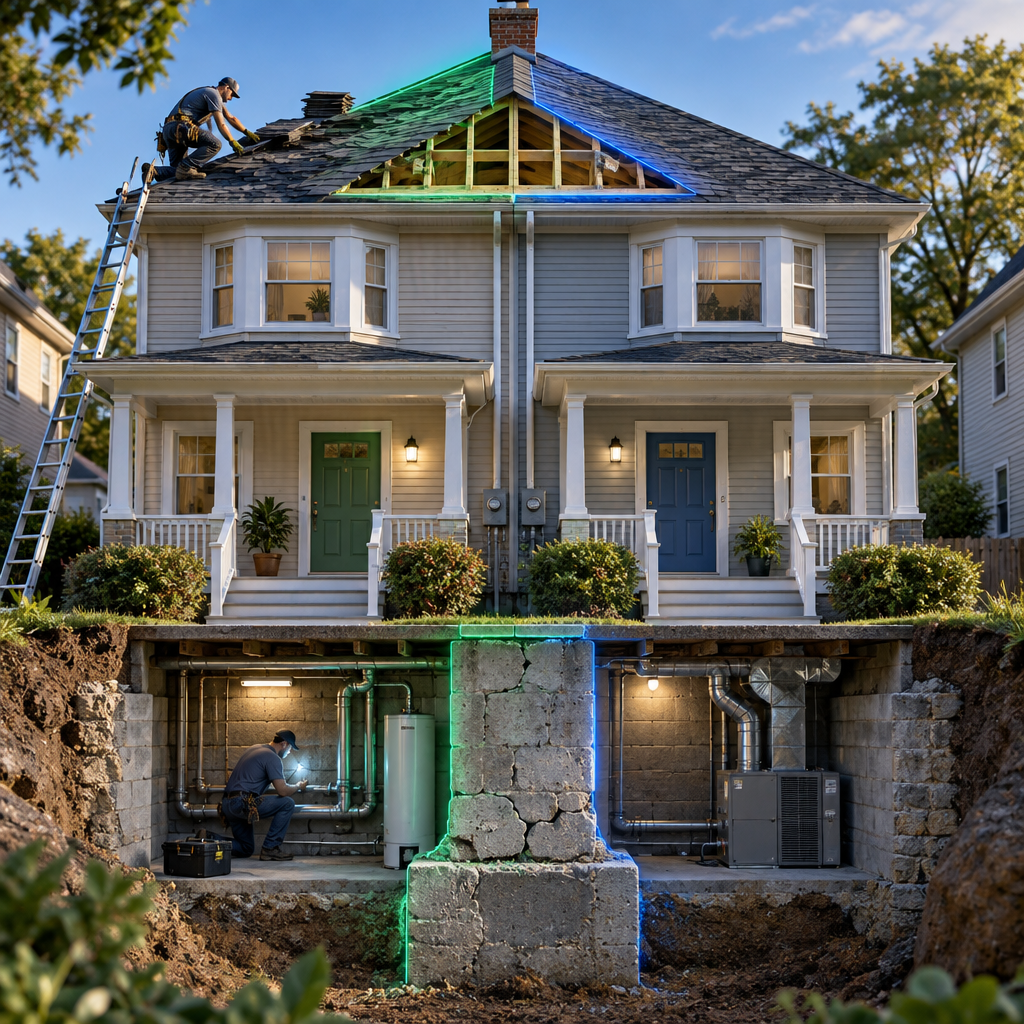
Two-family houses have unique repair challenges that often surprise new landlords. Here’s where costs can escalate:
- Shared Systems: Repairs to shared systems like roofs and foundations can be costly due to their complexity and size.
- Dual HVAC and Plumbing: Maintaining multiple HVAC systems and plumbing setups can double the costs compared to single-family homes.
- Common Area Maintenance: Hallways, staircases, and other shared spaces require regular upkeep to remain safe and attractive.
- Code Compliance: Ensuring your rental units meet local codes can entail unexpected expenses, especially in older buildings.
To decide whether to tackle repairs yourself or hire a professional, consider reading our article on DIY vs Hiring a Handyman.
Setting Up Your Repair Reserve Account
Once you have your budget, it's time to put it into practice by setting up a repair reserve account:
- Open a Separate Account: Keep your reserve funds in a separate account to avoid the temptation of using them for non-repair expenses.
- Monthly Deposits: Commit to regular monthly deposits based on your calculated budget to ensure consistent savings.
- When to Use Reserves: Use your reserve funds for unexpected repairs that exceed your monthly repair budget, not for routine maintenance.
Start with your building's age and current condition, then use the framework in this article to calculate your monthly reserve. Set up a separate account this week and commit to the monthly deposit—your future self will thank you when the water heater dies. For more strategies on managing your rental property effectively, explore more resources at The Small Landlord.
Understanding Local Market Influences on Repair Costs
One often overlooked factor in budgeting for repairs is the influence of the local market. Costs can vary significantly based on geographic location, local labor rates, and the availability of materials. Here’s how these factors can impact your repair budget:
- Regional Labor Costs: In metropolitan areas, labor costs for skilled tradespeople such as plumbers and electricians can be substantially higher than in rural regions. It's crucial to research average rates in your area to avoid underestimating repair costs.
- Material Availability and Costs: The cost and availability of materials can fluctuate based on regional supply chains and economic conditions. For example, coastal areas might have higher costs for weather-resistant materials.
- Regulatory Environment: Local building codes and regulations can dictate the types of repairs or upgrades required, potentially increasing costs. Being familiar with these regulations can help you anticipate and budget for compliance-related expenses.
By taking these local market influences into account, you can create a more precise repair budget that reflects real-world conditions.
Strategies for Reducing Repair Costs
While budgeting appropriately is crucial, adopting strategies to reduce repair costs can also significantly impact your bottom line. Consider the following approaches:
- Preventive Maintenance: Regular maintenance can prevent minor issues from becoming major repairs. Establish a schedule for routine checks on HVAC systems, plumbing, and roofing to catch problems early.
- Bulk Purchasing: Buying materials in bulk or establishing relationships with suppliers can lead to discounts, especially for frequently required items like paint or flooring materials.
- Energy-Efficient Upgrades: Investing in energy-efficient systems can reduce long-term operational costs. For example, installing LED lighting or high-efficiency HVAC units might have higher upfront costs but lead to savings over time.
Implementing these strategies not only helps in managing costs but also enhances the value and appeal of your property.
Checklist for Evaluating Repair Needs
To ensure no detail is overlooked, use the following checklist to evaluate your property's repair needs:
- Inspect the roof for leaks or damaged shingles.
- Check HVAC systems for efficiency and schedule regular servicing.
- Examine plumbing for leaks or outdated piping that may need replacement.
- Assess electrical systems for outdated wiring or potential hazards.
- Review the condition of windows and doors for drafts or damages.
- Inspect the foundation for cracks or water intrusion.
- Evaluate common areas for wear and tear or safety hazards.
- Check compliance with local building codes and regulations.
Regularly using this checklist can help you stay on top of necessary repairs and avoid unexpected expenses.
Frequently Asked Questions
How often should I review my repair budget?
It's advisable to review your repair budget annually or whenever there are significant changes to your property, such as major renovations or changes in tenant occupancy. Regular reviews ensure your budget remains aligned with current needs and market conditions.
What should I do if my repair costs exceed the budget?
If repair costs exceed your budget, prioritize essential repairs that impact safety or habitability. Consider temporary solutions for less critical issues and adjust your budget for future periods to accommodate unexpected expenses.
Can insurance cover some repair costs?
Yes, property insurance can cover certain repair costs, particularly for damage caused by covered events like storms or fires. Review your insurance policy to understand what is covered and consider purchasing additional coverage for specific risks relevant to your property.
Key Performance Indicators for Repair Budget Management
Monitoring key performance indicators (KPIs) can help you manage your repair budget effectively. Consider tracking the following KPIs:
- Percentage of Income Allocated to Repairs: This KPI helps you understand how much of your rental income is devoted to maintenance and repairs.
- Frequency of Major Repairs: Track how often significant repairs occur to identify patterns or recurring issues.
- Cost per Repair: Analyzing the average cost per repair can provide insights into cost management and highlight areas for potential savings.
By regularly monitoring these KPIs, you can make informed decisions and adjust your budgeting strategies as needed.