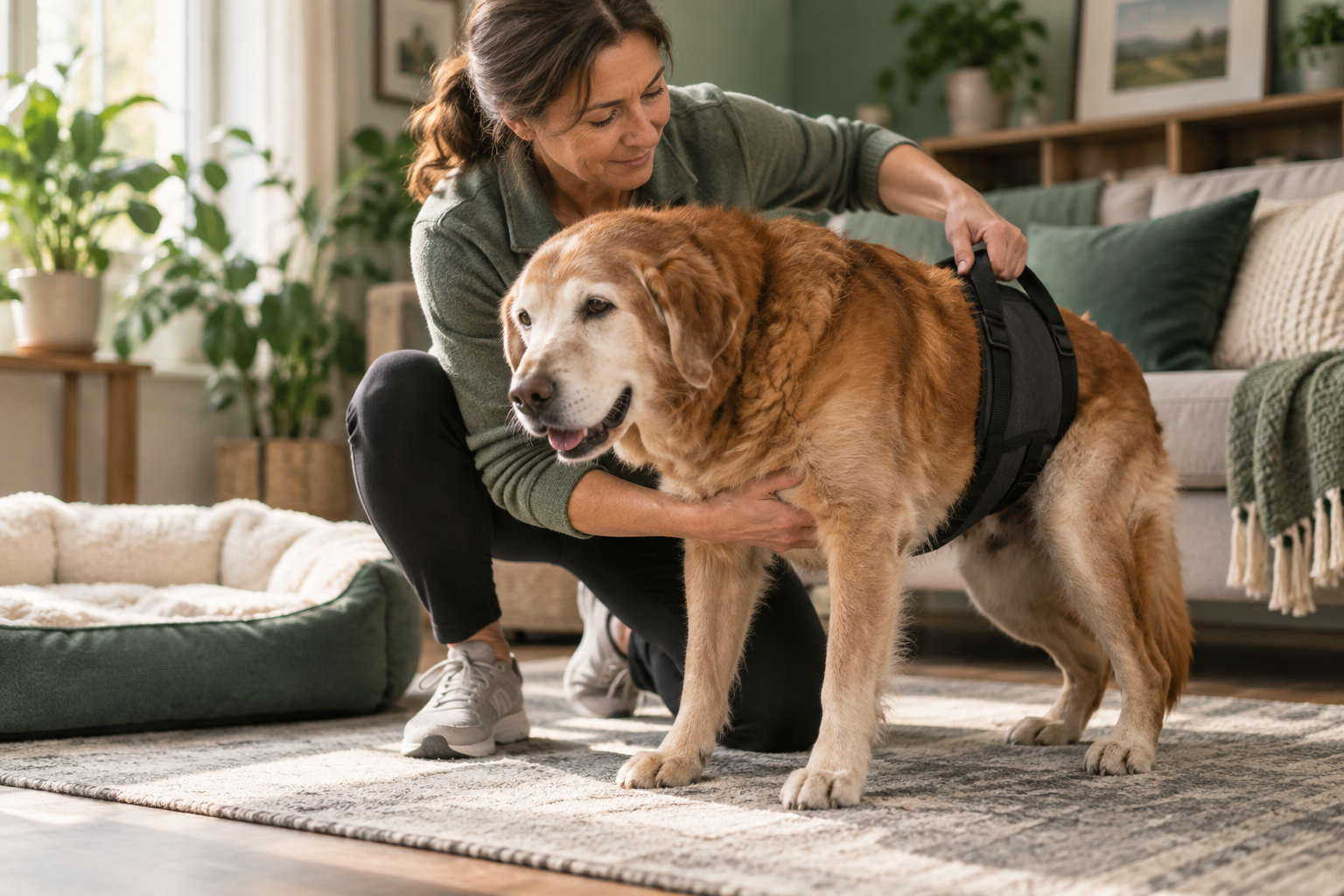
How to Help a Senior Dog Stand Up Without Hurting Yourself
How to Help a Senior Dog Stand Up Without Hurting Yourself
If your back hurts after helping your senior dog up from the floor, you're using your body wrong, not your dog's fault. This guide will teach you how to assist your furry friend safely and comfortably while protecting your own body.
Why Senior Dogs Struggle to Stand (and Why It Matters for Your Approach)
Understanding why your senior dog struggles to stand is crucial. It's not laziness or stubbornness but rather physical challenges like muscle atrophy, arthritis, or neurological changes.
- Muscle Atrophy in Hind Legs: As dogs age, they lose muscle mass, particularly in their hind legs, making it difficult to stand.
- Arthritis and Joint Stiffness: Arthritis is common in senior dogs and can make movements painful.
- Spinal or Neurological Issues: Conditions like degenerative myelopathy affect coordination, requiring a gentler approach.
- Why Rushing or Forcing Makes It Worse: Forcing your dog can cause stress and injury, both to you and your pet.
The Right Way to Lift: Protect Your Spine First
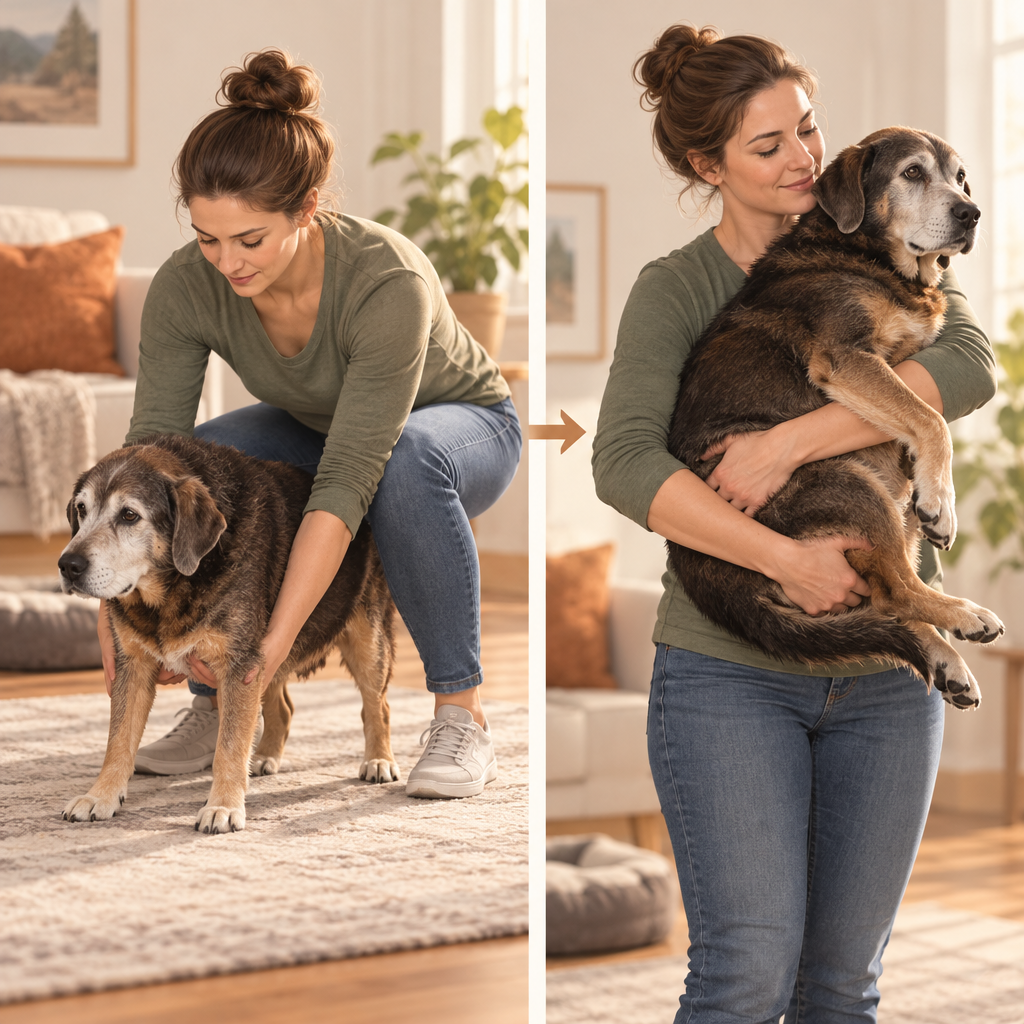
To lift your senior dog safely, focus on your body mechanics. Here's how:
- Bend at Hips and Knees: Avoid bending at the waist. Instead, squat down, keeping your back straight.
- Keep the Dog Close: Hold your dog close to your body to maintain balance and reduce strain.
- Distribute Weight Evenly: Use both arms to support your dog evenly.
- Use Your Legs: Drive the lift from your legs, not your back.
- Know When to Stop: If lifting becomes too difficult, consider using equipment.
Slings, Harnesses, and Ramps: When Lifting Isn't Enough
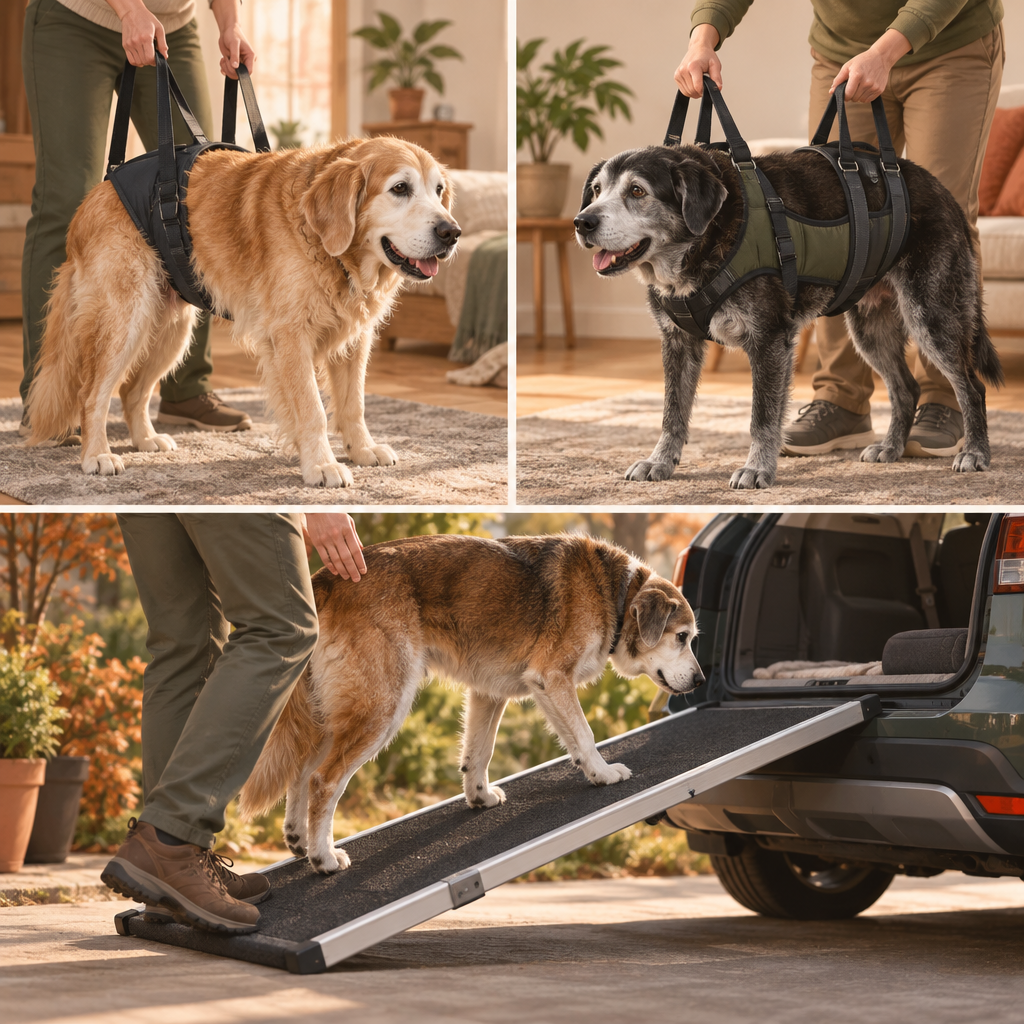
Sometimes, lifting isn't enough, and using equipment is necessary to prevent injury and stress.
- Rear-End Slings: These support the hind legs and are easy to fit. They provide stability without heavy lifting.
- Full-Body Harnesses: Ideal for dogs with front-leg weakness, these distribute weight and make lifting easier.
- Ramps and Steps: Useful for everyday standing and accessing furniture. They reduce the need for lifting.
- Introducing Equipment: Gradually introduce these tools to avoid scaring your dog. Use treats and positive reinforcement.
The Daily Routine: Timing and Frequency Matter
Building a routine can help both you and your dog manage standing more effectively.
- Scheduled Help: Assist your dog after rest periods when muscles are relaxed.
- Let the Dog Try First: Allow your dog to attempt standing before intervening, encouraging muscle use.
- How Often is Too Often: Frequent struggles might indicate a need for a vet visit. Monitor and adjust as necessary.
- Nighttime Strategies: If your dog wakes you repeatedly, consider a nighttime routine to minimize disruptions.
When to Call the Vet (and What to Tell Them)
Understanding when to seek professional help is vital for your dog's health.
- Sudden Loss of Ability: If your dog suddenly can't stand, it's time to call the vet.
- Pain Signs: If your dog shows signs of pain during standing attempts, seek medical advice.
- Incontinence or New Symptoms: These can indicate underlying health issues needing attention.
- Questions to Ask: Discuss mobility aids and medications that might help your dog.
Helping your senior dog stand up doesn't have to be painful or stressful. By understanding their challenges, using the right techniques, and incorporating helpful tools, you can make daily life easier for both you and your pet. For more tips on supporting your aging dog, visit Senior Dog Comfort for practical advice tailored to your needs.
Environmental Modifications for Easier Mobility
Adapting your home environment can significantly aid your senior dog's ability to stand and move without requiring frequent lifting assistance.
- Non-Slip Flooring: Slippery surfaces can be a significant hurdle for dogs with mobility issues. Consider adding non-slip rugs or mats in areas where your dog spends most of their time.
- Accessible Sleeping Areas: Ensure your dog's bed is easily accessible. A low-profile bed can help reduce the effort required to stand up.
- Strategic Furniture Placement: Arrange furniture to create clear pathways, allowing your dog to navigate without obstacles that might require assistance.
- Pet Gates: Use gates to limit access to stairs or high furniture, which can pose a falling risk.
- Outdoor Adjustments: If your dog has trouble navigating steps to the yard, consider building a small ramp or adding a gentle slope for easier access.
Nutrition and Supplements: Supporting Mobility from Within
Proper nutrition and supplements can play a crucial role in maintaining your senior dog's mobility and overall health.
- Balanced Diet: Consult with your veterinarian to ensure your dog's diet meets their specific needs, focusing on maintaining a healthy weight to reduce joint strain.
- Joint Supplements: Consider glucosamine and chondroitin supplements, which may help support joint health and reduce inflammation.
- Omega-3 Fatty Acids: These can help reduce joint inflammation and promote overall well-being.
- Hydration: Ensure your dog has constant access to fresh water, as dehydration can exacerbate joint stiffness.
Incorporating Gentle Exercises
Engaging your senior dog in gentle exercises can help maintain muscle tone and flexibility, aiding in their ability to stand and move more comfortably.
- Short Walks: Regular, short walks can help maintain muscle mass and joint flexibility without overexertion.
- Water Therapy: Swimming or walking in water can provide low-impact exercise that supports muscle strength and joint health.
- Range of Motion Exercises: Gently move your dog's legs through their natural range of motion to keep joints flexible.
- Interactive Play: Encourage light play with toys that promote movement without requiring jumping or strenuous activity.
Recognizing Behavioral Changes
Understanding behavioral changes in your senior dog can provide insights into their physical comfort and inform when additional assistance may be needed.
- Reluctance to Move: If your dog hesitates to stand or walk, it may indicate discomfort or pain that warrants attention.
- Changes in Appetite: A sudden decrease in appetite can be a sign of pain or discomfort, suggesting a need for veterinary evaluation.
- Increased Restlessness: Pacing or restlessness, especially at night, can indicate discomfort or anxiety related to mobility challenges.
- Seeking Support: If your dog leans against walls or furniture more frequently, it may be a sign they're struggling with balance or strength.